
Word Study: “Triumph” (thriambeuō)
2 Corinthians 2:14 · Strong’s G2358
Triumph — The Short Study
Today's Revelations
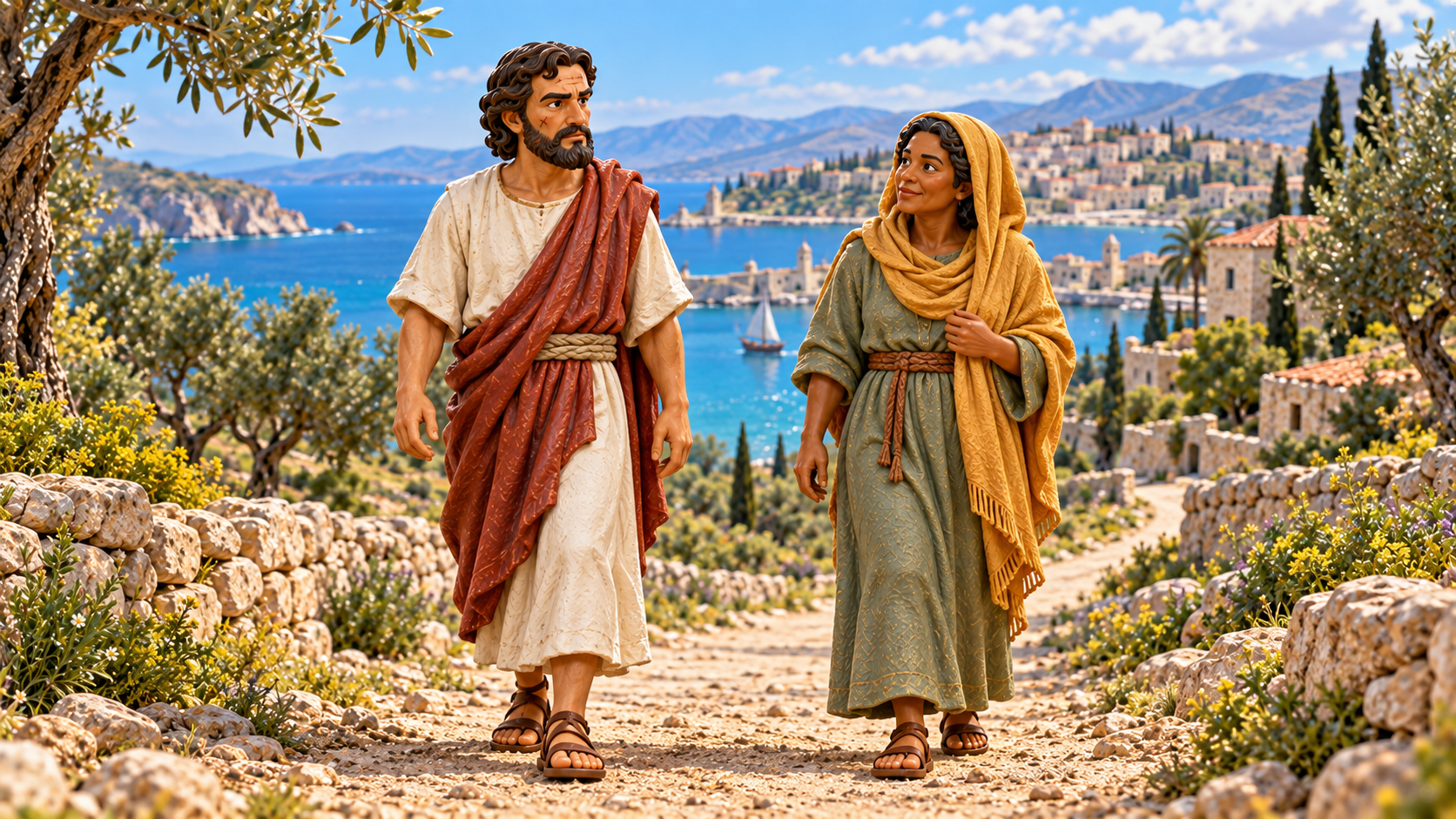
- 1God leads the procession. The sentence begins with thanksgiving to God. Paul has just described an open door for ministry in Troas and an unsettled spirit because Titus was absent. His gratitude does not mean the journey has become easy. God remains the one directing the ministry in Christ. The “us” first concerns Paul and his fellow ministers; believers can then draw an application from their example. Our circumstances do not have to look victorious before we can give thanks to the One who leads.
- 2His victory puts us on display. The Greek verb evokes a public triumphal procession. Its other New Testament use, Colossians 2:15, describes defeated powers being openly displayed. This makes the captive reading of 2 Corinthians 2:14 compelling: Paul is someone God has overcome and now leads in Christ. The wording is debated, so the KJV should not simply be dismissed as saying the opposite of the Greek. Yet the emphasis is clear: God’s victory is displayed through Paul. “Willing captive” is a devotional description of surrender, not an extra meaning contained in the verb itself.
- 3Weakness can carry Christ’s life. The captive image has a sharp edge. Roman triumphs displayed defeated people, and some prominent prisoners faced execution. Paul’s thanksgiving does not turn that suffering into a promise of comfort or personal advancement. Later he describes carrying Jesus’ dying so that Jesus’ life can become visible through him; death works in the ministers, and life in those they serve. This wider context supports a picture of costly, surrendered ministry. Following Christ may change what success looks like: faithful love can bear fruit even when our own strength feels spent.
- 4The fragrance is offered to God. Paul calls the ministers an aroma of Christ “unto God,” among both the saved and the perishing. Processional incense provides a vivid possible background, while the language also recalls the biblical aroma of an acceptable offering. The life-and-death contrast concerns the gospel’s reception and its consequences. It does not identify Paul’s place in the parade beyond dispute. The same messenger can be pleasing to God amid very different responses. Disagreement or unpopularity alone therefore does not prove that we are faithful; the aroma must be Christ’s.
- 5Walk sincerely where He leads. Paul asks who is sufficient for a ministry with such weight. His next words describe sincerity: speaking from God, before God, in Christ, instead of treating the word as a product to manipulate. In the following chapter he says that their sufficiency comes from God. The practical response is neither self-promotion nor passivity. Name the outcome you want to control, place it before the Lord, and take one honest act of obedience. Speak truth gently, serve someone concretely, and let Christ’s character shape what your life makes visible.
The Bottom Line
Let God lead. Let Christ be seen. Take the next faithful step, and entrust the outcome to Him.
Watch the complete Triumph study on YouTube →
Song: My Public Parade · My Public Parade celebrates strength received from God, rescue made visible, and a triumph the singer attributes to divine power. Its public-parade refrain connects directly with the day’s word. The lyrics also weave in joy, an inclined ear, standing firm, and a reasoned answer, extending reflection across several recent studies. Read its personal victory language through Paul’s focus: God leads, Christ is made known, and faithful ministry can remain costly. The song is an artistic response, not a literal reconstruction of the Roman procession.