Daily studies that reveal the original Hebrew and Greek meanings behind Scripture. No seminary required — just you, your phone, and 15 minutes.
1 TIMOTHY 1:19 · STRONG’S G3489
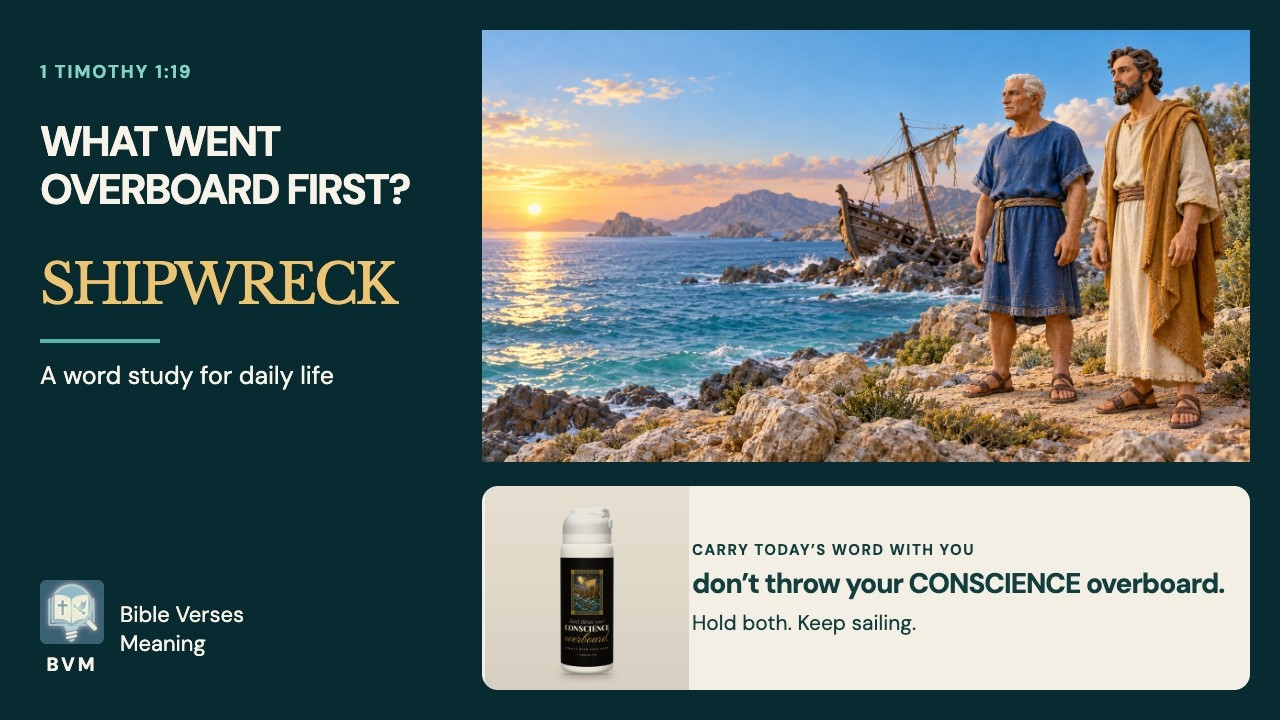
Paul’s warning begins before the wreck. Holding faith and a good conscience together helps us tell the difference between a storm we endure and a warning we refuse.
“Shipwreck” · nauageo · ναυαγέω
“Holding faith, and a good conscience; which some having put away concerning faith have made shipwreck:”
1 Timothy 1:19 · King James Version
THE COMPLETE STUDY
Five discoveries, the real app study, and Beneath the Broken Hull.

READ · REFLECT · RESPOND
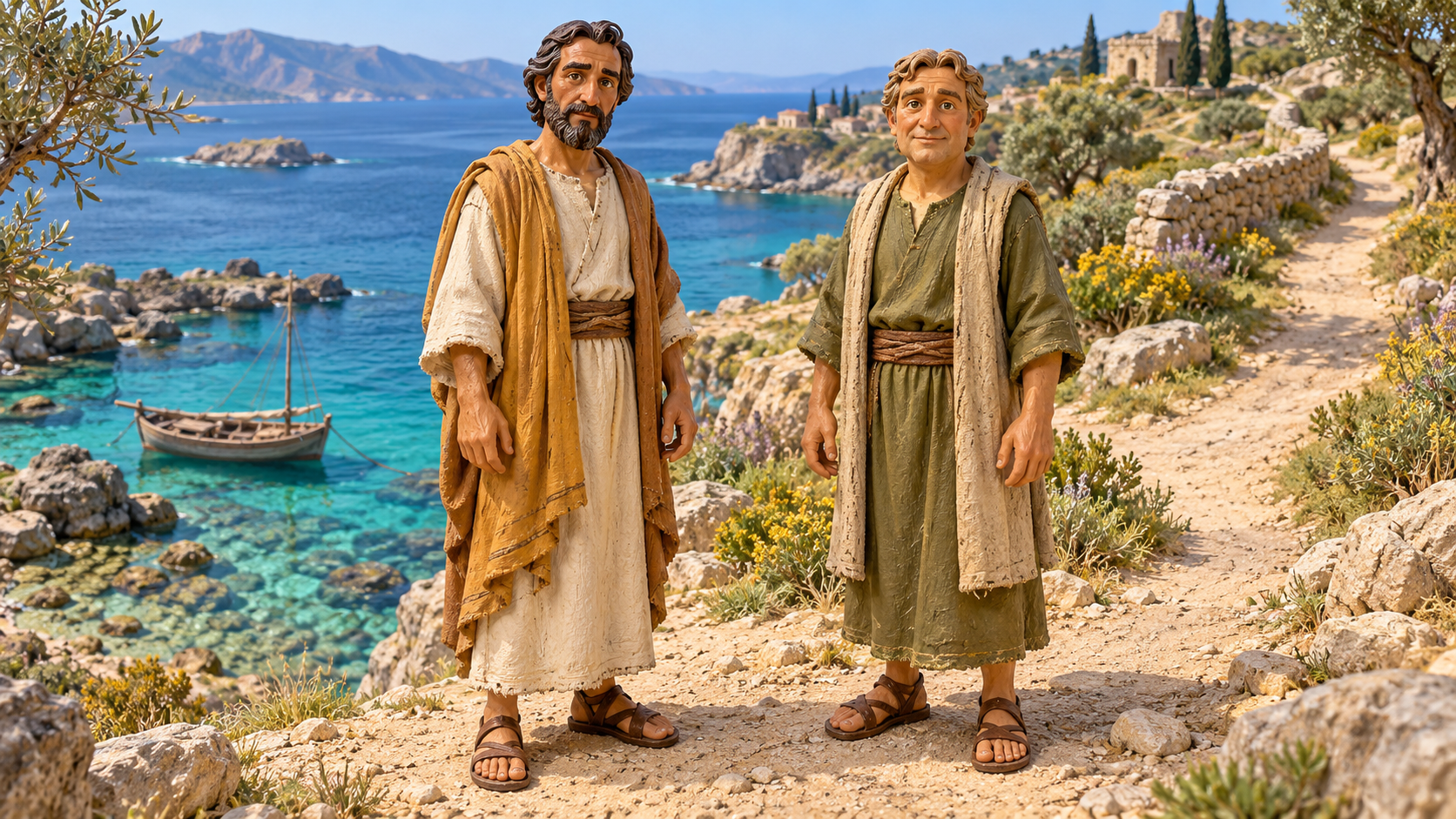
Paul does not describe an unexplained accident. He first names a good conscience, then says that some have put it away and made shipwreck concerning faith. The verb translated “put away” expresses rejection or pushing aside. The sentence connects the collapse with that refusal. It does not tell us how many days or decisions came between the two. The wider chapter describes people turning aside from love, a pure heart, a good conscience, and sincere faith. Small compromises can belong to that path, but we should not invent a timetable. The searching question is immediate: what truthful correction am I pushing away?
1 Timothy 1:5–6, 19 · rejection precedes shipwreck

Timothy is told to keep holding both faith and a good conscience. Belief and conduct belong together. A conscience is not an infallible private revelation, and every anxious feeling is not a command from God. It needs to be shaped by truth, love, and the gospel Paul is defending. Yet knowing the right words cannot replace living honestly. Where Scripture makes a duty clear, respond to it: tell the truth, keep a promise, make restitution, or seek wise correction. A good conscience is not the claim that we have never failed; it is part of a life that stops defending what needs to change.
1 Timothy 1:5, 18–19 · faith and a good conscience
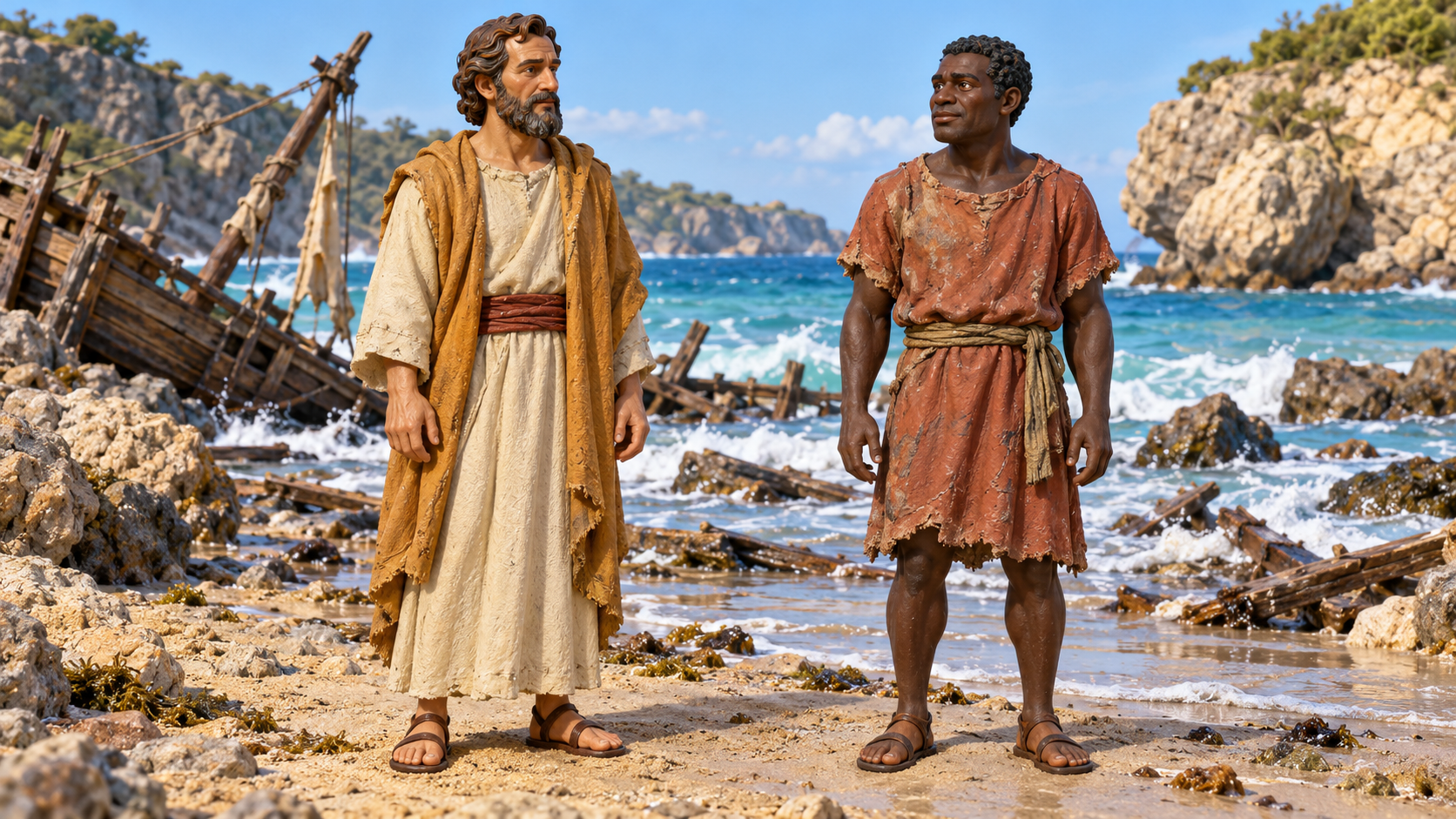
The same Greek verb, nauageo, appears in Paul’s account of literal suffering: “thrice I suffered shipwreck.” He endured real danger while continuing his ministry. Those disasters do not function as evidence that he had rejected God. By contrast, 1 Timothy 1:19 connects the spiritual wreck with rejecting conscience. The comparison keeps us from confusing grief, loss, illness, or a difficult season with moral or spiritual failure. A storm can batter a faithful person. Before you judge yourself or someone else by the wreckage around them, ask what the passage actually says. Suffering and surrendering integrity are different things.
2 Corinthians 11:25 · 1 Timothy 1:19
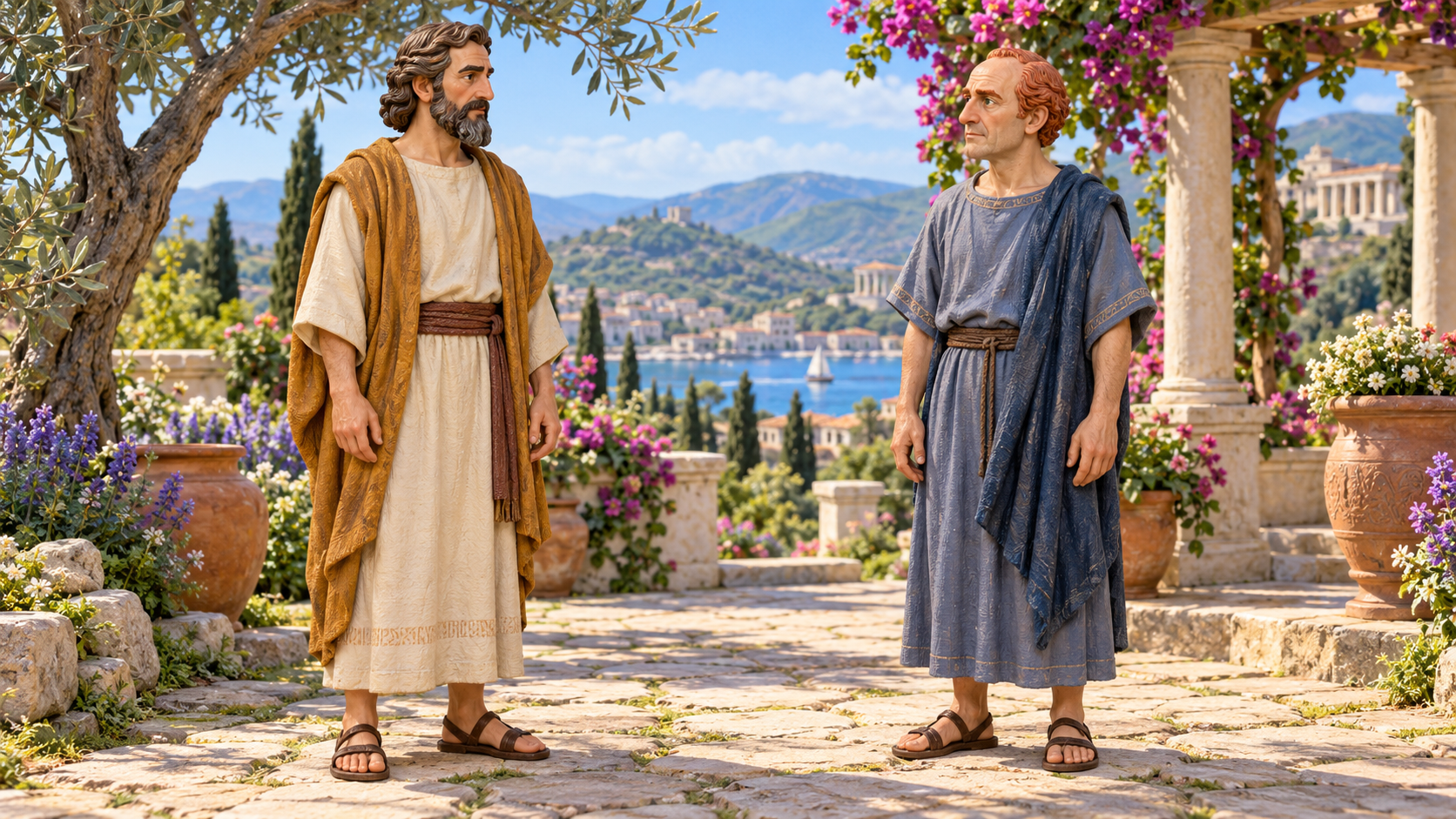
Paul names Hymenaeus and Alexander and describes a severe act of discipline. His stated purpose is that they may learn not to blaspheme. The text does not report their eventual response, and the image of a surviving sailor alone cannot guarantee anyone’s restoration. Still, the purpose clause gives correction a direction: harmful speech must stop and truth must be learned. We should not soften the seriousness of damage or turn discipline into humiliation. When we have done wrong, receiving responsible correction, taking ownership, and seeking help are better responses than denying the breach.
1 Timothy 1:20 · “that they may learn”

The practical invitation is to hold on now. Name one clear duty you have been avoiding, bring it honestly before God, and take one concrete step toward obedience. If you are enduring a storm, seek support without treating your suffering as proof that your faith is ruined. If you have caused harm, seek forgiveness and begin repair with appropriate help. Today’s song, “Beneath the Broken Hull,” gives a devotional setting for that reflection. Let its imagery send you back to Paul’s instruction: keep holding faith and a good conscience. Hope is not permission to ignore the warning; it gives us courage to respond.
1 Timothy 1:18–20 · a faithful response today
THE BOTTOM LINE
A storm around you is not the same as a conscience you have pushed away. Hold faith and a good conscience together, receive correction, and take the next honest step.
CONSCIENCE REJECTED · HARDSHIP ENDURED
| Paul’s warning | Paul’s experience |
|---|---|
| Some reject a good conscience. | Paul endures literal danger at sea. |
| The rejection is linked with shipwreck concerning faith. | The suffering occurs within his continuing ministry. |
| Receive correction and hold faith with integrity. | Do not equate hardship with abandoned faith. |
A MOMENT TO RESPOND
Where do you need endurance, and where do you need to receive correction?
A prayer: Lord, help me hold faith and a good conscience together. Give me courage to receive correction and endurance through the storms I cannot control.
TODAY’S WORD · AN EVERYDAY REMINDER
A companion to today’s study of Shipwreck in 1 Timothy 1:19: a reminder to hold faith and a good conscience together.
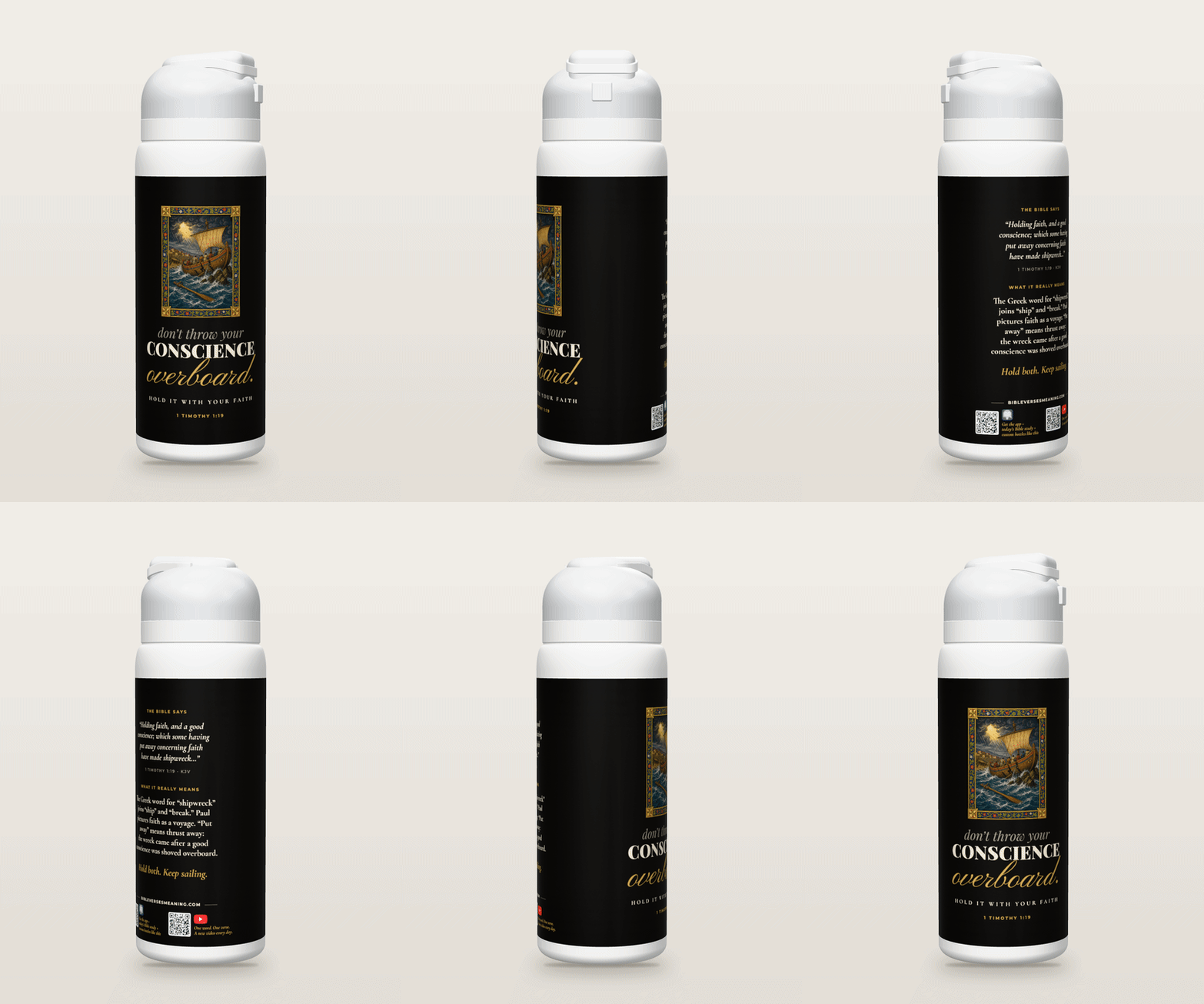
360° view · Conscience Overboard
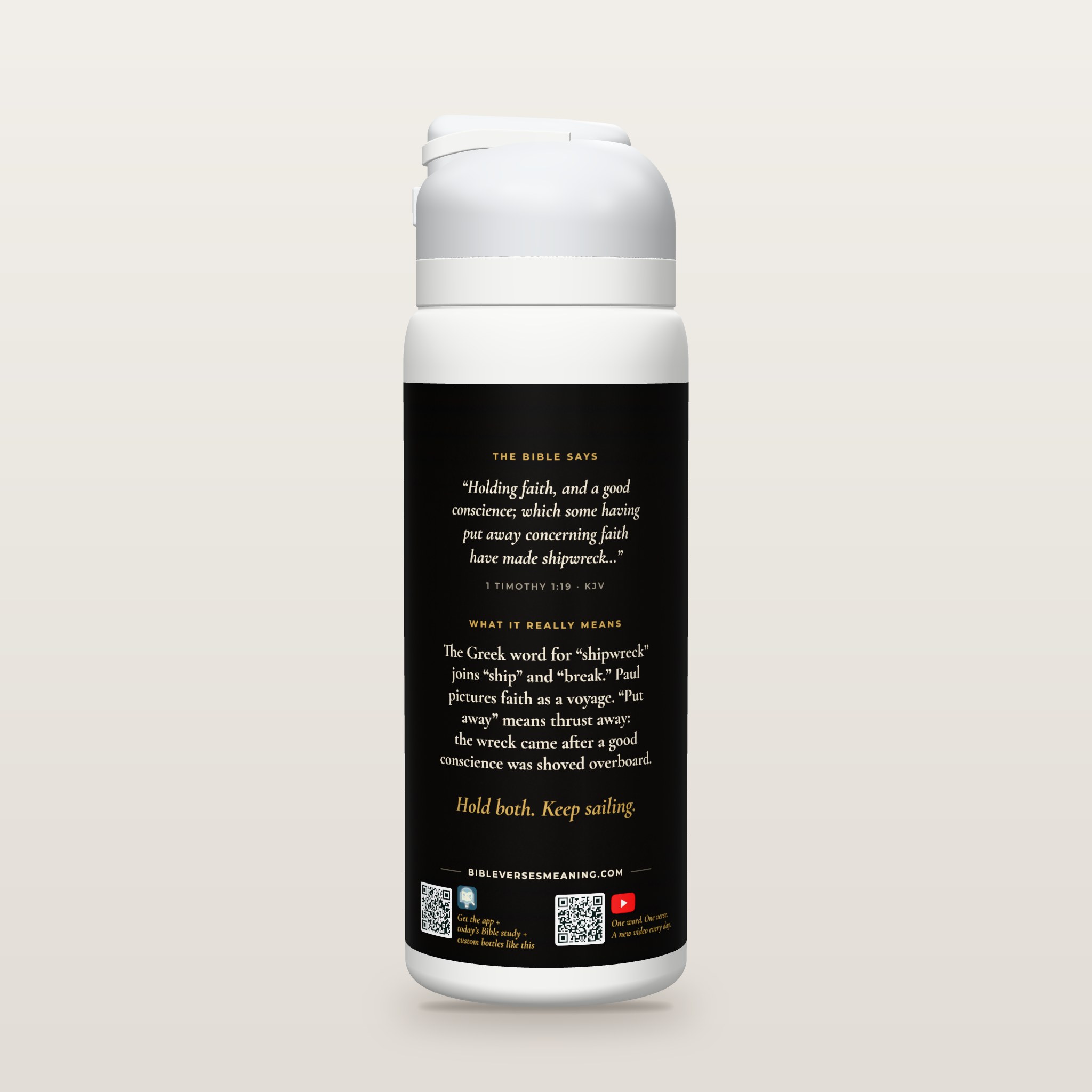
PRINTED ON THE BOTTLE
Hold both. Keep sailing.
“Holding faith, and a good conscience; which some having put away concerning faith have made shipwreck…”
1 Timothy 1:19 · KJV
An everyday reminder to receive correction and take the next honest step.
Explore today’s study bottle ↗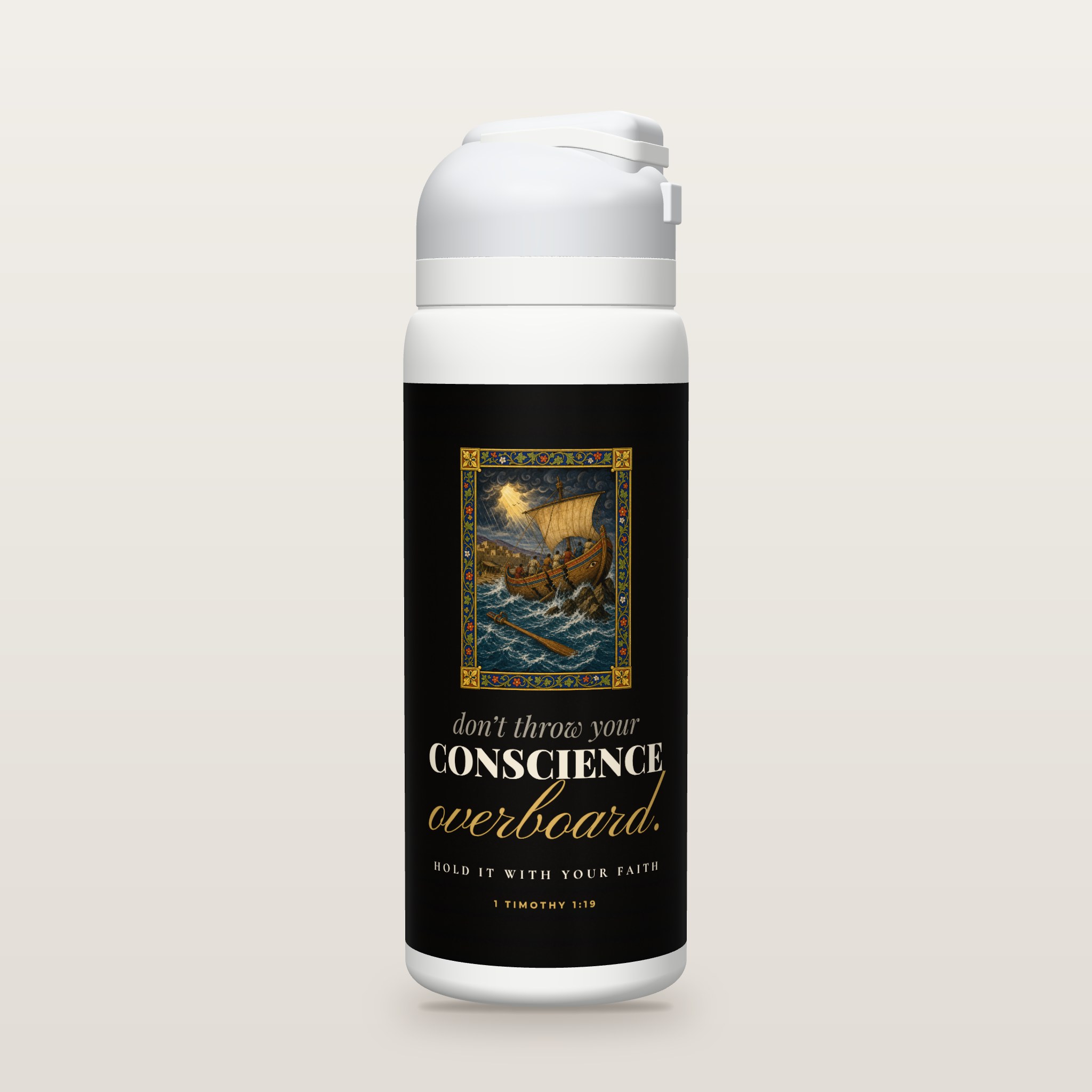

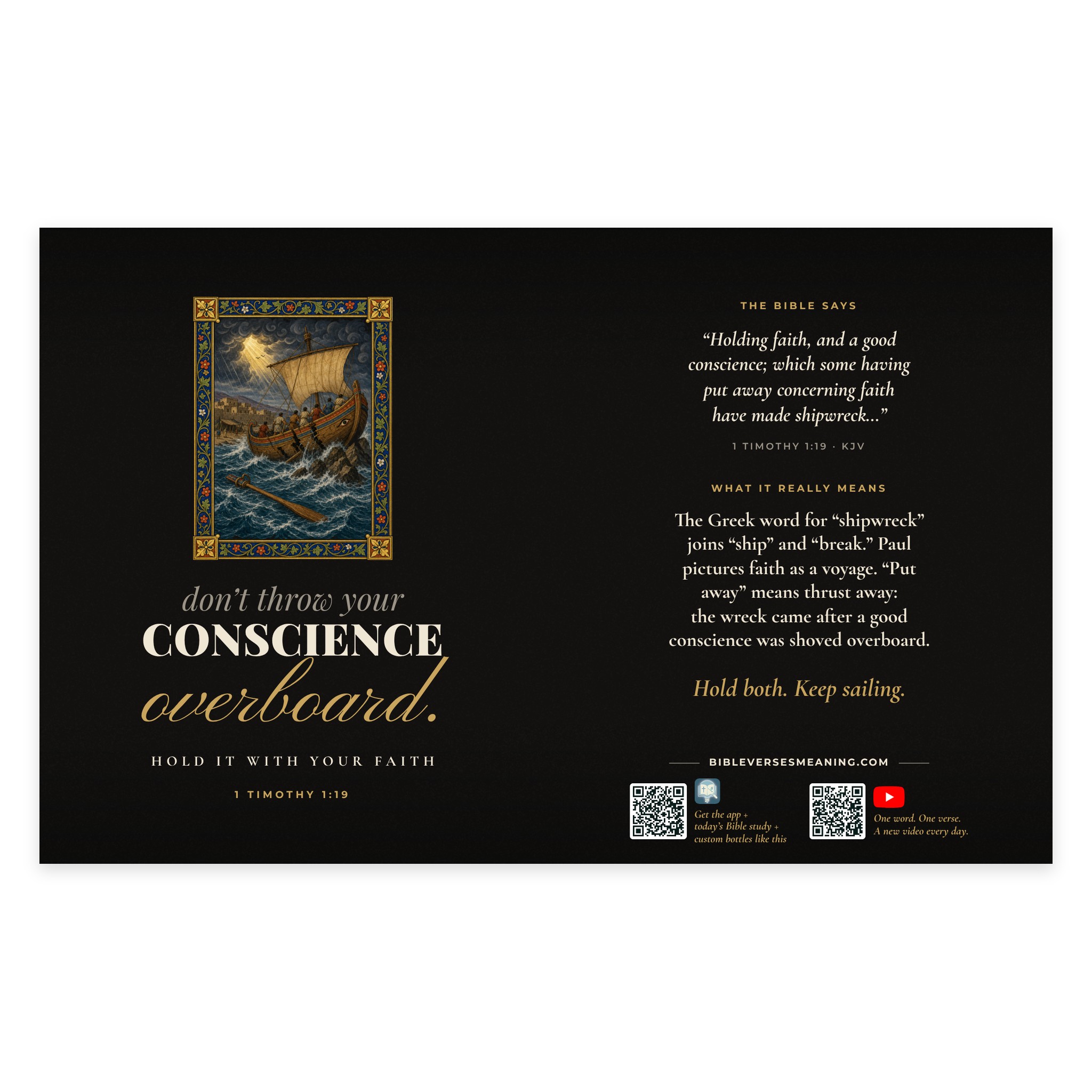
Headline: don’t throw your CONSCIENCE overboard.
Verse: “Holding faith, and a good conscience; which some having put away concerning faith have made shipwreck…”
Meaning: The Greek word for “shipwreck” joins “ship” and “break.” Paul pictures faith as a voyage. “Put away” means thrust away: the wreck came after a good conscience was shoved overboard.
Reminder: Hold both. Keep sailing.
A companion to the study, created to help you remember today’s word.
FROM BIBLE VERSES MEANING
Continue reflecting on the word, the passage, and today’s song.
📖 Word Study: shipwreck (G3489)
1 Timothy 1:19
1. Linguistic Nuance
Nauageō combines naus ("ship") and āgnymi ("to break"), literally meaning "ship-breaking." Unlike synonyms for wandering off-course (planasthai) or falling (piptō), nauageō conveys violent, catastrophic destruction. It denotes a vessel smashed against rocks, emphasizing that abandoning a good conscience is not a quiet slide, but a ruinous, violent collision.
2. Historical Context
First-century Mediterranean culture relied heavily on sea travel, making shipwreck a universally feared disaster involving financial ruin and death. Writing to Timothy in Ephesus—a prominent port city—Paul (who survived four actual shipwrecks) used an imagery his audience intimately understood: ignoring moral integrity inevitably leads to a visible, tragic collapse of one's spiritual life.
3. Practical Application
Conscience acts as an internal moral compass. When people repeatedly ignore ethical alarms, they destroy their capacity to navigate safely. Practical integrity and belief are linked; compromising internal ethics ultimately causes the structural failure of one's faith and character.
— Bible Verses Meaning App
💡 Bible Insight
Q: In 1 Timothy 1:19, Paul urges Timothy to keep "holding faith, and a good conscience; which some having put away concerning faith have made shipwreck (nauageo)." Is the shipwreck a sudden catastrophe, or the slow result of having first thrust a good conscience overboard? And what does it suggest that Paul uses the same word in 2 Corinthians 11:25, "thrice I suffered shipwreck," for literal wrecks he survived and kept sailing after?
OVERVIEW
In 1 Timothy 1:19, Paul describes spiritual "shipwreck" (nauageo) as the cumulative result of discarding a good conscience. The context demonstrates that this collapse is not an unpredictable, sudden event, but the outcome of a process where individuals "swerved" and "turned aside" from a pure heart and unfeigned faith (1 Timothy 1:5–6). By actively thrusting away moral conscience, their faith subsequently collapses. Conversely, Paul uses the identical word nauageo in 2 Corinthians 11:25 to detail physical perils: "thrice I suffered shipwreck, a night and a day I have been in the deep." Paul survived these literal maritime disasters and continued his labors. Comparing these uses shows that whereas physical shipwrecks are external hazards endured through perseverance, spiritual shipwreck is a self-inflicted disaster caused by internal moral compromise. Nevertheless, Paul's corrective action regarding Hymenaeus and Alexander 1 Timothy 1:20 indicates that even spiritual discipline aims at instruction "that they may learn not to blaspheme."
KEY BIBLICAL PASSAGES
1 Timothy 1:5–6: "Now the end of the commandment is charity out of a pure heart, and of a good conscience, and of faith unfeigned: From which some having swerved have turned aside unto vain jangling." This passage establishes that genuine faith and moral conscience are inextricably linked, showing that swerving from ethical integrity leads directly to empty speculation.
1 Timothy 1:19–20: "Holding faith, and a good conscience; which some having put away concerning faith have made shipwreck: Of whom is Hymenaeus and Alexander; whom I have delivered unto Satan, that they may learn not to blaspheme." Paul warns that rejecting a good conscience causes faith to shipwreck, citing two specific men who faced stern discipline so they might be corrected.
2 Corinthians 11:25: "Thrice was I beaten with rods, once was I stoned, thrice I suffered shipwreck, a night and a day I have been in the deep." Here, nauageo refers to literal nautical accidents Paul endured while fulfilling his ministry.
Together, these passages contrast outward life trials, which can be survived without losing faith, with the deliberate casting off of conscience, which destroys faith from within.
PRACTICAL WISDOM
The textual evidence provides clear guidance on maintaining personal spiritual integrity. First, spiritual shipwreck is prevented by guarding one's moral compass ("a good conscience") alongside explicit beliefs ("holding faith"). Because turning aside begins subtly with "vain jangling" 1 Timothy 1:6 and ignoring conscience, individuals must address minor moral compromises immediately before they damage faith. For example, in professional or personal matters, ignoring internal warnings about honesty gradually erodes conviction.
Second, the passages distinguish between external hardships and internal moral failures. Sufferings, setbacks, or literal disasters—such as Paul’s physical shipwrecks in 2 Corinthians 11:25—do not equate to spiritual ruin. External adversity tests endurance, whereas internal rejection of conscience causes destruction.
Finally, when spiritual failure occurs, the purpose of discipline (as seen with Hymenaeus and Alexander in 1 Timothy 1:20) is educational rather than merely punitive, intended to teach individuals to cease harmful speech and align their conduct with truth.
— Bible Verses Meaning App
The song’s shipwreck imagery invites reflection on conscience, faith, failure, and hope. Read it devotionally alongside Paul’s warning: external suffering is not proof of abandoned faith, while rejecting conscience calls for honest correction.
The water was smooth when I started out.
Traded my compass for a shadow of doubt.
Ignored the small light burnin' bright in my chest.
Thought I could steer through the dark with the best.
But that quiet voice ain't something you ignore.
Not when you're driftin' away from the shore.
It's a ship breakin'.
Violent, heavy wreck.
The timber is splittin'.
I'm breakin' my neck.
I'm breakin' my neck.
Crashing on the rocks, nothing left to say.
I buried my conscience.
right under this wave.
I watched the old landmarks just fade from my sight.
Told my own spirit that wrong was just right.
A hole in the hull that I didn't care to mend.
Now I am lookin' right at the bitter end.
You can't play with fire and not expect to burn.
There's a point of no return.
It's a ship breakin'.
Violent, heavy wreck.
The timber is splittin'.
I'm breakin' my neck.
I'm breakin' my neck.
Crashing on the rocks, nothing left to say.
I buried my conscience.
Oh yeah, right under this wave.
How'd I get here?
Lost in the deep.
I had the truth in my hands and I let it slip right through.
Now there's no anchor left, nothing to hold me, just the tide.
It's a ship breakin'.
Violent, heavy wreck.
Oh, the timber is splittin'.
I'm breakin' my neck.
I'm breakin'
my neck.
Oh, crashing on the rocks, nothing left to say.
I buried my conscience.
Oh, right
under this wave.
Gone.
It's all gone.
Watch out, brother.
Keep your hand on the wheel.
Don't lose the light.
Don't lose it.
Try Bible Verses Meaning free for 7 days and discover what the original words really mean.