
Word Study: “Be still” (phimoo)
Mark 4:39 · Strong’s G5392
Be still — The Short Study
Today's Revelations
- 1A command, not a wish. Jesus does not negotiate with the wind. He rebukes it and says to the sea, “Peace, be still.” The word translated “be still” is pephimoso, a perfect passive imperative of phimoo, “to muzzle” or “silence.” The image is vivid: the threatening noise is brought under restraint. The form presents the sea as commanded into a silenced condition. This is a forceful word in its context, though phimoo is not limited to beasts or exorcisms. Mark’s emphasis falls on the effective authority of the speaker: the wind ceases and a great calm follows.
- 2One voice over every threat. Mark 1:25 and Mark 4:39 share the language of rebuking and silencing. Jesus commands an unclean spirit in the synagogue and later commands the sea. Both use the same Greek verb, phimoo, though the inflected forms differ: phimotheti in Mark 1:25 and pephimoso in Mark 4:39. The echo portrays a threatening storm as something Jesus can subdue. It may evoke the biblical picture of chaotic waters, but the shared word alone does not prove a demon caused this storm. The secure conclusion is striking enough: neither the spiritual threat nor the natural one can resist His command.
- 3Creation answers its Lord. The story moves from a great storm to a great calm. Jesus does more than calm frightened feelings: Mark says the wind actually ceases. This scene recalls Old Testament passages in which God rules the sea and stills its waves. Psalm 107 describes sailors crying to the Lord, who makes the storm calm; Psalm 89 praises God’s rule over raging waters. These echoes invite us to consider who Jesus is. The sea’s response reveals an authority greater than the danger that had seemed overwhelming. His presence in the boat is the decisive fact.
- 4The deepest question is who He is. After the wind falls silent, the disciples are still filled with awe. They ask, “What manner of man is this, that even the wind and the sea obey him?” Jesus has also asked why they are afraid and whether they have faith. The miracle therefore leads beyond relief to recognition. Faith grows as their view of Jesus grows. Their earlier cry, “carest thou not that we perish?” can become a different question: who is the One with us? The passage makes room for honest fear while calling the disciples to trust the person whose word the sea obeys.
- 5Bring your fear to Him. The disciples wake Jesus in their distress, and He responds. Our practical response begins with bringing real fear to Him in prayer, remembering His authority, and taking the next wise, faithful step. A pause, a healthy boundary, or help from another person can support that response; none is a formula that gives us Jesus’ command over nature. This miracle is not a promise that every crisis ends instantly or that continuing anxiety proves failed faith. It directs our confidence toward Christ. We can entrust what we cannot control to Him while caring responsibly for ourselves and our neighbors.
The Bottom Line
The storm is real, but it does not have the final word. Bring your fear to Jesus, trust His authority, and take the next faithful step.
Song: Muzzle the Storm · Muzzle the Storm develops the passage’s image of threatening chaos brought under a higher command, moving toward calm and rest. Its dramatic first-person lines are poetic reflection, not additional Scripture or a promise that believers can control every crisis. Read the song through Mark’s focus on Jesus, the One whose voice the sea obeys.
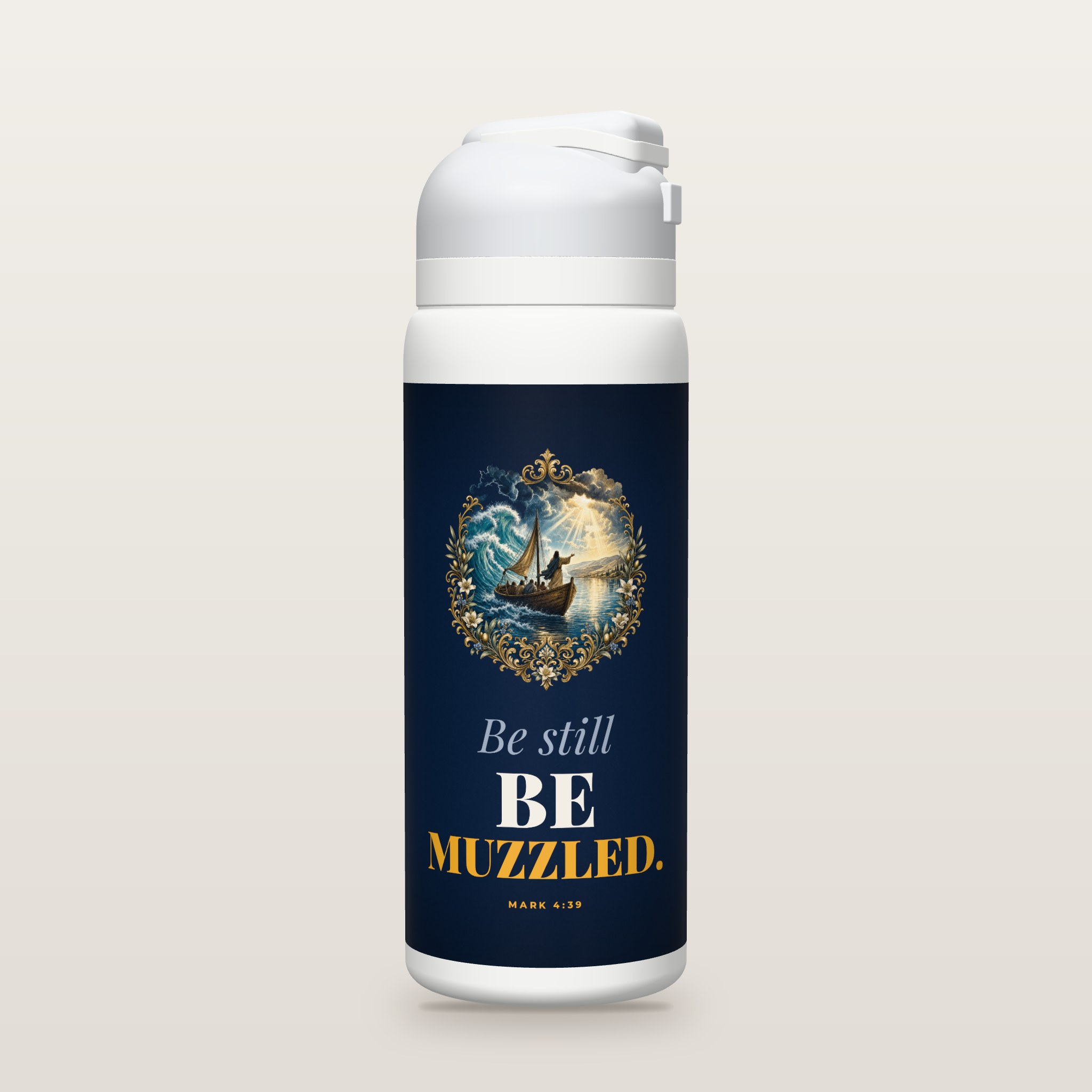
CARRY TODAY’S WORD WITH YOUBE MUZZLED.
Your storm answers to Him.
Explore the October 5 study bottle →