
Word Study: “Sent out” (tul)
Jonah 1:4 · Strong’s H2904
Sent out — The Short Study
Today's Revelations
- 1The wind is deliberately hurled. The LORD is the subject of Jonah 1:4. The Hebrew verb behind “sent out,” Strong’s H2904, means to hurl or cast. This is a forceful action, not a casual release. The storm does not arrive as a rival power that surprises God. Within this narrative, the One Jonah is fleeing commands the sea that carries him. Jonah can buy passage, but he cannot make creation a place beyond the Creator’s reach.
- 2One verb follows the whole crisis. The same Hebrew verb links the LORD hurling the wind in verse 4, the sailors casting cargo in verse 5, Jonah asking to be cast into the sea in verse 12, and the sailors doing so in verse 15. What begins with a divine interruption reaches the prophet himself. The repetition draws attention to the real issue: lightening the ship cannot resolve Jonah’s flight. Follow the repeated word through the story instead of stopping at an isolated dictionary definition.
- 3Running never affects only the runner. The sailors fear for their lives while Jonah sleeps below deck. They pray, unload cargo, question him, and then row hard to return to land before finally releasing him into the sea. Their danger exposes the human cost of his escape. Jonah acknowledges that the storm has come because of him. Our application is to own the consequences of the responsibilities we avoid, without blaming every sufferer for a crisis or using this unique event as a formula for judging others.
- 4The confrontation opens toward mercy. Jonah 1:4 itself describes divine action and serious danger; it does not explicitly name the storm mercy. The wider story supplies more: the sea becomes calm, the sailors worship the LORD, a great fish preserves Jonah, and God calls him a second time. Read in that sequence, the interruption is both a confrontation with disobedience and part of God’s continuing pursuit. Mercy does not make Jonah’s flight harmless. It makes a return possible after he has run.
- 5Return to the next faithful step. When the word of the LORD comes again, Jonah goes to Nineveh. The immediate response to a known duty is obedience, not a demand to decode every storm first. Read the passage honestly, name one responsibility you have been avoiding, and take a concrete step toward it. Seek help where needed. This account tells us who sent Jonah’s storm; it does not reveal the cause of every illness, loss, or disaster. Let it invite humble self-examination and trust, rather than confident explanations of another person’s pain.
The Bottom Line
You cannot outrun God by changing your destination. Own the responsibility you have avoided, receive His mercy, and take the next faithful step.
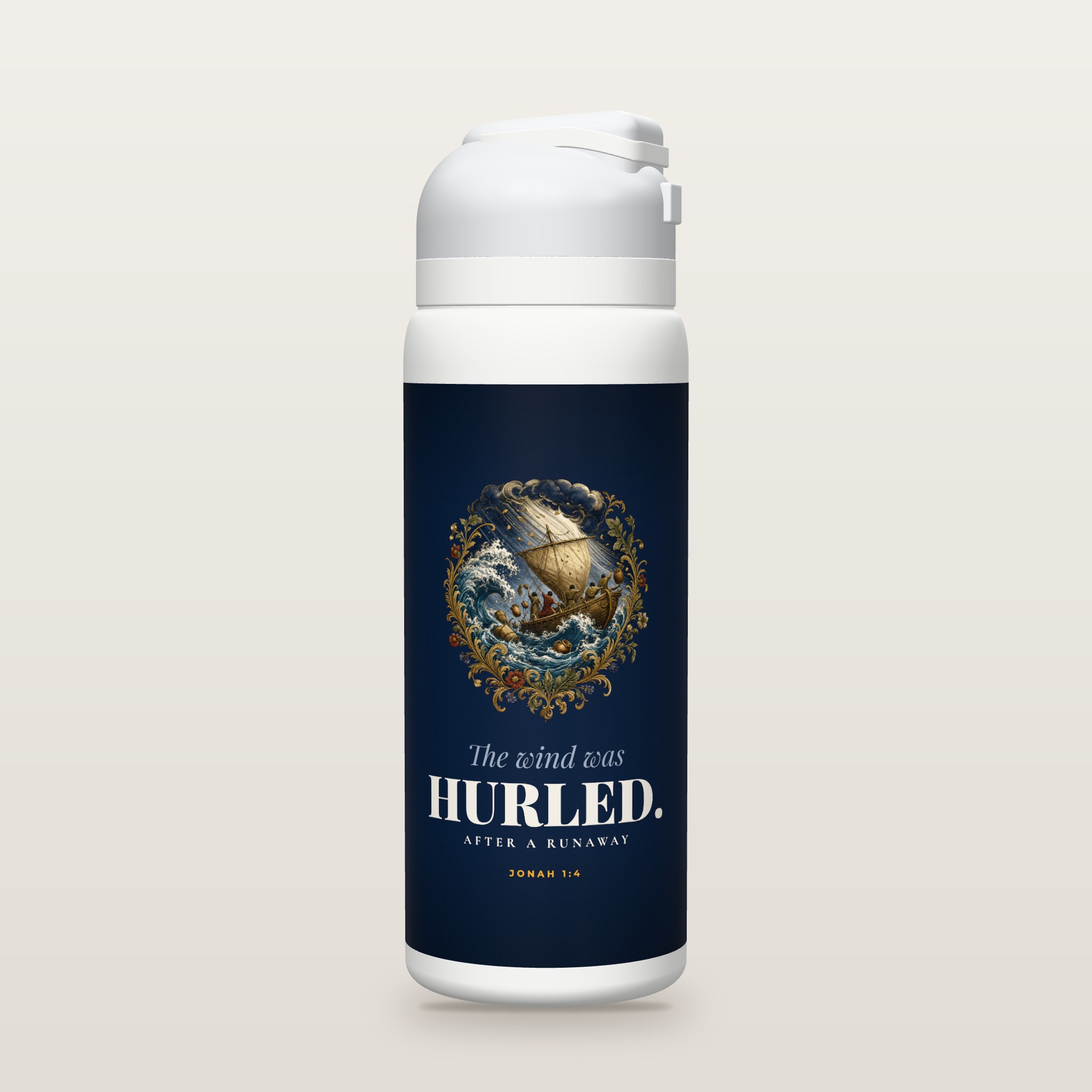
CARRY TODAY’S WORD WITH YOUThe wind was HURLED.
The storm came looking for him.
Explore the October 12 study bottle →