
Word Study: “Whirlwind” (suphah)
Nahum 1:3 · Strong’s H5492
Today's Revelations
- 1The storm is within God’s rule. The Hebrew suphah, Strong’s H5492, names a storm-wind or whirlwind. It evokes force that people cannot control. Yet Nahum’s sentence gives the decisive perspective: the LORD has His way in it. The vision concerns Nineveh, the seat of Assyrian power. Its frightening strength does not place it beyond God’s authority. The whirlwind can picture judgment and sovereign purpose together. The word itself does not promise that every disruption will cleanse our lives; the passage tells us who rules the storm.
- 2Patience comes before the whirlwind. Before the storm imagery, Nahum says the LORD is slow to anger and great in power. His patience is not inability, and His power is not a loss of self-control. The same sentence says He will not acquit the wicked. Read the three statements together: God is patient, powerful, and just. Delay does not mean oppression is invisible to Him. Nor does this verse give us a timetable for the resolution of every wrong. It calls us to trust His character without excusing evil.
- 3The clouds are only dust beneath Him. Clouds that fill our horizon are pictured as the dust of God’s feet. This is poetic language of divine majesty, not a claim that we can map His movements or explain every storm. The following verses picture seas drying and mountains trembling before Him. Creation’s largest powers do not rival their Maker. When fear fills our field of vision, Nahum enlarges our view of God. We may not understand what is happening, but our limited sight is not the measure of His authority.
- 4His goodness is a refuge in trouble. Nahum’s severe words are followed by a clear assurance: the LORD is good, a stronghold in the day of trouble, and He knows those who trust Him. The refuge is God Himself. Trust does not require pretending that the trouble is small, and this promise does not guarantee a life untouched by suffering. It gives the frightened a place to turn. Bring your fear honestly to Him, remain faithful to what is right, and receive practical help rather than facing hardship alone.
- 5God’s justice breaks the oppressor’s yoke. The chapter speaks directly to Judah’s oppression: God will break the enemy’s yoke and burst its bonds. Judgment on violent power means release for those it has crushed. This is more specific than a general promise of personal reinvention. We can respond by refusing to normalize cruelty, supporting people who are burdened, and trusting God without taking vengeance into our own hands. “Wild Liberty” gives that longing a personal voice; its new beginning is a devotional response, not a guarantee that every painful event was sent to improve us.
The Bottom Line
The whirlwind does not outrun God’s rule. Trust His patient justice, seek refuge in His goodness, and stand beside those who are burdened.
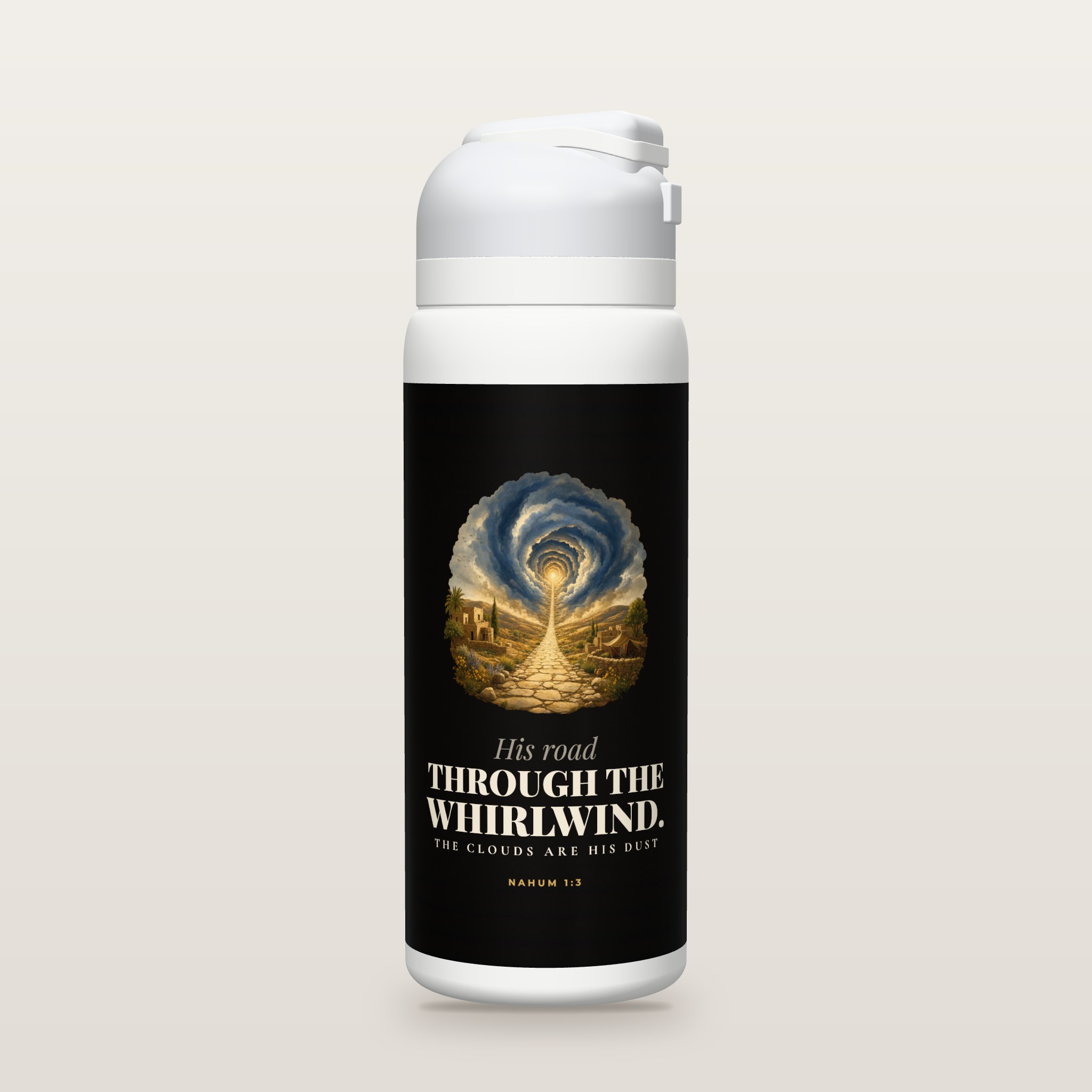
CARRY TODAY’S WORD WITH YOUHis road THROUGH THE WHIRLWIND. THE CLOUDS ARE HIS DUST
Slow to anger, never out of control.
Explore the October 17 study bottle →