
Word Study: “Hap” (miqreh)
Ruth 2:3 · Strong’s H4745
Hap — The Short Study
Today's Revelations
- 1Hap describes what Ruth could not foresee. Hap is an older English word for a happening or chance occurrence. The Hebrew word behind it, miqreh, Strong’s H4745, can describe an occurrence, chance, or what befalls someone. Ruth 2:3 pairs it with a related verb: she happened upon this particular field. The word itself is not a dictionary definition of divine guidance. The larger story invites that reading. Ruth does not appear to have chosen the field because she knew its owner’s family connection. What she could not arrange or see becomes the setting for extraordinary kindness.
- 2Faithfulness starts with the work in front of you. Before the unexpected meeting, Ruth asks Naomi for permission to glean. She is a widow and a foreigner who needs food, and she takes a practical step to provide for them both. Israel’s gleaning provisions made room for the poor and the stranger, though Ruth still needed protection and a willing welcome. Trust does not require her to remain passive. Her example invites us to do the honest task available today: apply, work, care, ask for help, or offer it. Ordinary effort is not a bargain that obligates God to give us the outcome we want. It is one way faith becomes visible.
- 3The story lets us see more than Ruth sees. Verse 1 has already introduced Boaz as a relative of Naomi’s late husband. When Ruth enters his field in verse 3, the reader recognizes a connection she has not yet discovered. Then verse 4 announces, “And, behold, Boaz came from Bethlehem.” The timing brings the landowner and the gleaner into the same scene. Read with the whole account, that convergence quietly suggests providence. We need not claim that the word behold proves a miracle or that every unexpected meeting carries a hidden message. Here the narrator draws our attention to a particular encounter whose significance unfolds through the story.
- 4Quiet care becomes concrete kindness. Boaz does more than arrive at the right moment. He tells Ruth to remain with his workers, directs the young men not to harm her, offers access to water, and later ensures she has grain to gather. His blessing names the LORD as the One under whose wings she has sought refuge. Naomi’s response recognizes kindness that has not abandoned the living or the dead. The story’s hope takes material form through protection, food, and generous people. As you look for God’s care, also ask how your choices might become care for someone else. Notice the outsider; make the next welcome safer and more generous.
- 5Take the next step without demanding the whole map. Ruth leaves home to gather food, not with a complete picture of her future. The day’s unexpected provision belongs to a story that will reach far beyond this field. We can receive that encouragement without turning Ruth’s experience into a promise of sudden romance, wealth, or an explanation for every painful event. Today’s song, “A Beautiful Collision,” invites reflection on an unplanned meeting and God’s quiet care. Let it return you to the passage: do the good you can see, receive kindness with gratitude, and leave room for a future you cannot yet understand.
The Bottom Line
Do the faithful thing in front of you. Receive unexpected kindness with gratitude, offer it generously, and trust God with the part of the story you cannot yet see.
Watch the complete Hap Bible study →
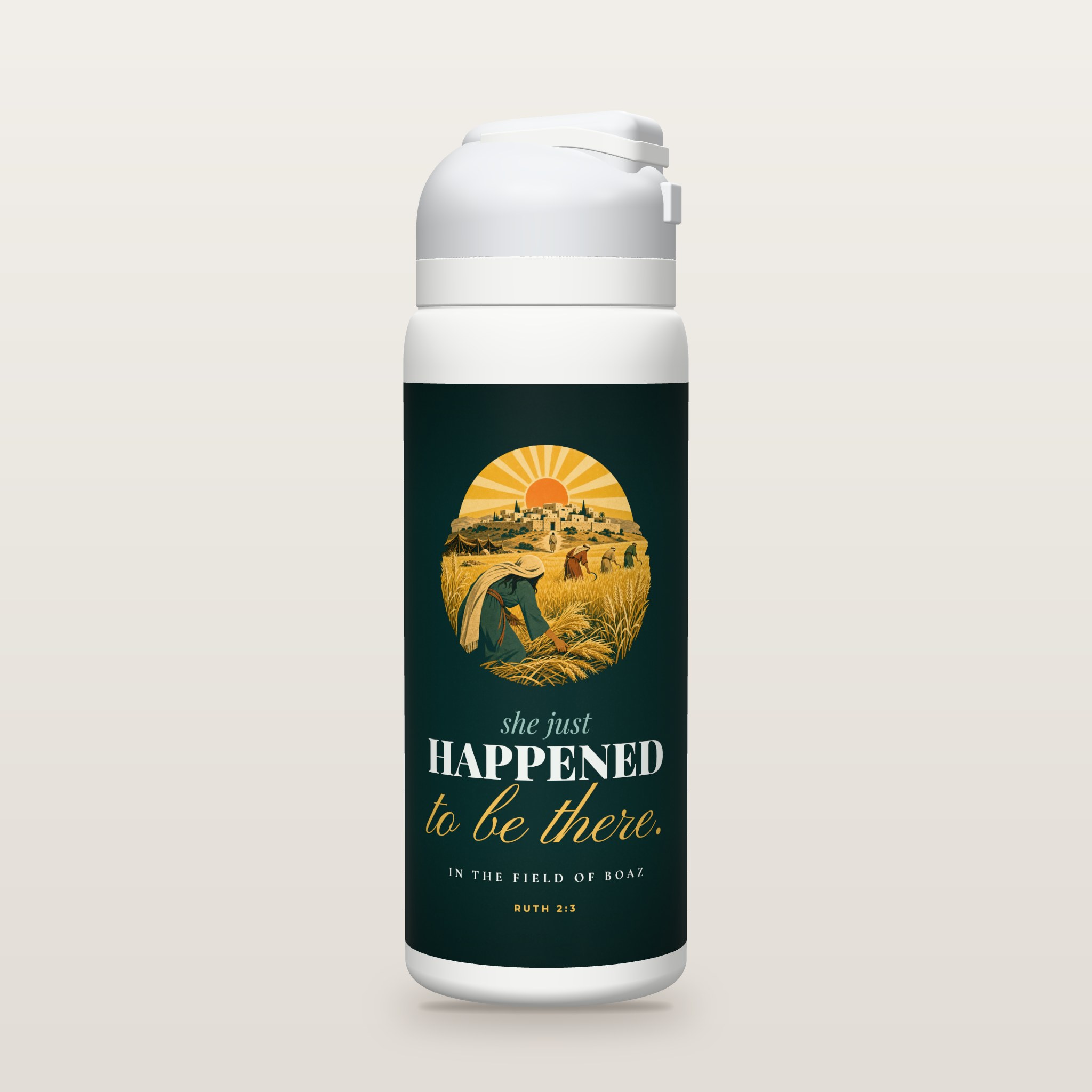
CARRY TODAY’S WORD WITH YOUshe just HAPPENED to be there.
Her choice. His quiet hand.
Explore the October 20 study bottle →