
Word Study: “At ease” (sha’anan)
Amos 6:1 · Strong’s H7600
Today's Revelations
- 1Ease takes its meaning from its setting. The Hebrew adjective sha’anan describes being at ease, quiet, or secure. In Amos 6:1, that ease is complacent: the surrounding verses expose pride, luxury, and indifference. Yet Isaiah 33:20 uses the same word for Jerusalem as a quiet habitation. The word is not inherently a condemnation of every peaceful moment. Its setting tells us what sort of security is in view. The app’s Word Study emphasizes the negative force in Amos; the broader comparison keeps us from treating that contextual warning as the word’s only possible meaning. Rest can be received with gratitude. The danger is a settled ease that no longer listens to God.
- 2A strong city can shelter a false confidence. Amos names both Zion and the mountain of Samaria. These important centers could make their leading people feel protected by place, status, and power. The chapter later exposes their boasting in their own strength. God’s warning reaches beneath outward security to the trust holding it up. A sturdy home, a healthy account, or a respected role can be a real gift without becoming an ultimate refuge. Ask what you would cling to if those supports shifted. The passage does not ask us to manufacture insecurity; it calls us to recognize how quickly a good provision can become an excuse for self-reliance.
- 3The test of comfort is whether we still grieve. Amos describes luxurious beds, rich food, music, and wine. The piercing conclusion is that the comfortable are not grieved for the affliction of Joseph. Joseph here points to the people of Israel; the concern is a community’s ruin, not an isolated report about the patriarch. The problem is more than owning pleasant things. It is enjoying them while remaining unmoved by what is breaking around us. This warning invites a concrete examination: whose pain have I stopped noticing? A heart resting in God can still lament, listen, and respond. Comfort becomes dangerous when it trains us to look away.
- 4True quietness belongs with justice and dependence. Isaiah’s quiet habitation appears in a passage that also describes righteous conduct: speaking honestly, rejecting oppressive gain, and refusing bribes. Its vision of security culminates in the Lord as judge, lawgiver, and king. Read these together. Peace grounded in God does not require us to become indifferent to how others are treated. Nor is this a technique for earning a trouble-free life. It is a portrait of life under God’s rule, where integrity and trust belong together. A quiet conscience cannot be purchased by pushing someone else into distress. Receive rest as a gift that strengthens faithful living.
- 5Let rest make you ready to love. Amos’s warning and Isaiah’s promise call for a response beyond feeling guilty about comfort. We can enjoy needed rest while placing our confidence in God and keeping our attention open to our neighbors. Begin small: name one source of false confidence, notice one person carrying a burden, and take one practical step of care. Today’s song, “Cities of Clay,” provides a devotional response to the study. Let its poetic imagery prompt prayer and action while allowing the biblical passages to govern the teaching. We need neither restless self-protection nor numb ease. We need a settled trust that leaves room for compassion.
The Bottom Line
Rest in God without becoming numb to your neighbor. Let the security you receive become room to notice, grieve, and help.
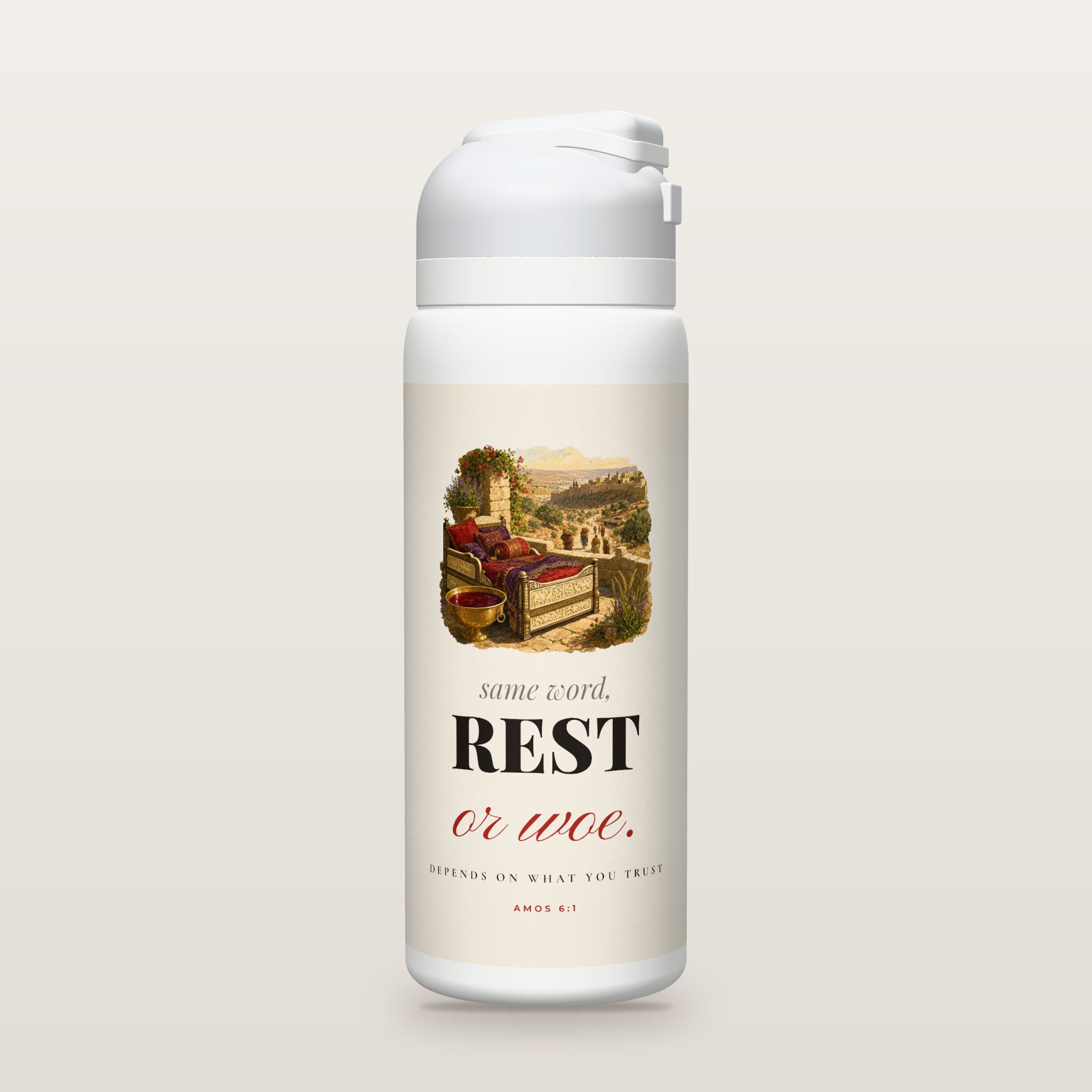
CARRY TODAY’S WORD WITH YOUsame word, REST or woe.
Rest in God. Keep seeing the hurting.
Explore the October 24 study bottle →