
Word Study: “Arms” (zeroa)
Deuteronomy 33:27 · Strong’s H2220
Arms — The Short Study
Today's Revelations
- 1An arm is a picture of strength put to work. The Hebrew word zeroa, H2220, can name an arm or shoulder and can also picture strength. In Deuteronomy, God’s arm is an image of his effective power. Yet the noun alone does not mean constant combat or exclude gentle care. Its surrounding words tell us how that strength is acting. Here the arms are everlasting and underneath; in Deuteronomy 26:8 the arm is outstretched in deliverance. Keep the word with its sentence. The app’s emphasis on active strength opens an important connection, while the complete passage also lets us hear the comfort of being upheld.
- 2Underneath means weakness is not the whole story. Moses speaks this blessing to Israel before his death. Their future would involve change and uncertainty, but their refuge was the eternal God. The picture of arms underneath locates their security beyond the strength they could muster for themselves. It does not require us to imagine a literal divine body. It tells us who sustains the people. For a weary reader, this is an invitation to bring weakness into prayer without pretending to be unbreakable. Trust is not a refusal of help, rest, or wise action. It is the confession that our own stamina is not the deepest support beneath our lives.
- 3The refuge is also the defender. The verse continues beyond the familiar phrase about everlasting arms: God thrusts out the enemy before Israel. The closing blessing also calls the Lord their shield and sword. Support and decisive action belong to the same portrait of divine help. These words address Israel within its covenant and the setting of the land; they are not permission to label personal opponents as enemies God must destroy for us. Their devotional force is that God’s care is neither indifference nor helpless sympathy. We can entrust real danger and injustice to him while pursuing faithful, wise responses rather than revenge.
- 4Remembered rescue gives present trust a history. Deuteronomy 26:8 recalls the Lord bringing Israel out of Egypt with a mighty hand and an outstretched arm. It uses the same Hebrew word for arm found in the blessing. This confession belongs to the presentation of firstfruits: the people remember affliction, their cry, and God’s deliverance as they give thanks. The arms underneath are not an unfamiliar source of security. Israel’s story has already shown the Lord acting for them. Remembering does not force a new crisis to end on our schedule. It anchors gratitude and hope in God’s faithfulness rather than in the changing strength of our feelings.
- 5Being held makes room for a faithful next step. The blessing ends by celebrating Israel as a people saved by the Lord. Their deepest identity is received rescue, not self-made invulnerability. We can respond by naming a burden, recalling a concrete mercy, and taking the next responsible step with help where needed. Today’s song, “Foundation of Stone,” gives energetic poetic expression to this sustaining and delivering strength. Its stone foundation and battle imagery are devotional language, not additional definitions of the Hebrew word or promises that every obstacle will disappear. Let the music send you back to the passage: the arm that fights also holds.
The Bottom Line
The strength that delivered Israel is the strength Moses places underneath them. Bring your weakness to God, remember his faithfulness, and take the next faithful step.
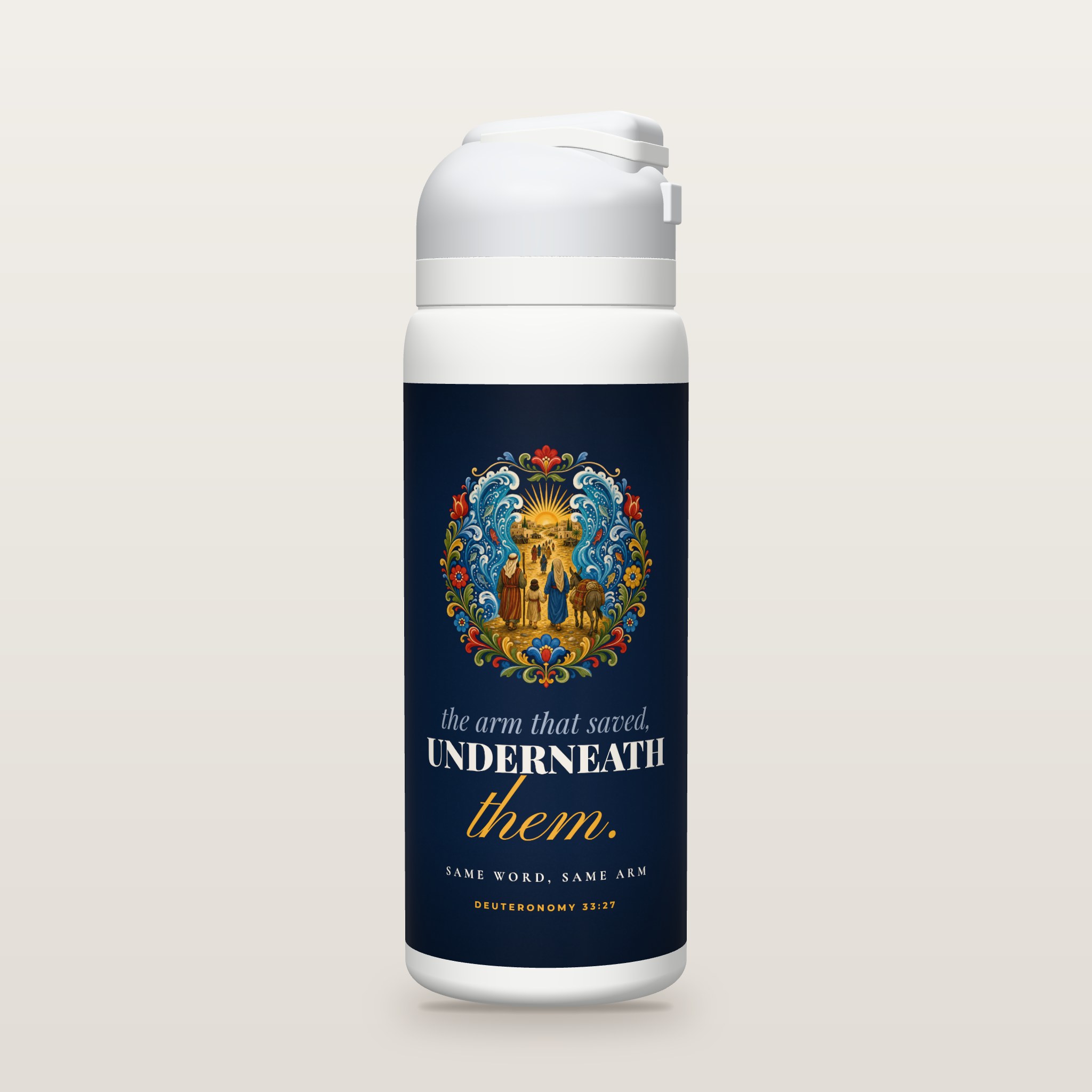
CARRY TODAY’S WORD WITH YOUthe arm that saved, UNDERNEATH them.
The arm that fights also holds.
Explore the October 25 study bottle →