Daily studies that reveal the original Hebrew and Greek meanings behind Scripture. No seminary required — just you, your phone, and 15 minutes.
1 SAMUEL 25:29 · STRONG’S NUMBER H6872
An insult nearly drove David to bloodshed. Abigail used the picture of a safely tied bundle to remind him who held his life—and why he could leave revenge with God.
“Bundle” · tseror · צְרוֹר
“Yet a man is risen to pursue thee, and to seek thy soul: but the soul of my lord shall be bound in the bundle of life with the LORD thy God; and the souls of thine enemies, them shall he sling out, as out of the middle of a sling.”
1 Samuel 25:29 · King James Version
THE COMPLETE STUDY
Five discoveries, the real app study, and Seams of Grace.

READ · REFLECT · RESPOND
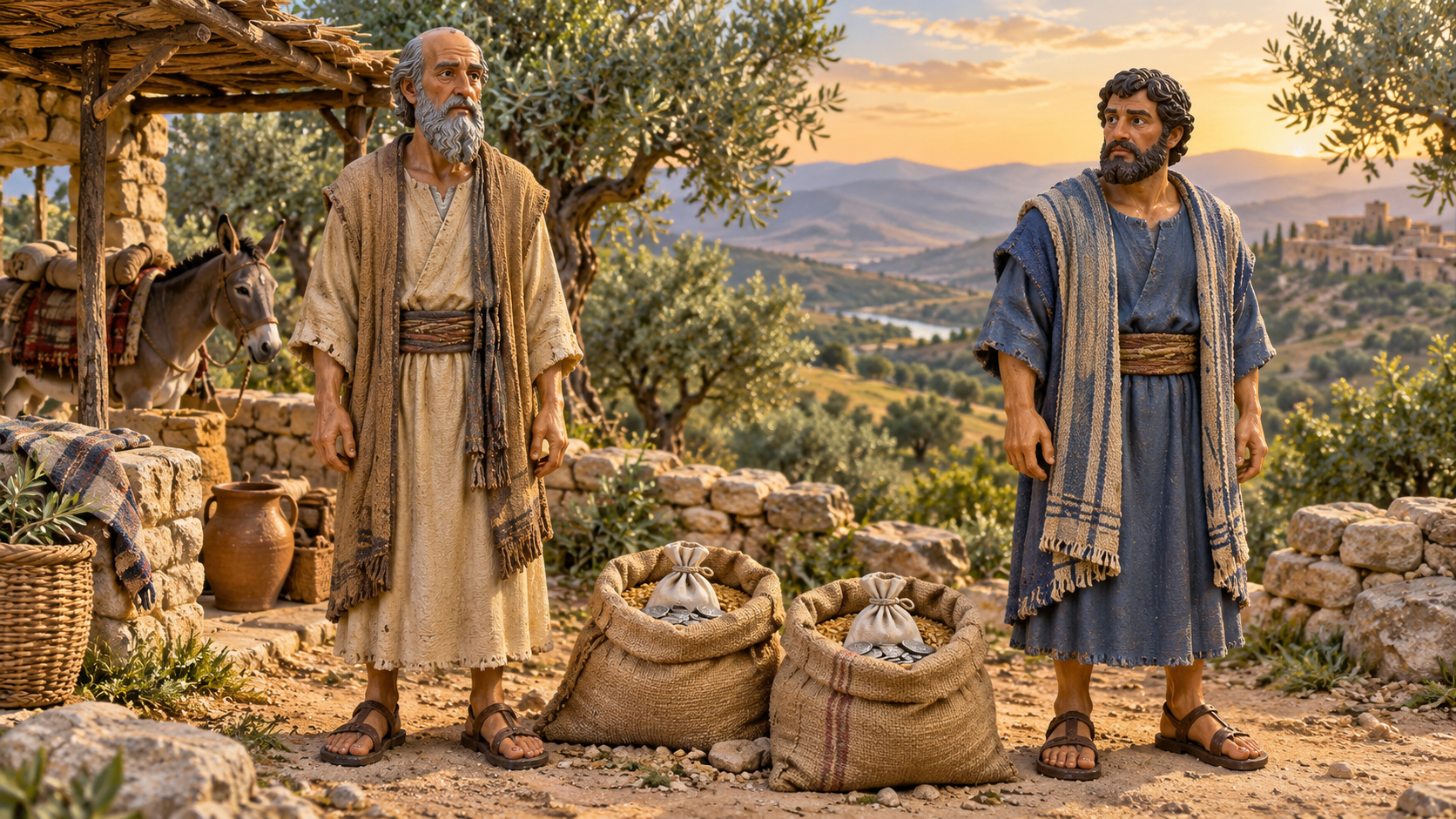
The Hebrew word is tseror, Strong’s number H6872. Here it means a bundle or pouch, something gathered and tied up. In Genesis 42:35, the same word describes each man’s bundle of money. That everyday use helps us picture Abigail’s words: David’s life is being kept, like something valuable placed safely together. The word can also refer to a small stone in other passages, so context matters. Here, the contrast is between a life kept with the LORD and enemies sent away from a sling.
1 Samuel 25:29 · Genesis 42:35
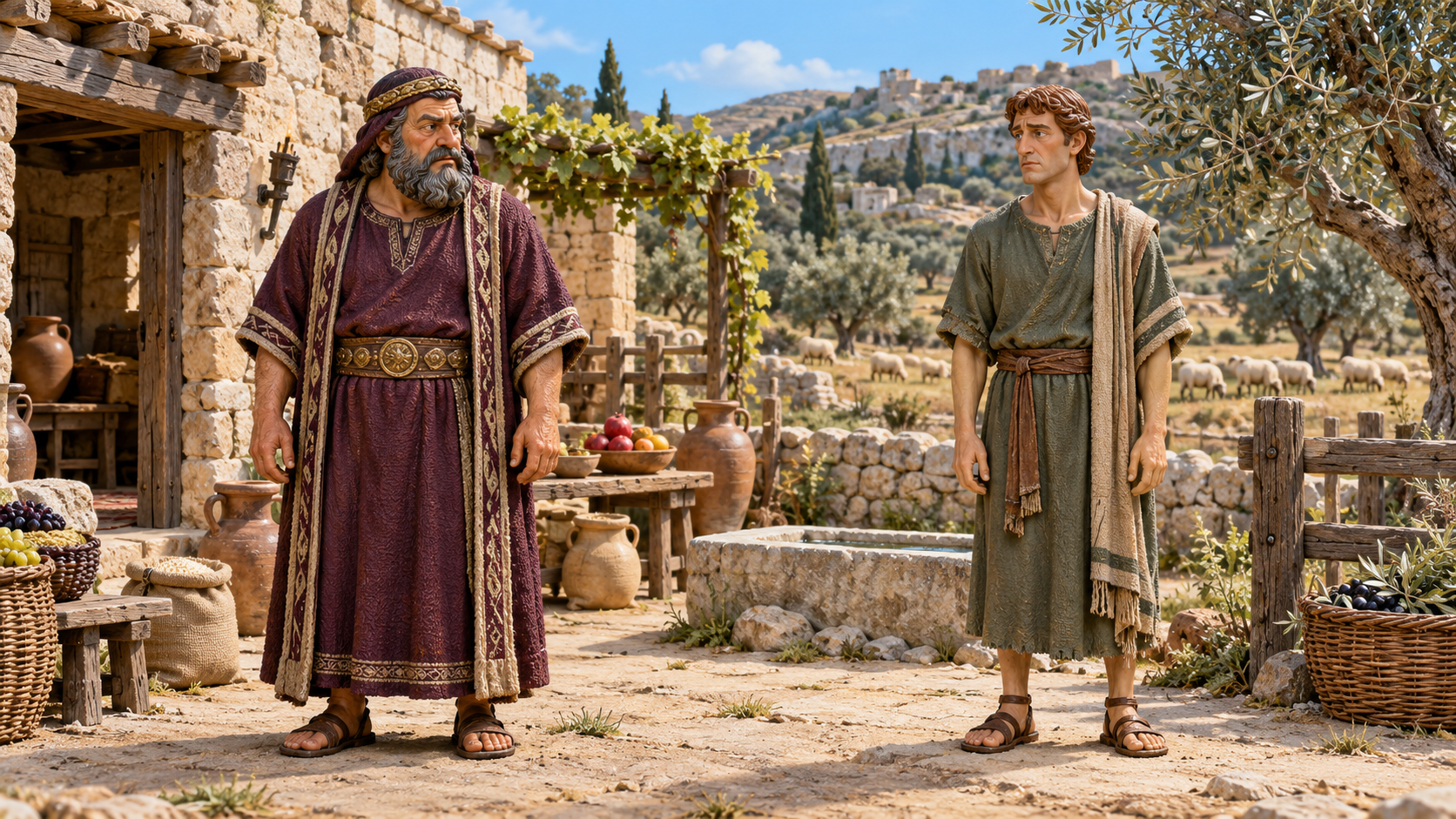
Nabal had insulted David and refused his request for food, even though David’s men had helped protect his shepherds. David responded by gathering armed men. Abigail, Nabal’s wife, hurried to meet him with provisions and an appeal for peace. Her picture of the bundle was not a pleasant thought detached from trouble. It challenged the choice David was about to make. Trusting God’s care meant that an insult did not have to control his next action.
1 Samuel 25:7–13, 18–29
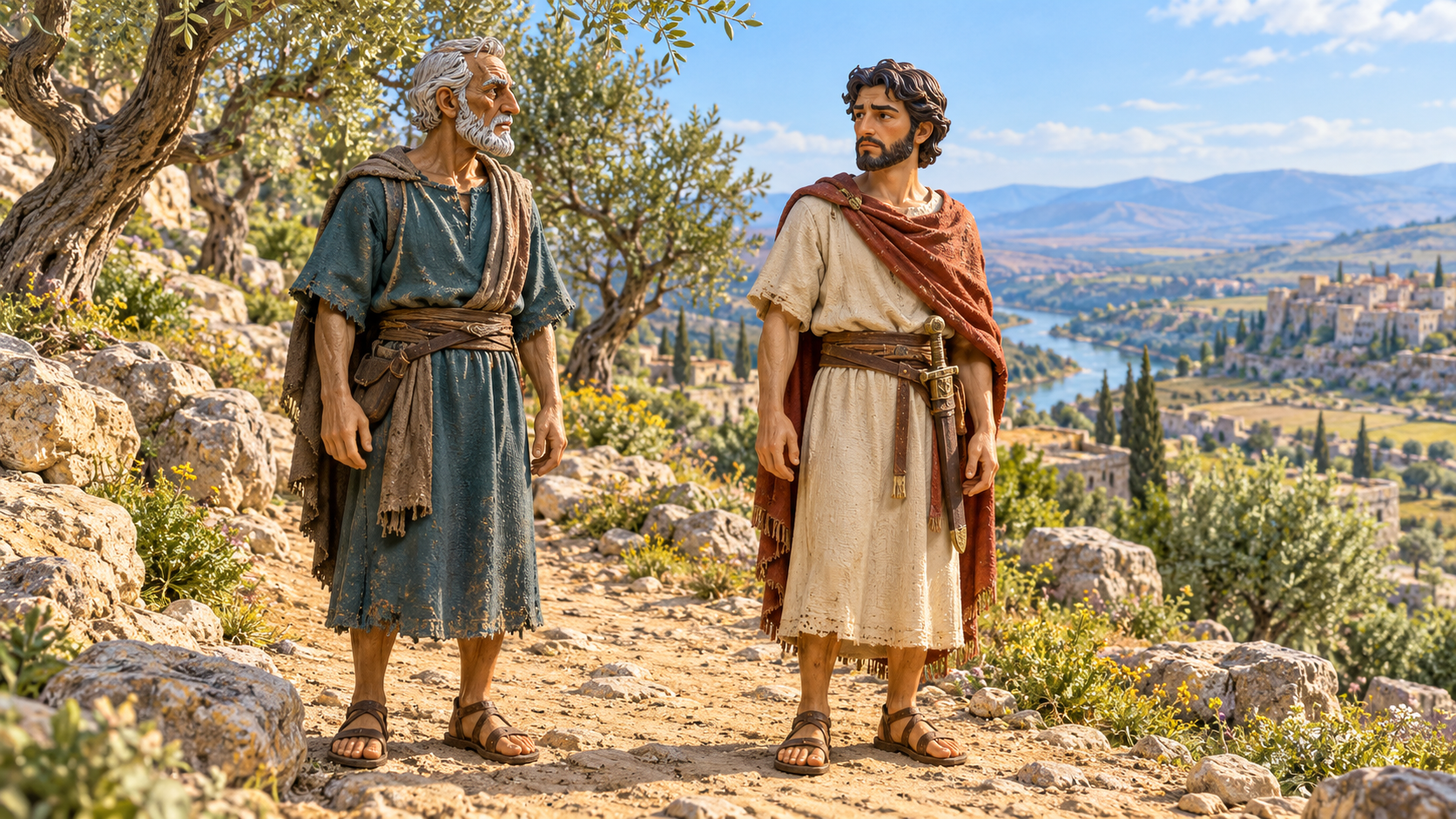
Abigail says the LORD will sling David’s enemies away. The action belongs to God; it is not an instruction for David to attack anyone who opposes him. Her words point to God’s promised future for David and urge him to stop personal revenge. We should not turn this particular assurance into a promise that every opponent will disappear or that believers will never suffer. The practical lesson is to resist paying back hurt with hurt. Seeking safety and fair help can be wise; taking revenge is a different choice.
1 Samuel 25:26, 29–31
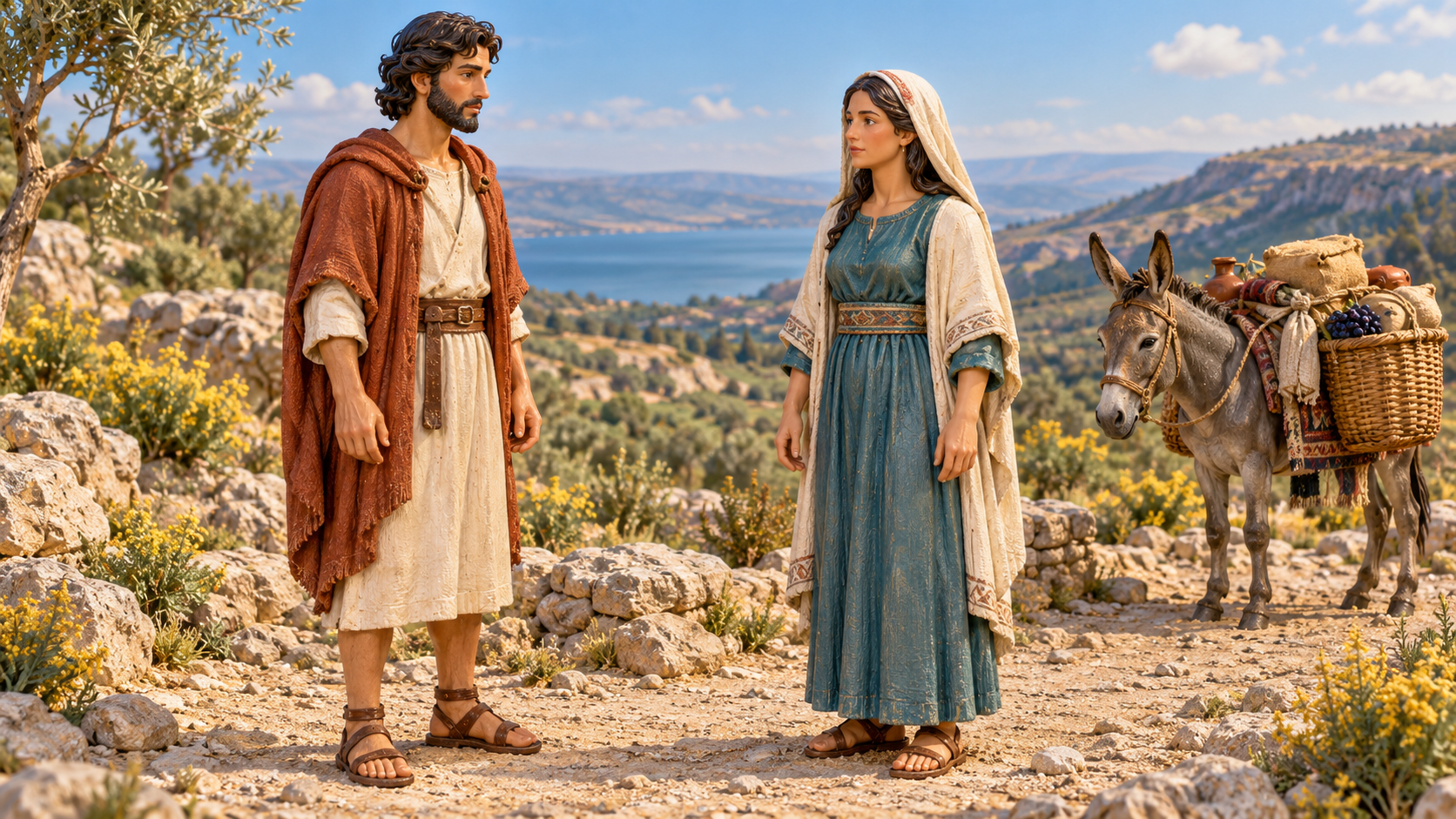
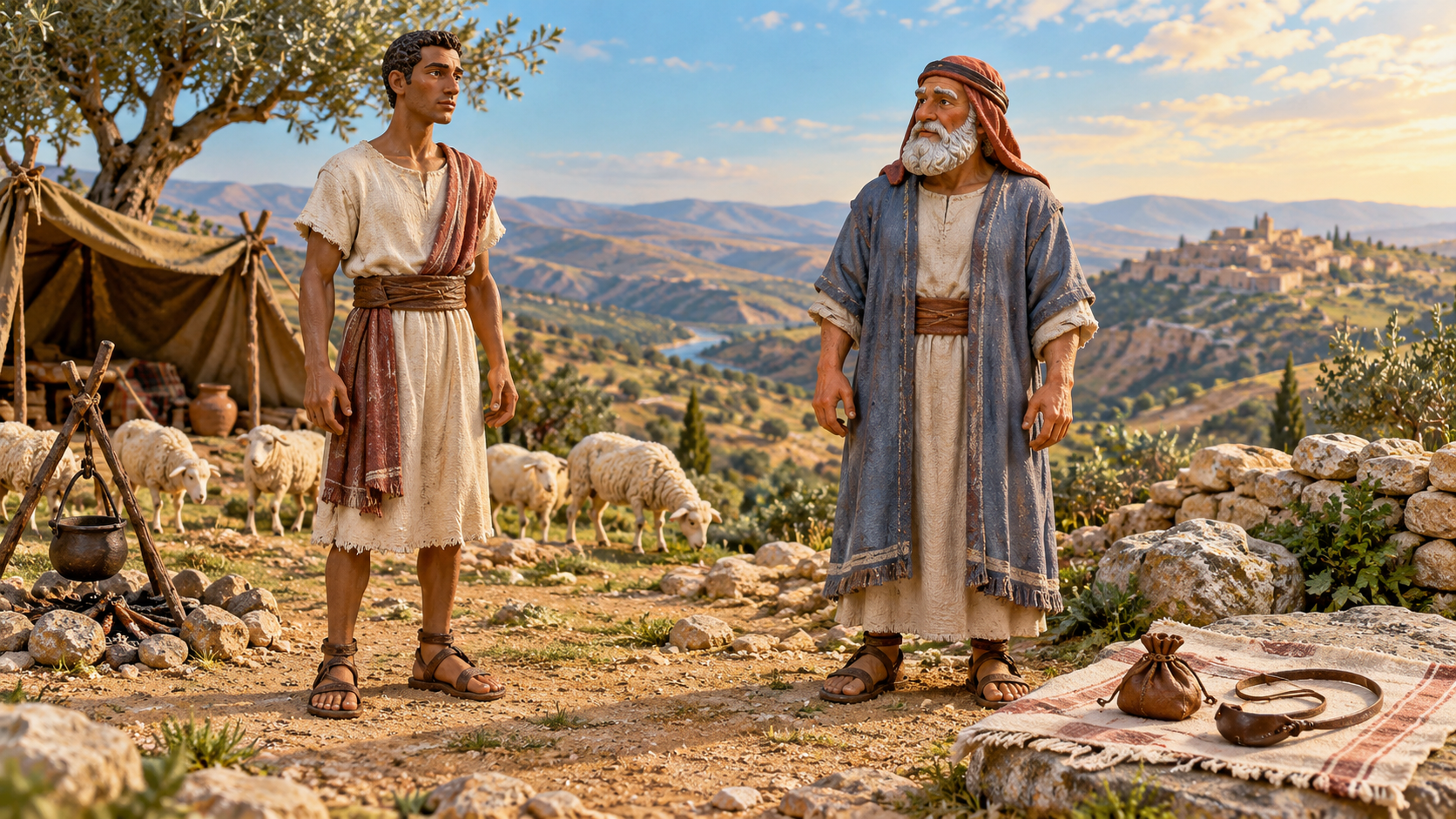
David was strong enough to lead armed men, but he still needed someone to challenge him. Abigail named the danger plainly: needless bloodshed would bring lasting grief. David listened. He thanked God for sending her and blessed her advice. Wise counsel may interrupt the answer you wanted to give or the message you were about to send. Before you defend an angry decision, ask whether a trustworthy person is helping you see the harm it could cause.
1 Samuel 25:31–35
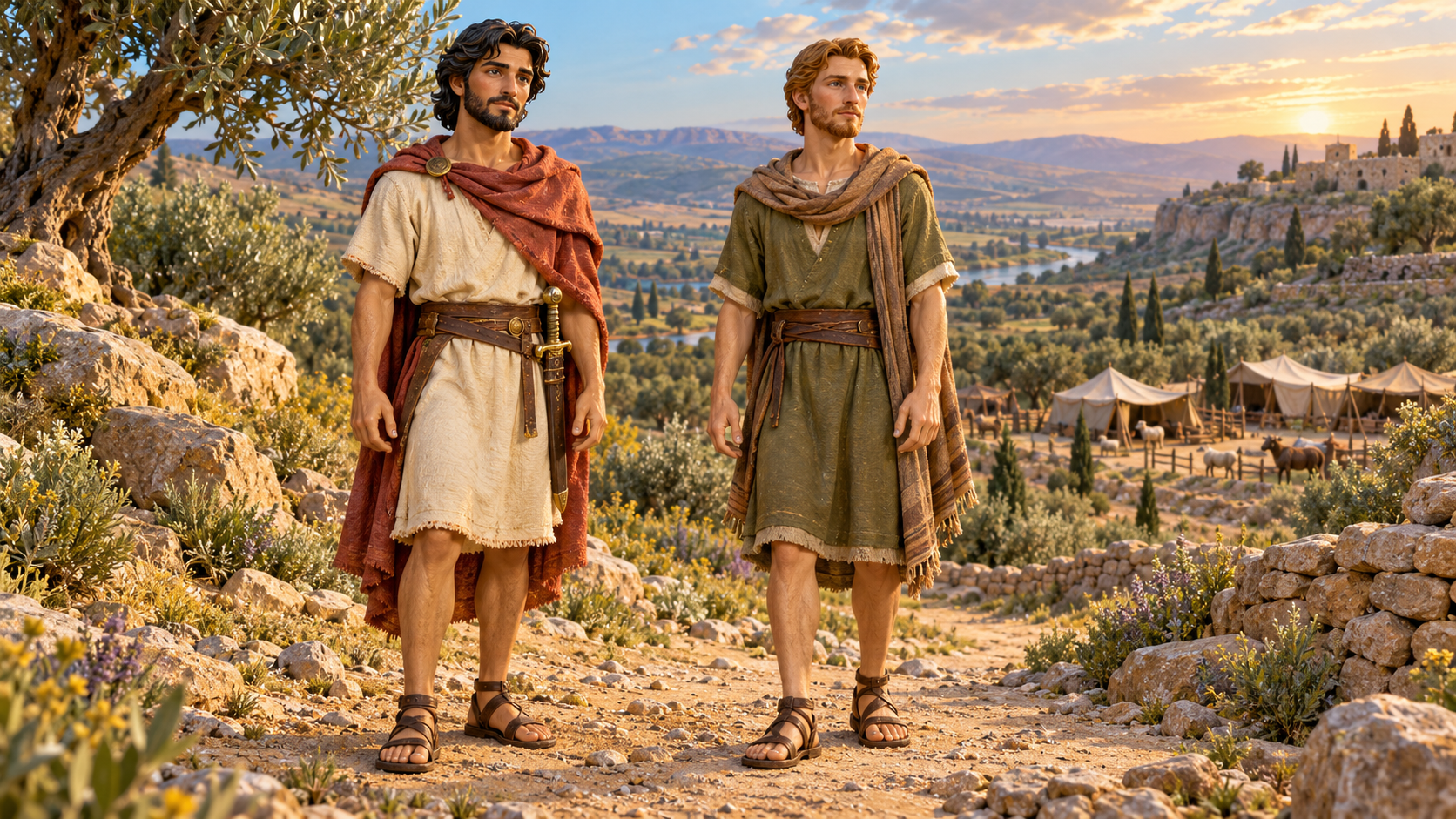
David accepted Abigail’s gift and sent her home in peace. He did more than admire her words; he changed what he was going to do. Later, when Nabal died, David thanked the LORD for keeping him from evil. God’s care had protected him from committing wrong as well as from an enemy. We cannot control every outcome, but we can stop a harmful response. You do not have to finish a course of action simply because you began it in anger.
1 Samuel 25:35–39
THE BOTTOM LINE
Being kept by God gives you a reason to stop taking revenge. Before your next response, pause, listen to wise counsel, and choose an action you will not regret tomorrow.
READ THE PASSAGES TOGETHER
| Genesis 42:35 | 1 Samuel 25:29 |
|---|---|
| A bundle of money is found in each sack. | David’s life is pictured as bound in a bundle with the LORD. |
| An everyday container keeps things together. | The image points to God’s care in danger. |
| The same Hebrew word describes the bundle. | The surrounding story calls David away from revenge. |
A MOMENT TO RESPOND
Is an insult or disappointment pushing you toward a choice you may regret?
A prayer: LORD, thank you for caring for my life. Keep me from answering hurt with harm. Give me humility to listen and courage to change course.
TODAY’S WORD · AN EVERYDAY REMINDER
A companion to today’s study of Bundle in 1 Samuel 25:29: a reminder to trust God’s care and turn away from personal revenge.
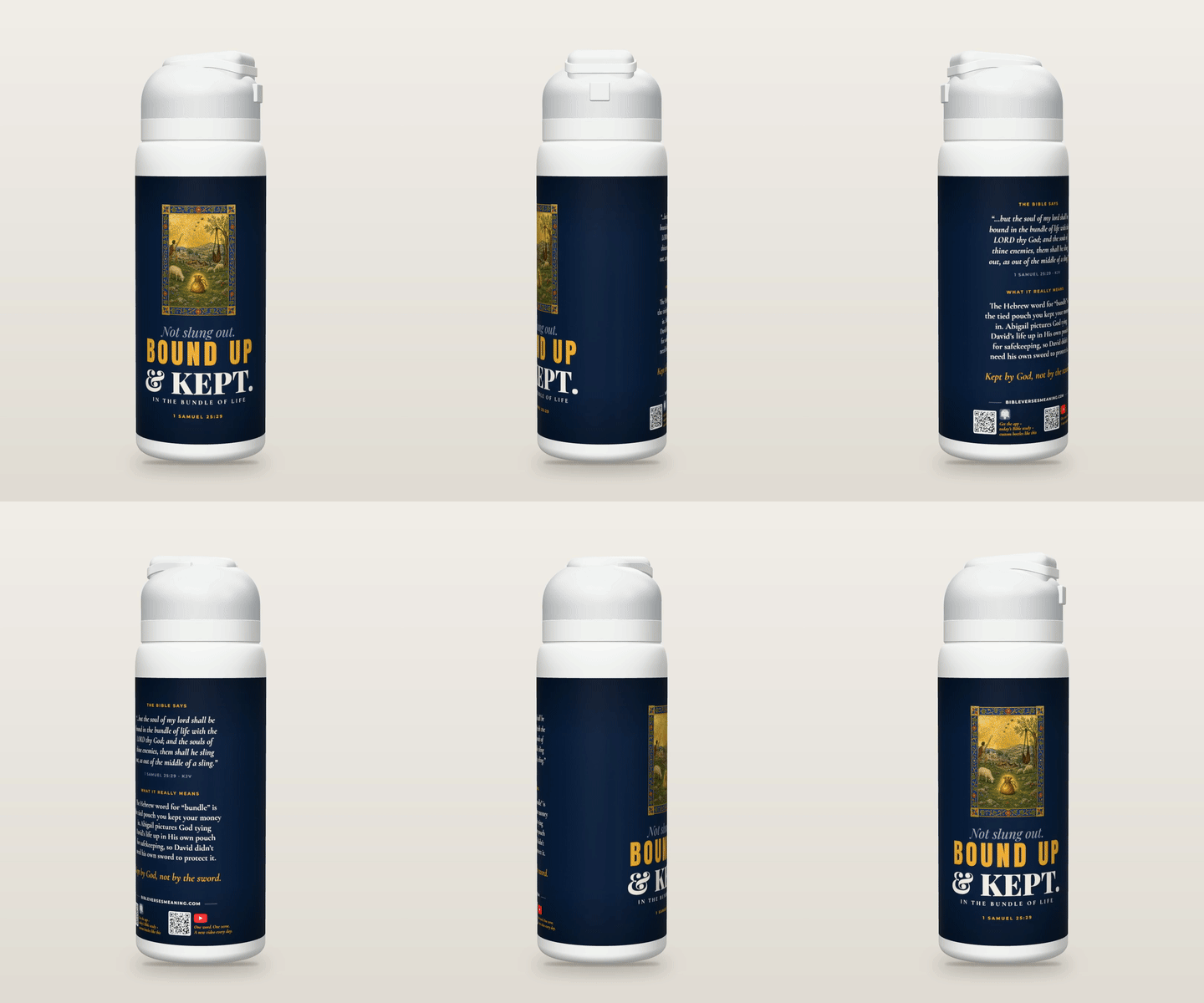
360° view · Not slung out. Bound up and kept.
PRINTED ON THE BOTTLE
Kept by God, not by the sword.
“…but the soul of my lord shall be bound in the bundle of life with the LORD thy God; and the souls of thine enemies, them shall he sling out, as out of the middle of a sling.”
1 Samuel 25:29 · KJV
An everyday reminder to pause, listen, and choose peace.
Explore today’s study bottle ↗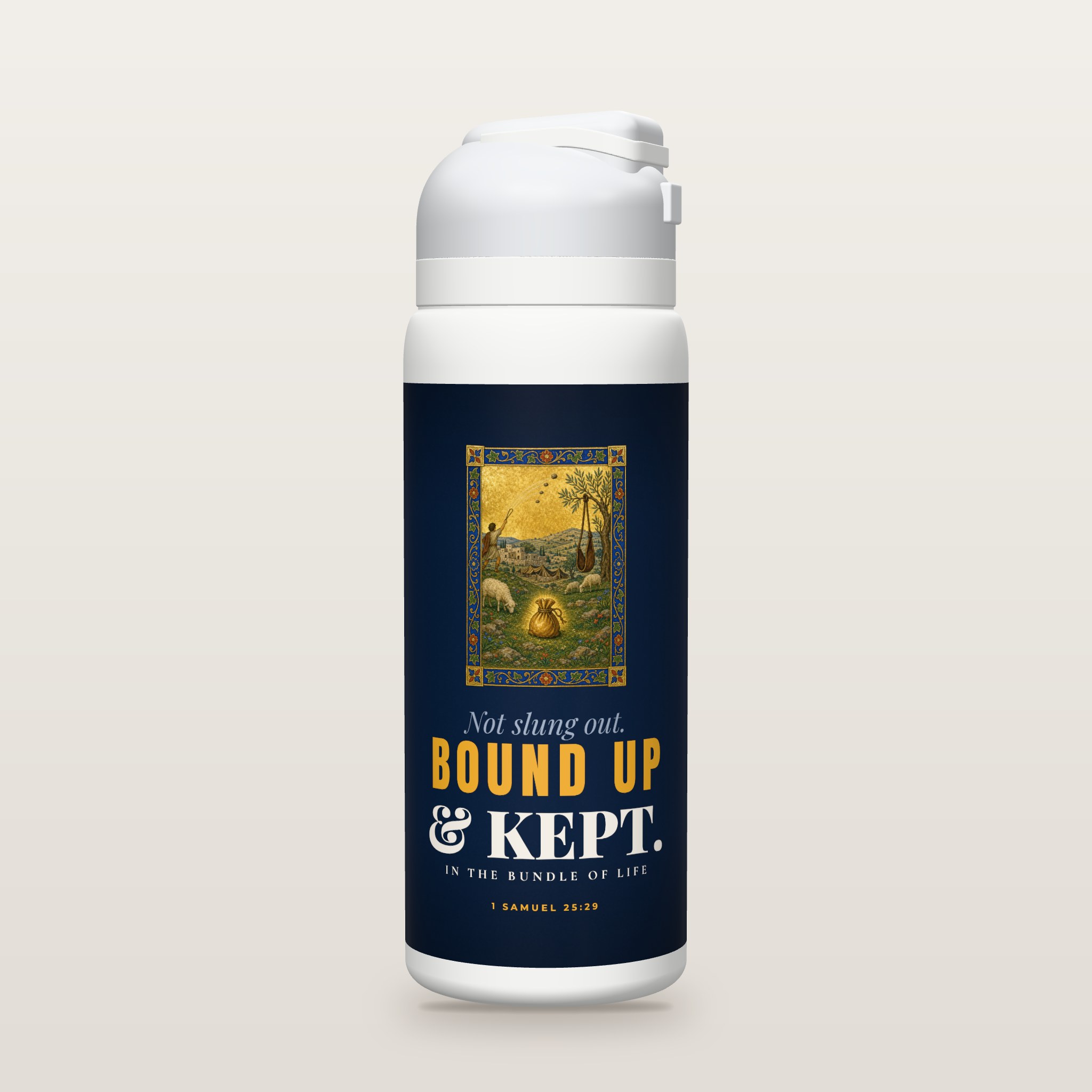
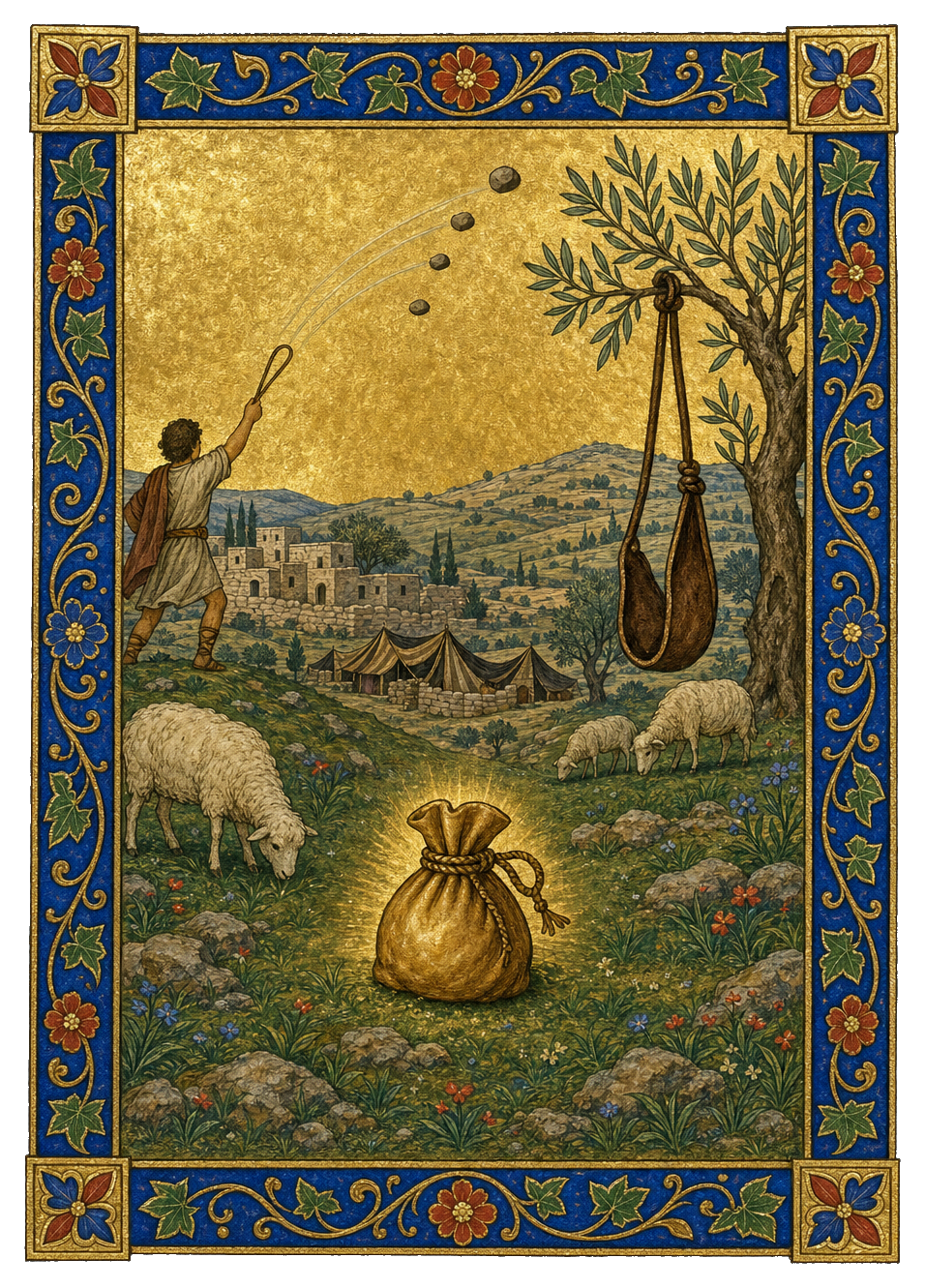
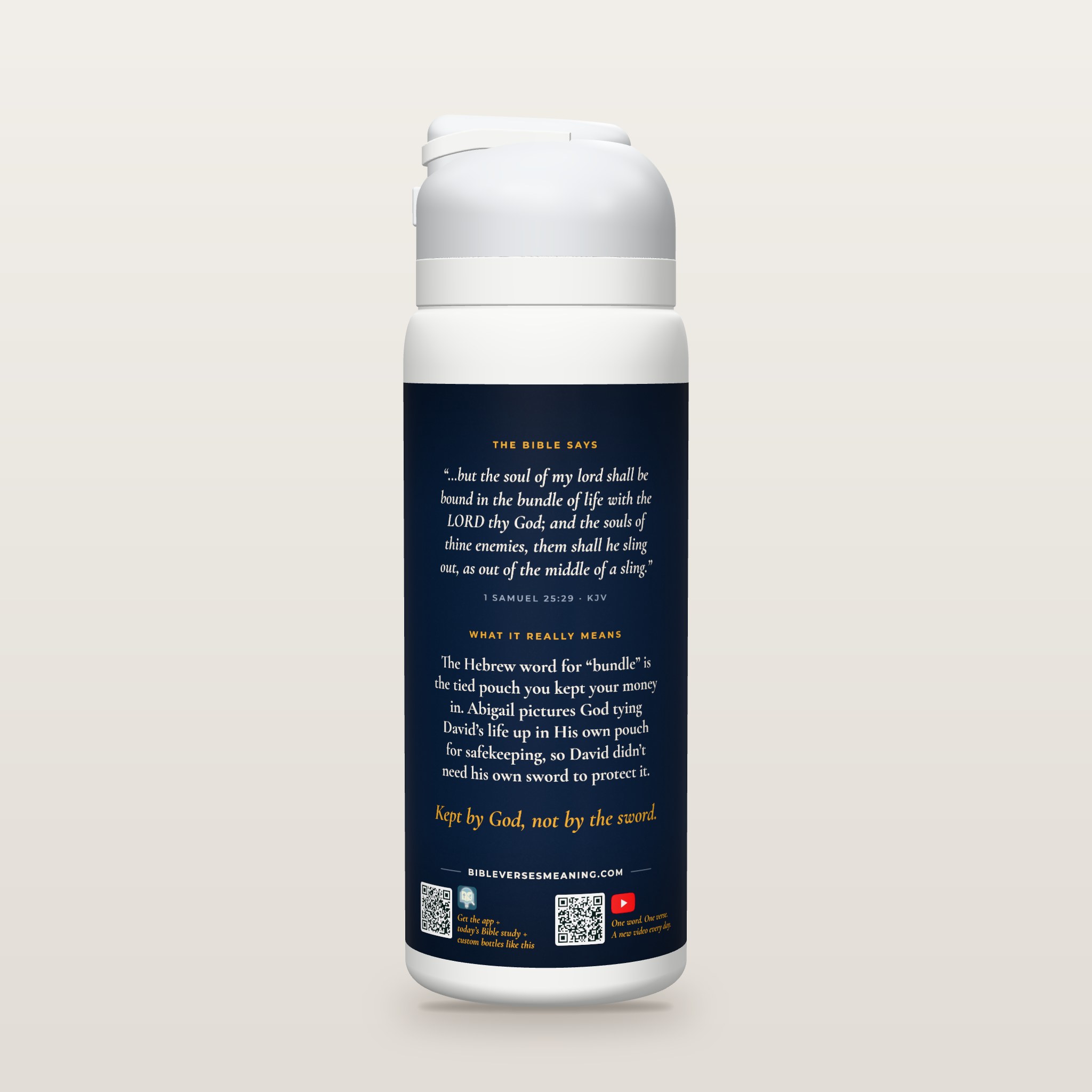
Headline: Not slung out. BOUND UP & KEPT.
Verse: “…but the soul of my lord shall be bound in the bundle of life with the LORD thy God; and the souls of thine enemies, them shall he sling out, as out of the middle of a sling.”
Meaning: The Hebrew word for “bundle” is the tied pouch you kept your money in. Abigail pictures God tying David’s life up in His own pouch for safekeeping, so David didn’t need his own sword to protect it.
Reminder: Kept by God, not by the sword.
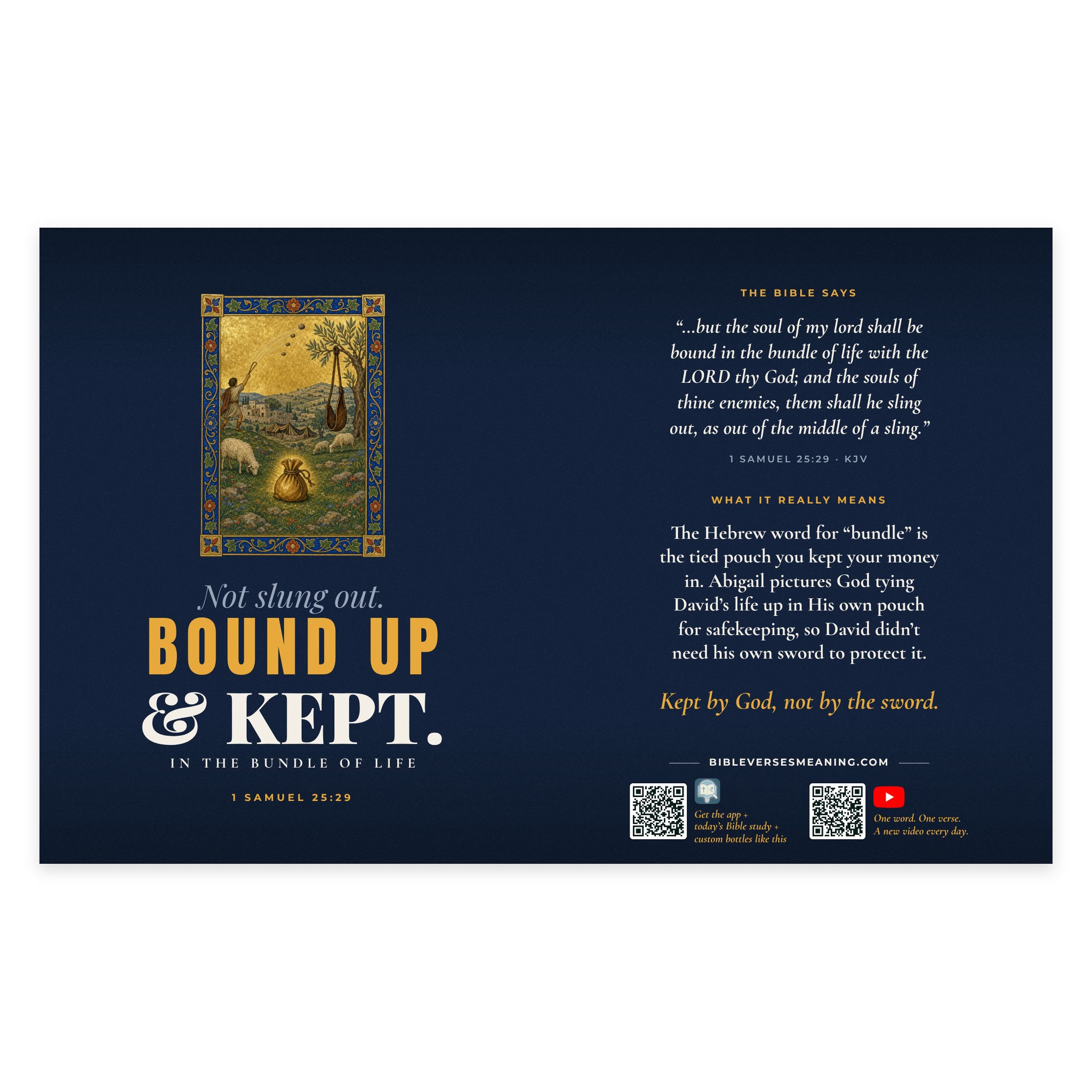
A companion to the study, created to help you remember today’s word.
FROM BIBLE VERSES MEANING
Continue reflecting on the word, the passage, and today’s song.
📖 Word Study: bundle (H6872)
1 Samuel 25:29
1. Linguistic Nuance
The Hebrew tzeror (H6872) derives from a root meaning "to bind tightly" or "compress." Unlike generic terms for a collection or container, tzeror specifically refers to a small pouch tied securely to keep precious items—like money, jewels, or myrrh—safe from loss. It conveys a distinct flavor of intimate preservation, high value, and active security.
2. Historical Context
In ancient Near Eastern culture, travelers carried personal valuables wrapped tightly in a cloth pouch (tzeror) close to their chest to prevent theft. Conversely, worthless stones were cast away with a sling. Speaking to David, Abigail uses this vivid imagery to assure him that Yahweh values his life as a treasure, holding it securely against Saul's threats.
3. Practical Application
When facing hostility, instability, or fear, your ultimate safety depends on who holds you, not your external circumstances. To be "bound in the bundle of life" offers modern individuals profound existential peace: your life is intentionally treasured, closely held, and permanently safeguarded by God, making you unshakeable regardless of external pressures.
— Bible Verses Meaning App
💡 Bible Insight
Q: In 1 Samuel 25:29, Abigail tells David that "the soul of my lord shall be bound in the bundle (tseror) of life with the LORD thy God," while the souls of his enemies God will "sling out, as out of the middle of a sling." Is Abigail picturing David's life as a treasure God personally wraps up and keeps safe, or as a stone held close in God's own hand in contrast to the ones being hurled away? And what does it suggest that the same word describes "every man's bundle (tseror) of money" in Genesis 42:35?
OVERVIEW
In 1 Samuel 25:29, Abigail pictures David's life as a precious treasure that God personally wraps up and keeps safe, rather than a stone held in the hand. The word translated as "bundle"—tseror—refers to a pouch or bound wrapper used to secure valuable items. Abigail contrasts this bound, protected bundle of life with David's enemies, whom God will "sling out, as out of the middle of a sling."
This image is illuminated by Genesis 42:35, where the exact same word tseror describes "every man's bundle of money" safely packed in their sacks. In biblical contexts, money or valuables were tied tightly in a tseror to keep them from being lost, scattered, or stolen. By applying this term to David, Abigail assures him that his life is held in divine custody as valuable treasure. Across these passages, the text establishes that what is valued is securely wrapped and preserved under watchful care, rendering rash self-defense and personal vengeance unnecessary.
KEY BIBLICAL PASSAGES
1 Samuel 25:29 highlights the sharp contrast between divine preservation and divine rejection. Abigail states that David’s soul is "bound in the bundle of life with the LORD," while his enemies are discarded like loose stones cast from a sling.
Genesis 42:35 illustrates the literal function of a tseror. When Jacob's sons empty their sacks and discover their "bundle of money," it shows that a tseror represents guarded, accounted-for wealth carried safely on a journey.
1 Samuel 25:26 contextualizes Abigail’s speech within her plea for peace. She notes that the LORD has restrained David "from coming to shed blood, and from avenging thyself with thine own hand," connecting confidence in divine protection with ethical restraint.
1 Samuel 25:32–33 records David’s response. He praises God and thanks Abigail for her advice, acknowledging that her intervention kept him from bloodguilt and from taking vengeance into his own hands.
PRACTICAL WISDOM
These passages offer practical guidance on emotional restraint, conflict management, and security.
First, recognizing that one's life and outcome are securely guarded fosters restraint under provocation. When Nabal insulted David (1 Samuel 25:10–11), David’s initial impulse was armed retaliation 1 Samuel 25:13. Abigail’s reminder that David was safely bundled by God persuaded him to step back from an impulsive act that would have caused lasting grief and guilt 1 Samuel 25:31. In modern settings, when faced with unfair treatment or personal insults, individuals can exercise composure rather than engaging in destructive retaliation.
Second, the passage highlights the value of listening to wise counsel during moments of anger. David did not let pride prevent him from hearing Abigail; he recognized the wisdom of her words and accepted her gift (1 Samuel 25:33–35). Actively welcoming perspectives that encourage calm and ethical choices helps prevent costly, heat-of-the-moment decisions in personal and professional life.
— Bible Verses Meaning App
Seams of Grace develops the picture of a life kept like treasure rather than cast away. Its cloth, pouch, and safekeeping language connects closely with Abigail’s words. Being held against God’s chest and having every fear tucked away are devotional poetry, not details stated in 1 Samuel 25:29 or a promise that believers never feel afraid. The study brings the song’s comfort back to the passage’s practical call: pause, receive wise counsel, and leave personal revenge with God. Complete performance lyrics and repetitions are preserved in the timed transcript.
Held so close.
Yeah, so close.
The road is wide and the wind is cold.
They cast the stones, they let them go.
I felt the weight of being just a thing.
Ready for the motion of a swing.
But you took the time to find the cloth.
To wrap the value, to shield the flaws.
Pulled me in right against your chest.
Giving my spirit a place to rest.
I'm a bundle, bound so tight.
Kept in the dark, kept in the light.
You're the keeper.
I'm the prize.
Seen with love through your own eyes.
Not cast away, not left behind.
I'm the treasure that you designed.
You know the price that's in the seam.
Better than the surface or the dream.
You don't judge by the way I lay.
You're keeping me for a brighter day.
Every fear is tucked away inside.
Nowhere left for the doubt to hide.
Got a grip that's made of grace.
Holding me in this sacred space.
I'm a bundle, bound so tight.
Kept in the dark, kept in the light.
You're the keeper.
I'm the prize.
Seen with love through your own eyes.
Not cast away, not left behind.
I'm the treasure that you designed.
No more wandering, no more fear of the fall.
I'm hearing the purpose in the call.
You're the one who gathers all the gold.
I'm the story that you chose to hold.
Wrapped in safety, found in love.
Under the watching eye above.
I'm a bundle, bound so tight.
Kept in the dark, kept in the light.
You're the keeper.
I'm the prize.
Seen with love through your own eyes.
Not cast away, not left behind.
I'm the treasure that you designed.
Kept in the bundle.
So close to the heart.
Bound by the love.
Never apart.
Kept so safe.
Try Bible Verses Meaning free for 7 days and discover what the original words really mean.
