Daily studies that reveal the original Hebrew and Greek meanings behind Scripture. No seminary required — just you, your phone, and 15 minutes.
NUMBERS 13:33 · STRONG’S NUMBER H2284
The spies saw tall enemies and felt like grasshoppers. Scripture helps us separate what fear says from what God has said—and remember that the Creator gives strength to weary people.
“Grasshoppers” · chagab · חָגָב
“And there we saw the giants, the sons of Anak, which come of the giants: and we were in our own sight as grasshoppers, and so we were in their sight.”
Numbers 13:33 · King James Version
THE COMPLETE STUDY
Five discoveries, the real app study, and Under This Shield.

READ · REFLECT · RESPOND
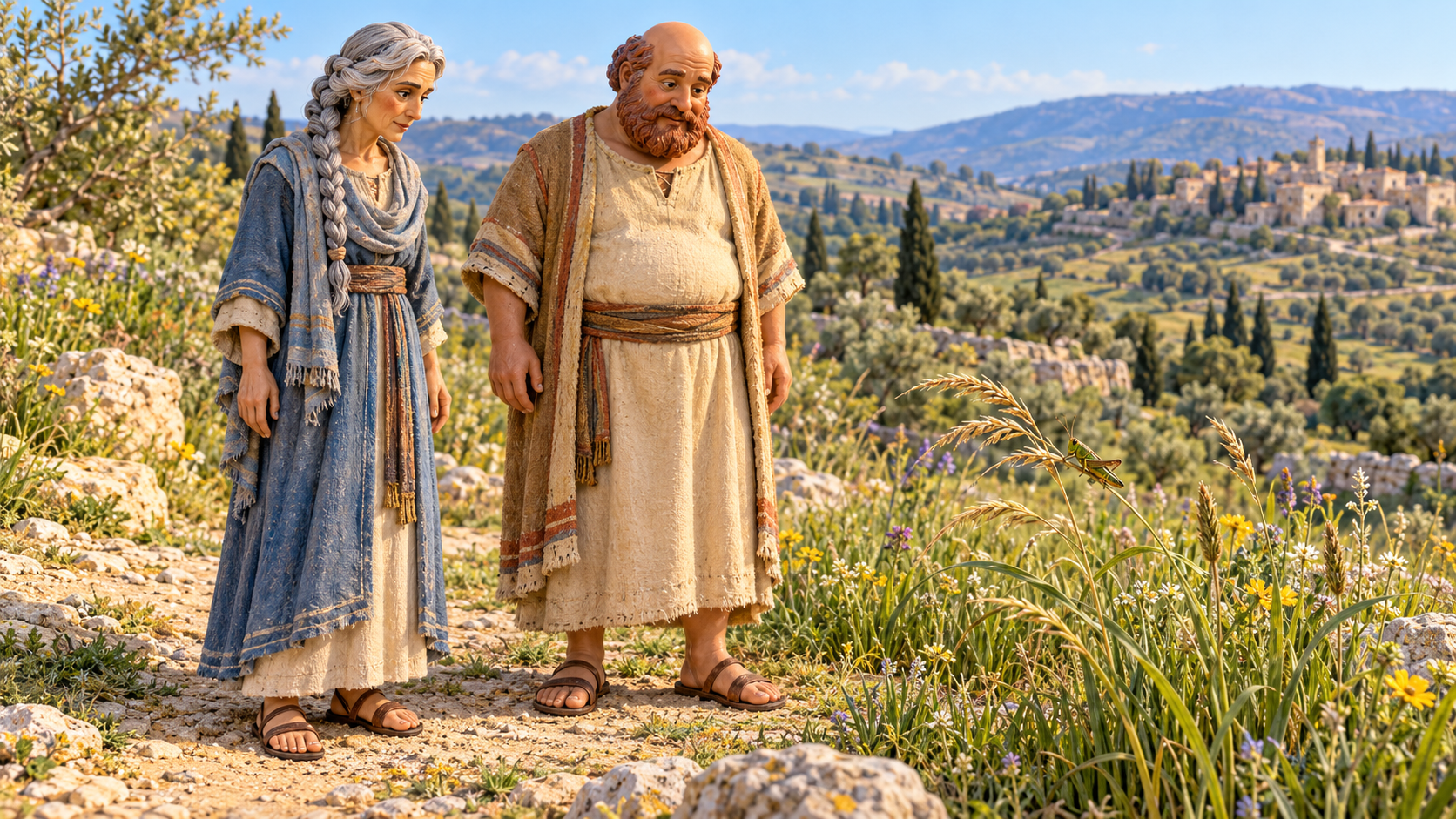
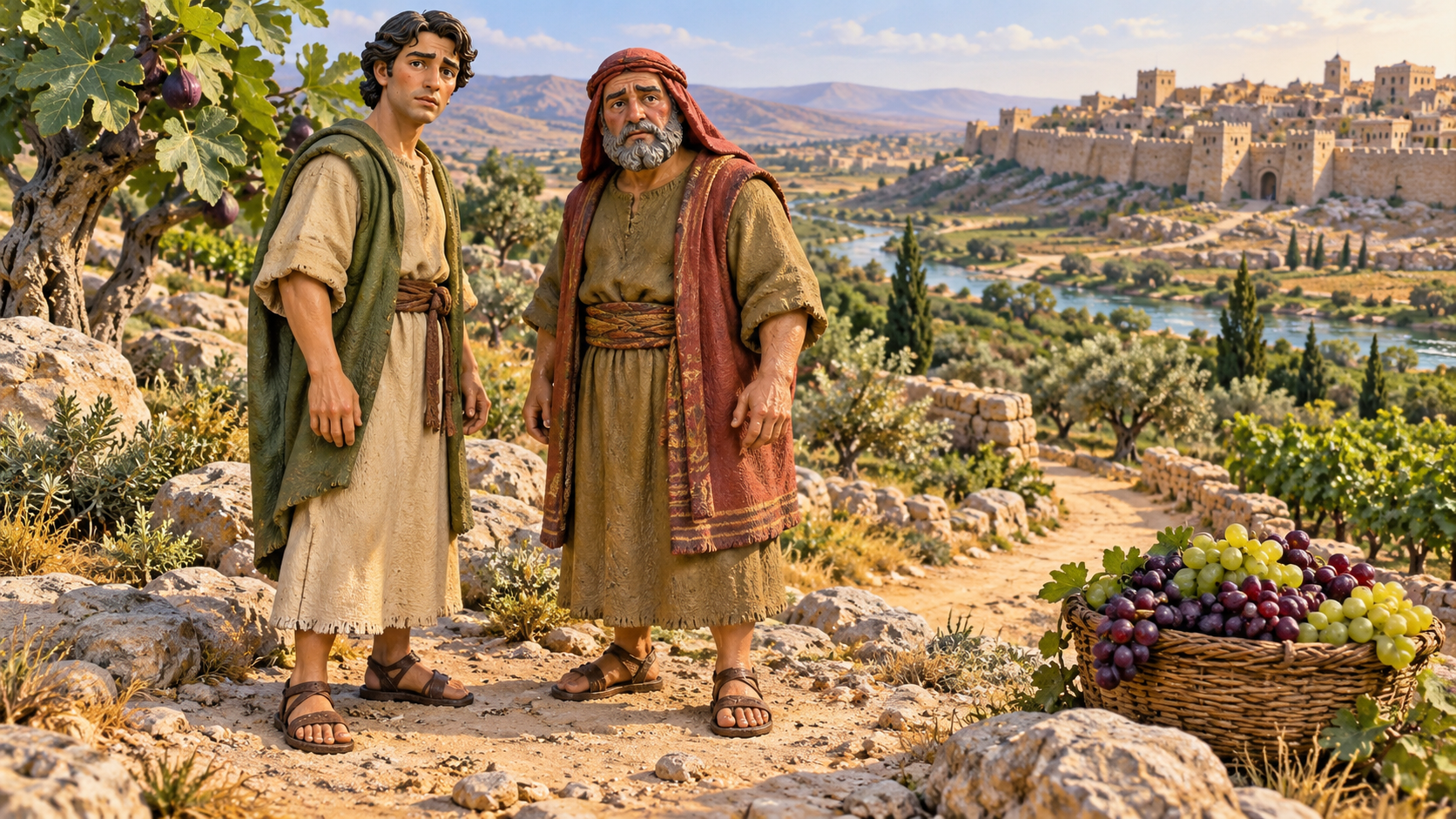
The Hebrew word is chagab, Strong’s number H2284. It means a grasshopper or locust. In Numbers 13:33, the spies use this small creature to describe how they felt beside the tall sons of Anak. The feeling of helplessness comes from their comparison; it is not a hidden meaning built into the word. Moses had sent twelve men to examine the land God had promised Israel. They returned with good fruit and troubling news. The people were strong, but the report went beyond describing the challenge: it made Israel’s weakness seem like the final word.
Numbers 13:1–3, 27–33
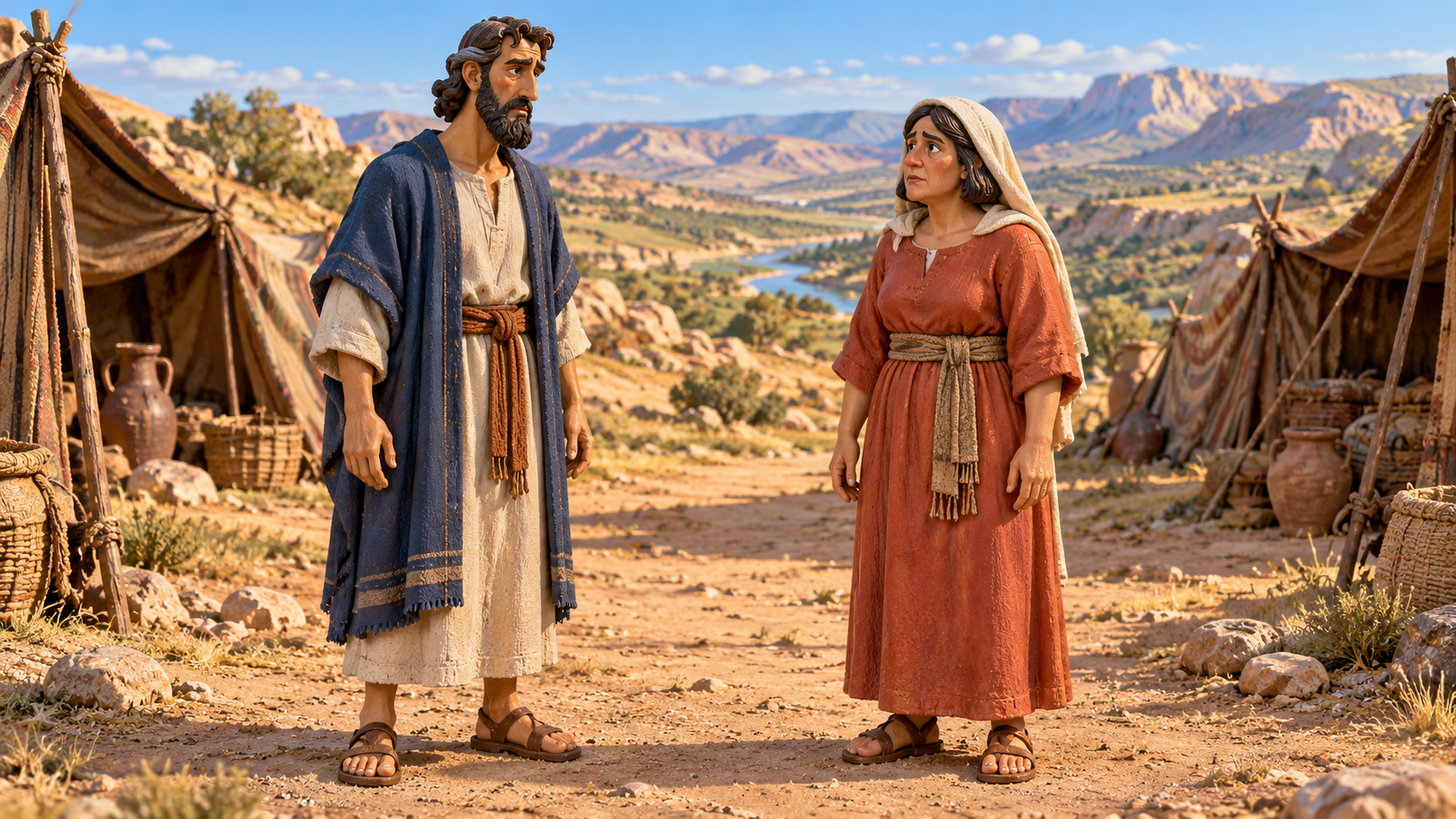
The spies say they were grasshoppers “in our own sight,” then add, “and so we were in their sight.” Scripture records their claim, but it does not give us the enemies’ words or explain how the spies knew what those people thought. We should not state as fact that every enemy despised them. The wording shows how closely their view of themselves was tied to their claim about others. We can make a similar mistake when we think, “I feel inadequate, so everyone must see me that way.” Name the real difficulty, then separate what you know from what fear is adding.
Numbers 13:31–33
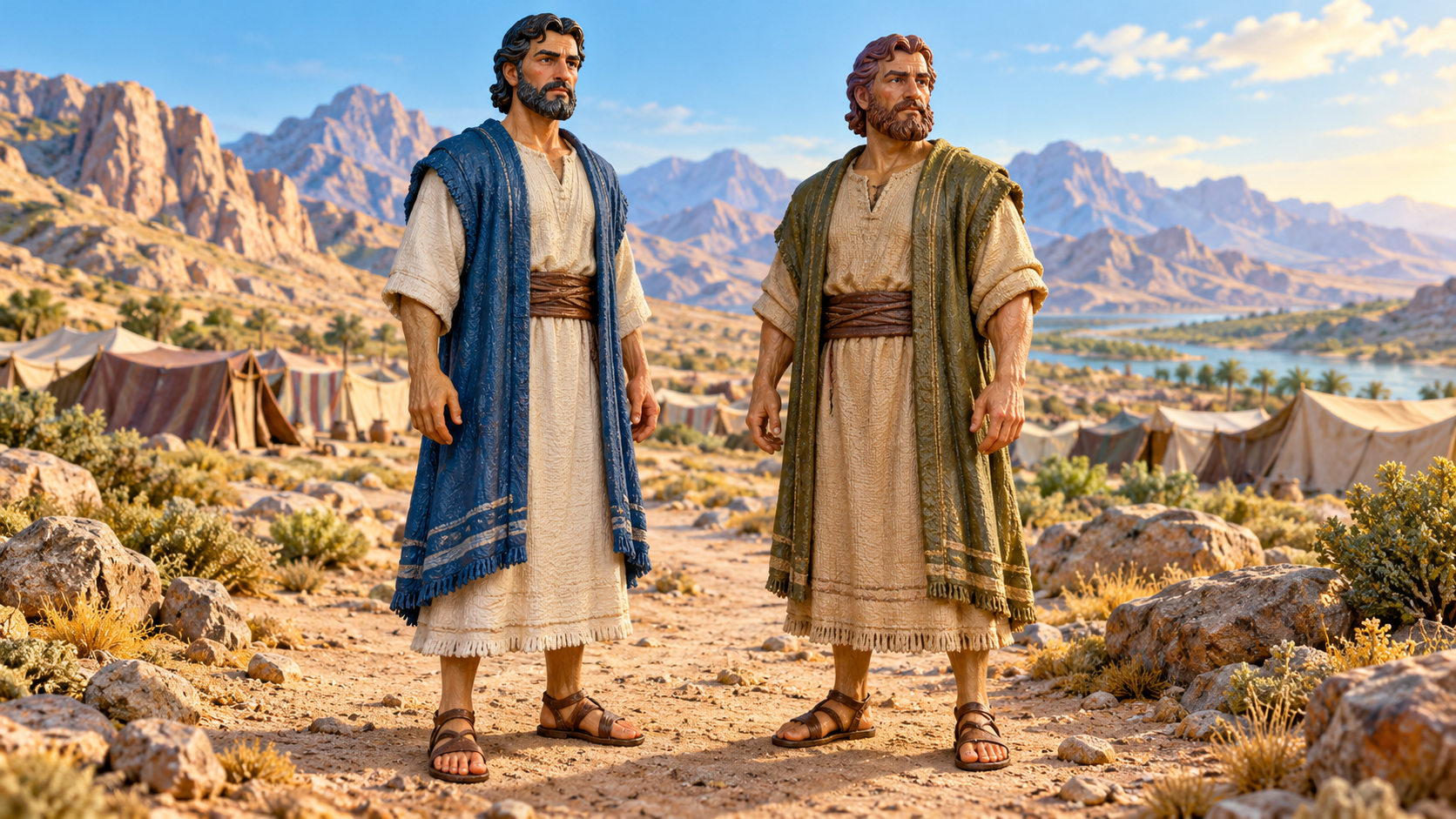
Caleb did not pretend that the land had no strong people. He called Israel to act on God’s promise. Joshua and Caleb later explained their confidence: “the LORD is with us: fear them not.” Their answer was grounded in God’s presence and His promise to Israel, not in a claim that they were bigger or stronger. That particular promise does not guarantee success for every plan we make. For us, trusting God means following what He has made clear, even when obedience feels difficult. Asking for help or taking a careful next step can be an act of trust.
Numbers 13:30 · Numbers 14:6–9
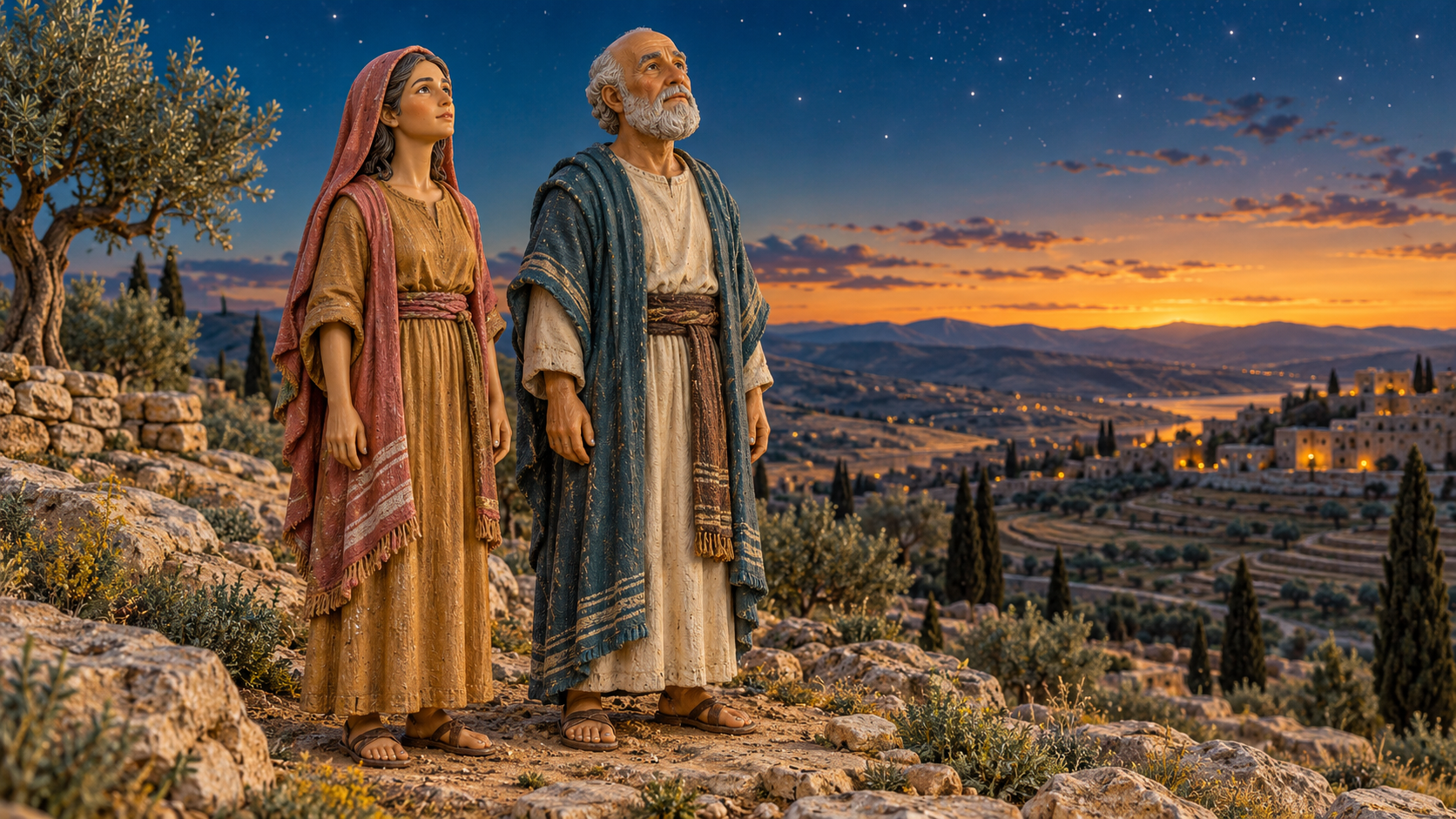
Isaiah 40:22 uses the same Hebrew word when it says that the earth’s inhabitants “are as grasshoppers” before God. Here the comparison includes all people, including the rulers and nations that seem so powerful. The chapter says that God brings princes to nothing and made the stars. This changes our sense of scale. We do not have to imagine ourselves becoming giants. We need to remember that no human power stands above the Creator. Our limits are real, but they are not the limits of God.
Isaiah 40:21–26
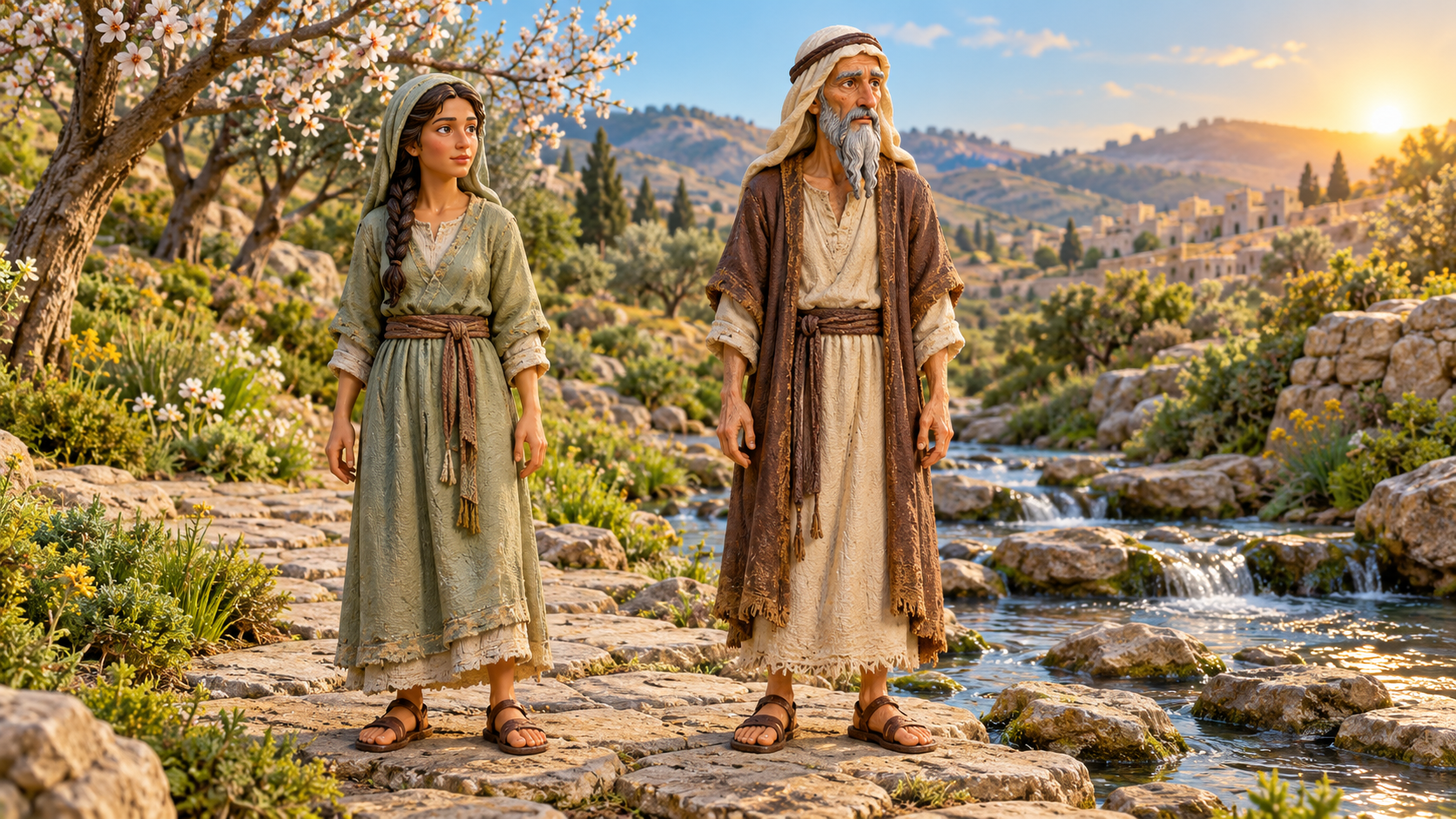
God’s greatness does not mean that tired people are beneath His notice. In Isaiah 40, Israel complains that its way is hidden from the LORD. The answer points to the everlasting Creator, who does not grow weary, and then says, “He giveth power to the faint.” To be faint is to be worn out and short of strength. Waiting on the LORD means depending on Him with patient trust. It is not a promise that every hard situation ends at once. The chapter ends with people walking as well as soaring: God’s help sustains the ordinary next step too.
Isaiah 40:27–31
THE BOTTOM LINE
Feeling small does not mean you are forgotten. Name the difficulty honestly, question what fear adds, and take the next faithful step with the God who gives strength to the weary.
READ THE PASSAGES TOGETHER
| Numbers 13:33 | Isaiah 40:22–31 |
|---|---|
| The spies compare themselves with tall enemies. | All the earth’s people are small before the Creator. |
| Their smallness becomes a reason to fear. | God’s greatness becomes a reason to depend on Him. |
| They say they know how others see them. | God answers people who feel unseen and gives strength to the weary. |
A MOMENT TO RESPOND
Where have you treated feeling small as proof that you cannot take the next faithful step?
A prayer: LORD, help me see my fear clearly. Remind me that my limits are not yours. Give me patience, wise help, and strength for the next faithful step.
TODAY’S WORD · AN EVERYDAY REMINDER
A companion to today’s study of Grasshoppers in Numbers 13:33: a reminder to measure your fears in the light of God’s greatness and care.

360° view · In our own sight. GRASSHOPPERS.
PRINTED ON THE BOTTLE
Measure the giants against God.
“And there we saw the giants, the sons of Anak, which come of the giants: and we were in our own sight as grasshoppers, and so we were in their sight.”
Numbers 13:33 · KJV
An everyday reminder that your limits are not God’s limits.
Explore today’s study bottle ↗
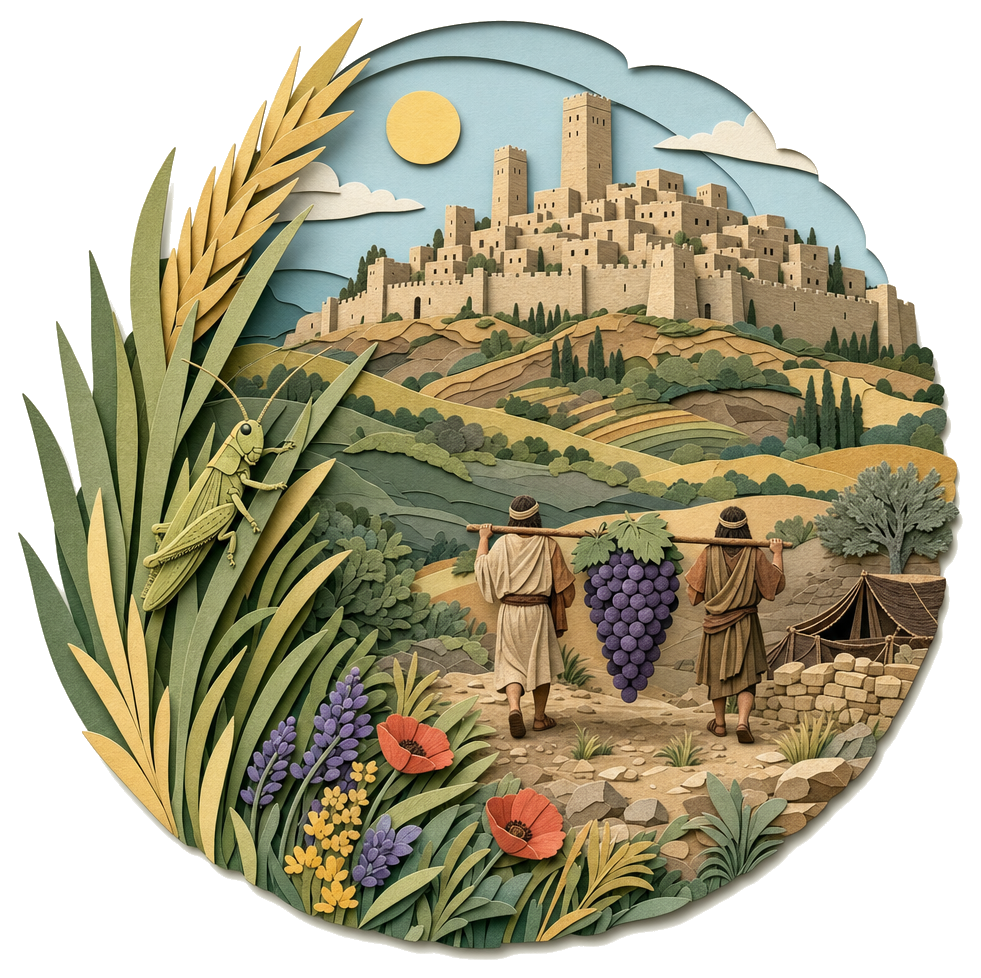

Headline: In our own sight GRASSHOPPERS.
Verse: “And there we saw the giants, the sons of Anak, which come of the giants: and we were in our own sight as grasshoppers, and so we were in their sight.”
Meaning: No giant is quoted. The spies sized themselves up first: “in our own sight” comes before “in their sight.” Isaiah uses the same Hebrew word for everyone on earth before God. Giants included.
Reminder: Measure the giants against God.
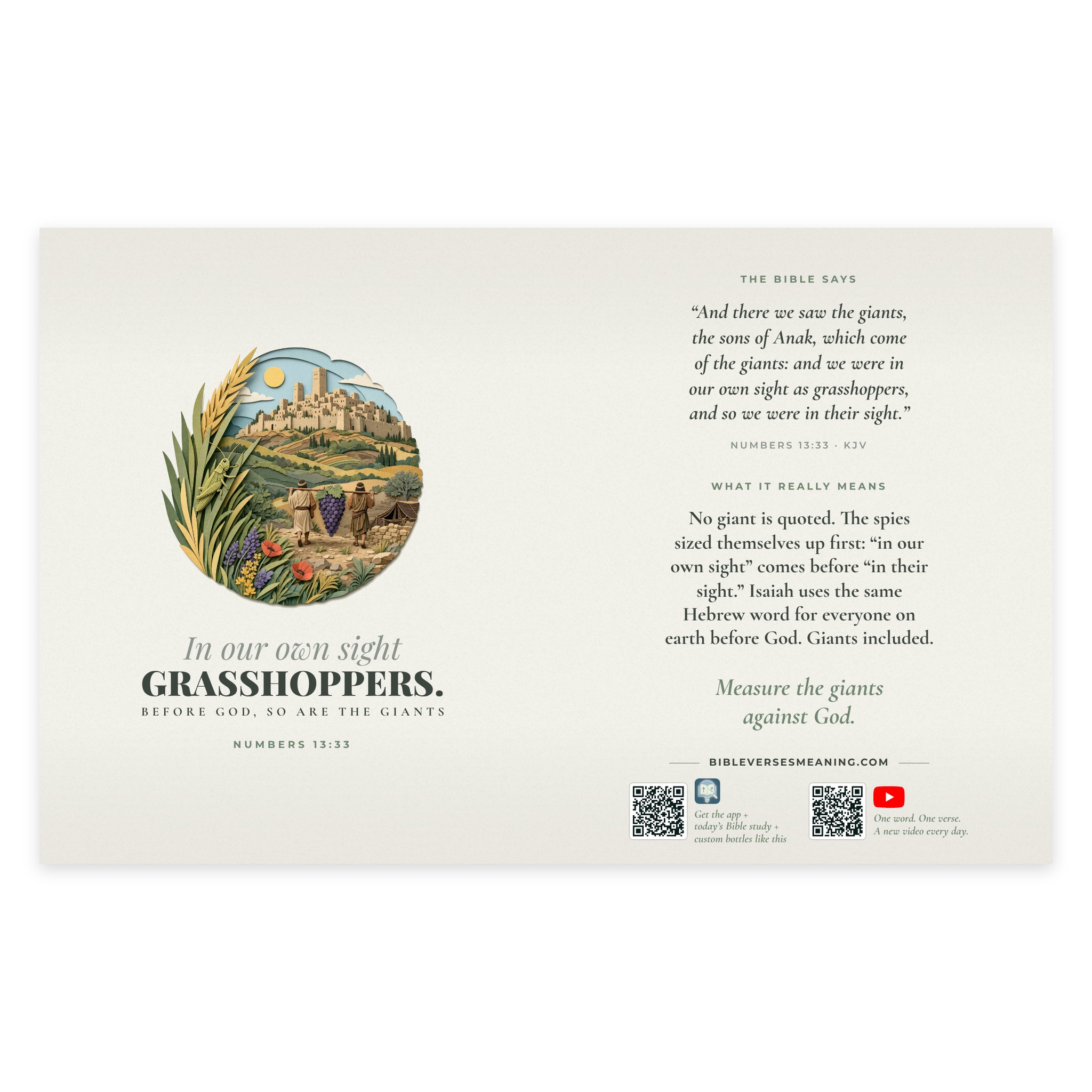
A companion to the study, created to help you remember today’s word.
FROM BIBLE VERSES MEANING
Continue reflecting on the word, the passage, and today’s song.
📖 Word Study: grasshoppers (H2284)
Numbers 13:33
1. Linguistic Nuance
The Hebrew ḥāgāb (H2284) differs distinctly from 'arbeh (the swarming locust of judgment). While 'arbeh connotes an overwhelming, destructive force, ḥāgāb emphasizes extreme physical smallness, insignificance, and fragility—a tiny creature effortlessly crushed beneath one's foot.
2. Historical Context
To the wilderness-wandering Israelites, a ḥāgāb was a common, defenseless insect. Utilizing this word was a hyperbolic expression of absolute vulnerability. Facing the tall Anakim, the ten spies experienced a psychological collapse; they reduced themselves to insignificant pests and projected that same contempt onto their enemies.
3. Practical Application
This illustrates the "grasshopper complex"—the tendency to assess daunting challenges by comparing our human limitations to the problem, rather than placing the problem against God’s power. Fear distorts self-perception, convincing us we are defeated before the battle even begins.
— Bible Verses Meaning App
💡 Bible Insight
Q: In Numbers 13:33, the ten spies report, "we were in our own sight as grasshoppers (chagab), and so we were in their sight." Is the grasshopper image an honest report of how the giants actually viewed Israel, or a self-image of smallness the spies projected onto their enemies? And what does it suggest that Isaiah 40:22 uses the same word to say the inhabitants of the earth are "as grasshoppers (chagab)" before the God who sits upon the circle of the earth?
OVERVIEW
In Numbers 13:33, the grasshopper metaphor is primarily a self-image of smallness that the ten spies projected onto their enemies, rather than an objective account of how the giants saw them. The phrasing reveals a clear psychological sequence: "we were in our own sight as grasshoppers, and so we were in their sight." Their perception began internally with fear and self-doubt before being attributed to the sons of Anak.
When Isaiah 40:22 uses the same word (chagab) to state that the inhabitants of the earth "are as grasshoppers" before God, it radically reframes this sense of scale. While the spies evaluated their size relative to earthly giants, Isaiah evaluates all human power—including intimidating nations and "men of a great stature" Num 13:32—relative to the Creator. The consistent biblical principle across these passages is that human fear stems from measuring oneself against earthly threats, whereas wisdom comes from viewing all earthly powers from God's transcendent perspective, where even the most formidable enemies are small and fleeting.
KEY BIBLICAL PASSAGES
In Numbers 13:30, Caleb attempts to counteract the fear of the other spies, declaring, "Let us go up at once, and possess it; for we are well able to overcome it." Caleb focuses on possibility, but Numbers 13:32-33 presents the bad report of the ten spies, who claim the land "eateth up the inhabitants thereof" and describe themselves as "grasshoppers" next to the giant sons of Anak.
Isaiah 40 contextualizes this fear within a larger reality. Isaiah 40:15 states that "the nations are as a drop of a bucket, and are counted as the small dust of the balance," while Isaiah 40:17 adds that "all nations before him are as nothing." Isaiah 40:22 then declares that God "sitteth upon the circle of the earth, and the inhabitants thereof are as grasshoppers."
Finally, Isaiah 40:28-31 bridges this divine perspective with human need, noting that the everlasting God "giveth power to the faint" Isa 40:29. Consequently, "they that wait upon the LORD shall renew their strength; they shall mount up with wings as eagles" Isa 40:31. Together, these texts show that while human strength is inherently small, fear is overcome not by self-inflation, but by aligning with the Creator's unlimited power.
PRACTICAL WISDOM
This teaching offers direct guidance on how to evaluate intimidating circumstances and internal fear. First, individuals must recognize when they are projecting internal self-doubt onto external situations. Just as the ten spies assumed their enemies viewed them as insignificant because they felt insignificant themselves Num 13:33, people today often project their own insecurities onto colleagues, adversaries, or daunting tasks.
Second, the text instructs believers to adjust their focal point when facing overwhelming challenges. When obstacles appear giant-sized, comparing personal inadequacy directly to the problem leads to paralysis. Instead, viewing societal pressures or daunting obstacles through the lens of Isaiah 40—where worldly powers are "less than nothing" Isa 40:17 and earth's inhabitants are "as grasshoppers" Isa 40:22—restores a realistic sense of proportion.
Finally, action should be guided by patient reliance rather than panic. Isaiah 40:31 counsels individuals to "wait upon the LORD" to renew their strength. In practical terms, this means making major decisions based on enduring truths rather than temporary feelings of weakness or intimidation, trusting that power is given to the faint when they rely on a God who "fainteth not, neither is weary" Isa 40:28.
— Bible Verses Meaning App
Under This Shield turns the grasshopper picture into a prayer from someone who feels small and vulnerable. Its wide sky, tall grass, giants, and longing to be seen connect with Numbers 13:33 and Isaiah 40. The song’s shield and God’s eye are poetic pictures of care, not a literal description of either passage. Its broken reed recalls the gentleness described in Isaiah 42:3. The study anchors that comfort in Isaiah 40: God gives strength to weary people. The song’s language about sorrow and shame expresses hope; it is not a guarantee that every fear or hardship vanishes immediately. Bryan’s supplied lyric sheet is preserved as the text source, with audible repetitions retained in timed captions.
(Hmm, yeah...)
(Look at me now...)
The sky is too wide, Lord, the dust is too deep.
Got promises that I'm too small to keep.
Just a spec in the sand, just a breath in the wind.
Wondering where my little life should begin.
Like them green little things in the tall summer grass.
Scared of the footstep that's coming to pass.
But you see the grasshopper jumping in the field!
You know the little heart that's under this shield!
They call me small and they call me weak!
But you are the power and the word that I speak!
Yes, you see the grasshopper, you know my name!
You take away all of my sorrow and shame!
The giant can stomp and the giant can stride.
But they don't see where the little things hide.
I got no armor and I got no crown.
Just a little bit of faith on this hard, dry ground.
But your eye is so big and your heart is so wide.
There ain't no place for a small thing to hide.
Yes, you see the grasshopper jumping in the field!
You know the little heart that's under this shield!
They call me small and they call me weak!
But you are the power and the word that I speak!
Yes, you see the grasshopper, you know my name!
You take away all of my sorrow and shame!
And when the foot comes down and the world goes dark.
You are the light and you are the spark.
You don't crush the broken, you don't break the reed.
You are the only one that a little thing need.
Yes, you see the grasshopper jumping in the field!
You know the little heart that's under this shield!
They call me small and they call me weak!
But you are the power and the word that I speak!
Yes, you see the grasshopper, you know my name!
You take away all of my sorrow and shame!
(Just a little grasshopper...)
(But you see me, Lord...)
(Yes you do...)
(Hmm, yeah...)
Try Bible Verses Meaning free for 7 days and discover what the original words really mean.
