Daily studies that reveal the original Hebrew and Greek meanings behind Scripture. No seminary required — just you, your phone, and 15 minutes.
MATTHEW 12:20 · STRONG’S NUMBER G5188
Jesus meets fragile people with gentleness. Matthew places the smoking wick beside a plot to destroy Him, showing how different His strength is from the power that crushes.
“Smoking” · tuphomai · τυφόμενον
“A bruised reed shall he not break, and smoking flax shall he not quench, till he send forth judgment unto victory.”
Matthew 12:20 · King James Version
THE COMPLETE STUDY
Five discoveries, the real app study, and You Won’t Blow It Out.


READ · REFLECT · RESPOND
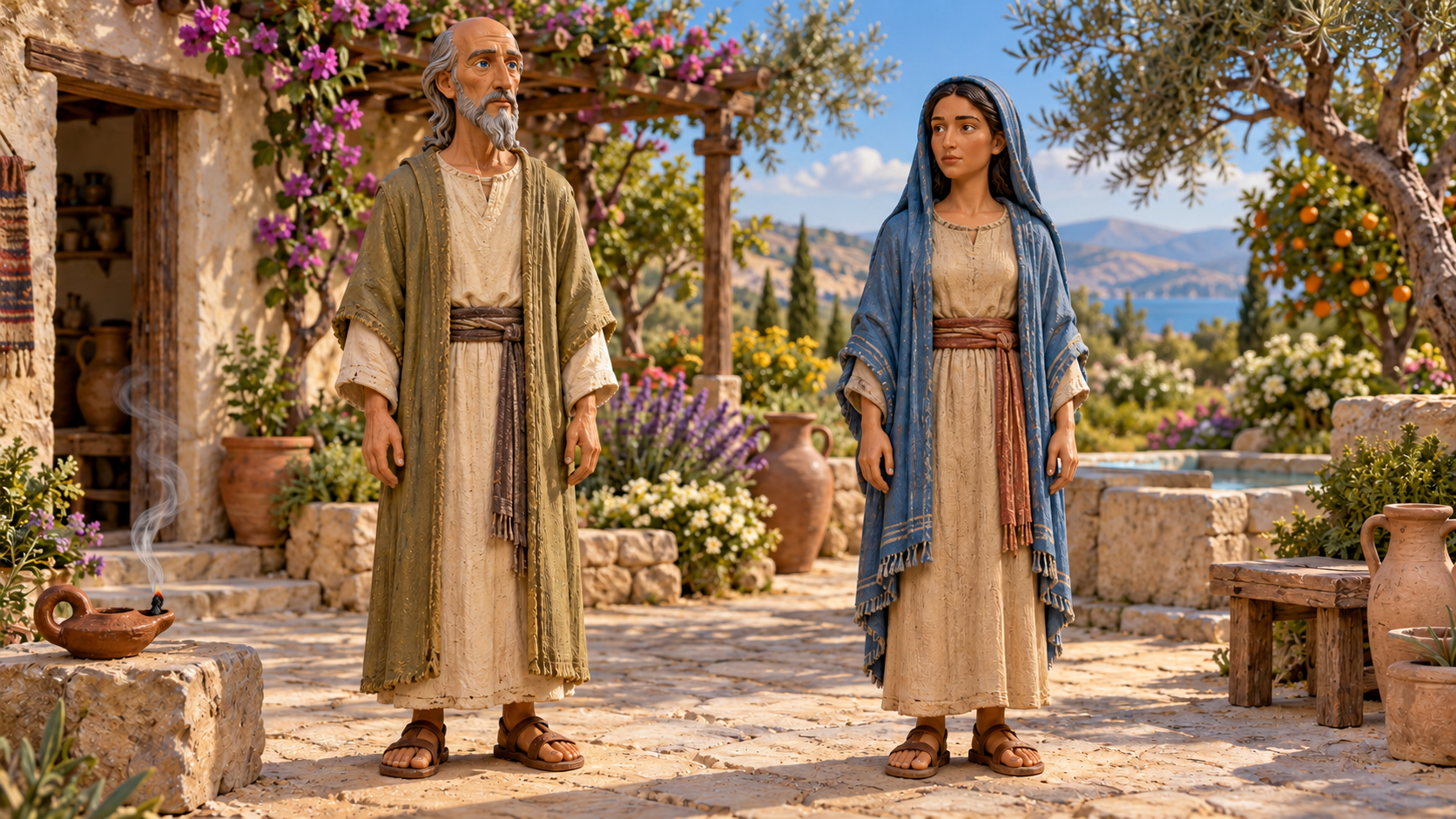
The Greek word in this study is tuphomai, Strong’s number G5188. It describes smoking or smoldering. In this verse, flax pictures a lamp wick made from plant fibers. The KJV word “quench” means to put out. The image is of a wick producing smoke instead of a strong, useful flame. Matthew does not give a history of the wick or explain exactly why it is smoking. His focus is what Jesus will not do: He will not extinguish it. Weakness does not make a person disposable. The picture invites us to look at the Servant’s care before we judge someone by how brightly they seem to shine.
Matthew 12:20 · Isaiah 42:3

Is this a flame nearly burned out, or a wick that has barely begun to burn? A smoldering wick can suggest either experience, but the verse does not settle that question. Both applications recognize the image’s frailty. The bruised reed beside it makes the same point: something already vulnerable will not be further crushed by God’s chosen Servant. Matthew is describing Jesus, not laying out stages that every believer must pass through. Someone worn down by years of trouble and someone just beginning to trust Him can both learn from His gentleness. We can offer patient help without first deciding whether another person’s struggle deserves our sympathy.
Matthew 12:18–20 · Isaiah 42:1–3
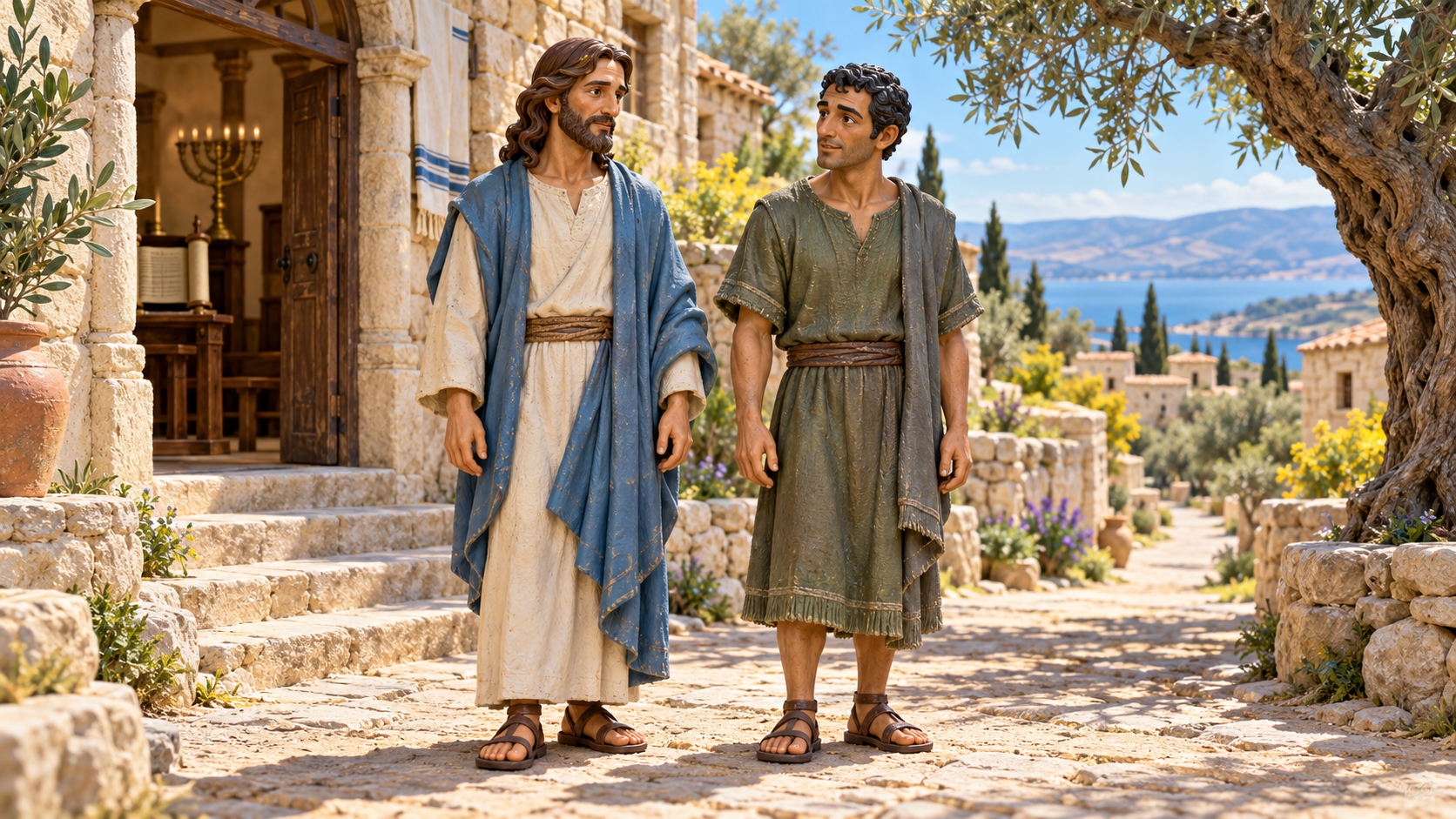
The setting gives this gentle picture its force. Jesus has healed a man’s withered hand on the Sabbath, the weekly day of rest. Some Pharisees, religious leaders in this account, then meet to plan His destruction. Matthew says Jesus withdraws, crowds follow Him, and He heals them. The contrast is sharp: they plan harm while He continues to restore life. His withdrawal is not indifference to people in need. He refuses to let their hostility set the direction of His work. Following His example can mean stepping away from a quarrel while continuing to do what is good. Gentleness does not require remaining in danger.
Matthew 12:9–16

The verse does not stop with the smoking wick. It continues, “till he send forth judgment unto victory.” Here judgment concerns God’s just rule and the setting right of what is wrong. Jesus’ care for the weak is part of His mission, not a pause before He becomes harsh. The word “till” does not promise that He will later extinguish the people He has protected. Isaiah’s Servant keeps going until God’s purpose is established, and Matthew ends this quotation with hope for the Gentiles, people of the nations. We need not choose between kindness and what is right. We can address wrong honestly without treating a person as worthless.
Matthew 12:18–21 · Isaiah 42:3–4

The passage first tells us who Jesus is. It also shapes how we treat people who are struggling. A sharp remark, public embarrassment, or an impatient demand can add weight to an already burdened person. Patient care might mean listening before advising, offering practical help, or speaking a difficult truth quietly and kindly. Galatians 6 connects restoring someone with meekness, a gentle spirit, and bearing one another’s burdens. This does not mean ignoring harmful behavior or promising an immediate recovery. It means helping without crushing. If you are the tired person today, bring that weakness honestly to Christ and let a trustworthy person help you carry it.
Matthew 12:15, 20–21 · Galatians 6:1–2
THE BOTTOM LINE
Jesus does not treat fragile people as disposable. Bring Him your weakness, and let His gentleness shape the way you help someone else.
READ THE PASSAGE TOGETHER
| The destructive plot · Matthew 12:14 | The Servant’s care · Matthew 12:15–21 |
|---|---|
| Opponents plan how to destroy Jesus. | Jesus withdraws and continues healing. |
| Hostility seeks to end His work. | He does not break the bruised reed or quench the smoking wick. |
| Power is used to harm. | His gentle mission brings God’s judgment to victory and hope to the nations. |
A MOMENT TO RESPOND
Where could your gentleness help someone who is struggling today?
A prayer: Lord Jesus, thank You for Your gentleness. Help me trust You with my weakness and care for others without crushing them.
TODAY’S WORD · AN EVERYDAY REMINDER
A companion to today’s study of Smoking in Matthew 12:20: a reminder of the Servant who does not quench the smoking wick.
360° view · smoldering, NOT SNUFFED.
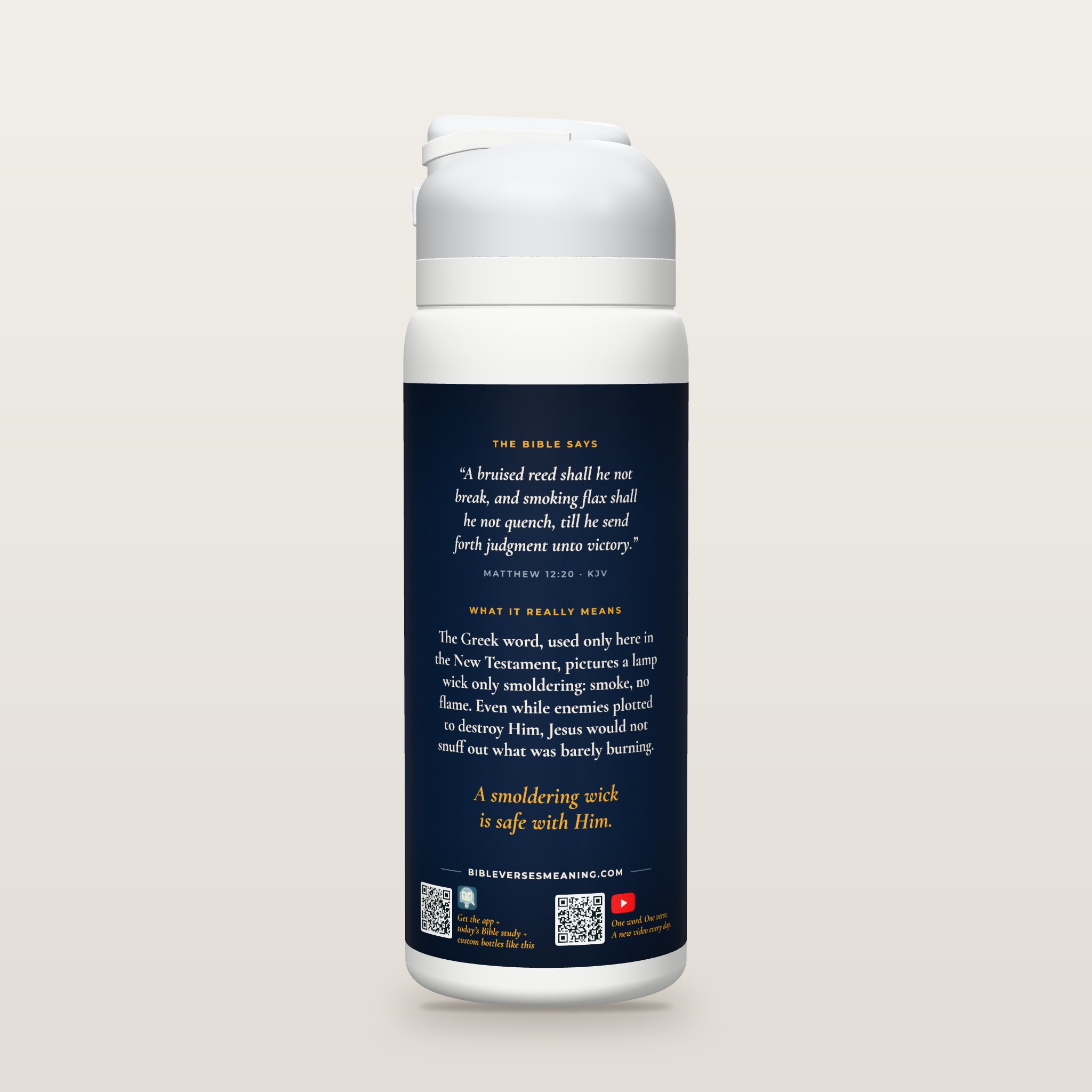
PRINTED ON THE BOTTLE
A smoldering wick is safe with Him.
“A bruised reed shall he not break, and smoking flax shall he not quench, till he send forth judgment unto victory.”
Matthew 12:20 · KJV
An everyday reminder to bring Him your weakness and care gently for another person.
Explore today’s study bottle ↗

Headline: smoldering, NOT SNUFFED.
Verse: “A bruised reed shall he not break, and smoking flax shall he not quench, till he send forth judgment unto victory.”
Meaning: The Greek word, used only here in the New Testament, pictures a lamp wick only smoldering: smoke, no flame. Even while enemies plotted to destroy Him, Jesus would not snuff out what was barely burning.
Reminder: A smoldering wick is safe with Him.
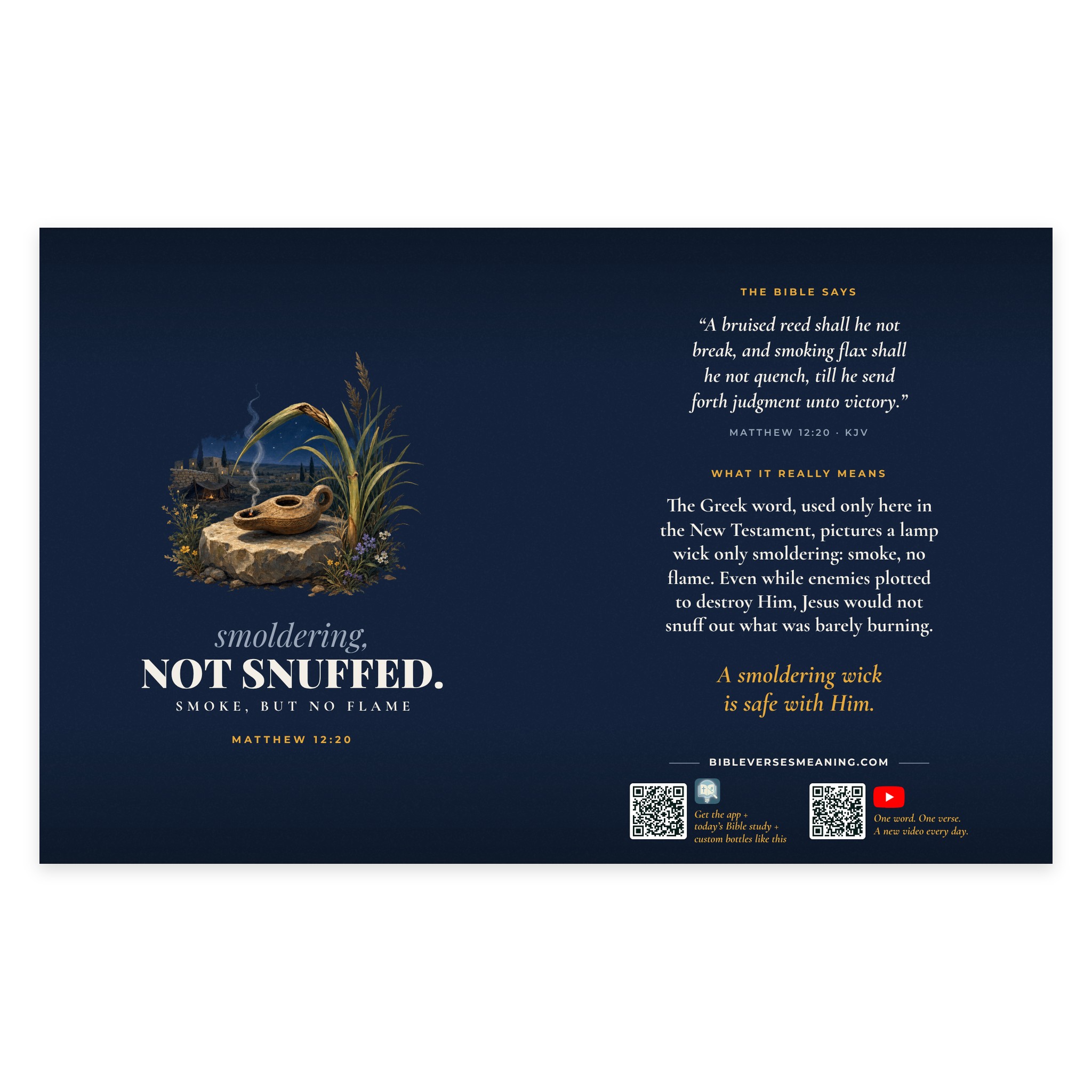
A companion to the study, created to help you remember today’s word.
FROM BIBLE VERSES MEANING
Continue reflecting on the word, the passage, and today’s song.
📖 Word Study: smoking (G5188)
Matthew 12:20
1. Linguistic Nuance
Unlike Greek terms for vibrant burning (kaio) or destructive flame (phlogizo), typho specifically describes smoldering without light. It conveys the nuance of a dying ember—an entity at its absolute threshold of vitality, generating foul irritation (smoke) rather than warmth or illumination.
2. Historical Context
"Flax" refers to a linen oil-lamp wick. In ancient homes, when a lamp ran dry, the charred wick stopped yielding light and emitted acrid smoke. Standard practice was to pinch it out and discard it as useless. First-century hearers would recognize that refusing to quench a smoldering wick represented extraordinary, counter-cultural gentleness toward what society deemed burdensome or broken.
3. Practical Application
This applies to people experiencing deep emotional, spiritual, or mental exhaustion—those whose "light" has dimmed and whose struggles may even cause friction or discomfort to others. Instead of discarding, harsh judgment, or "canceling" burnt-out individuals, the text mandates patient, delicate restoration, nurturing fragile life back to strength.
— Bible Verses Meaning App
💡 Bible Insight
Q: In Matthew 12:20, quoting Isaiah, Matthew says of Jesus, "a bruised reed shall he not break, and smoking (tuphomai) flax shall he not quench, till he send forth judgment unto victory." Is the smoking flax a picture of faith that is almost burned out and about to die, or of a wick that is only smoldering because it has not yet fully caught fire? And what does it suggest that Matthew sets this gentleness right after the Pharisees "held a council against him, how they might destroy him" (Matthew 12:14)?
OVERVIEW
In Matthew 12:20, the image of "smoking flax" (tuphomai) represents a fragile, smoldering wick—depicting either faith that is weak and near extinction or a vulnerable spark that has not yet caught fully into a bright flame. In both interpretations, the focus is on extreme frailty. Matthew places this quotation immediately after the Pharisees take counsel to destroy Jesus Matthew 12:14 to create a striking contrast. While the religious leaders display harsh, destructive legalism that seeks to crush life over Sabbath traditions, Jesus responds with non-violent restraint, withdrawing quietly to heal the sick and protect the weak Matthew 12:15-20. The consistent biblical principle shown here is that true servant-leadership does not operate through aggressive confrontation or legalistic condemnation, but through tender preservation of fragile life until divine justice achieves ultimate victory.
KEY BIBLICAL PASSAGES
Matthew 12:14 reveals the hostile setting: "Then the Pharisees went out, and held a council against him, how they might destroy him." This highlights the destructive mindset of legalistic authorities who prioritize rigid rules over human restoration.
Matthew 12:15 contrasts Jesus' response to this plot: "But when Jesus knew it, he withdrew himself from thence: and great multitudes followed him, and he healed them all." Instead of escalating conflict or seeking revenge, Jesus chooses quiet withdrawal while continuing His work of mercy.
Matthew 12:18-20 grounds Jesus' actions in Old Testament prophecy. Verse 19 states, "He shall not strive, nor cry; neither shall any man hear his voice in the streets," describing a non-aggressive ministry. Verse 20 emphasizes His restorative nature: "A bruised reed shall he not break, and smoking flax shall he not quench, till he send forth judgment unto victory." Together, these passages teach that Jesus deliberately nurtures the broken and preserves faint faith rather than discarding it.
PRACTICAL WISDOM
The text provides direct guidance for handling interpersonal conflict and supporting struggling individuals. When confronted by hostility, hostility should not be met with aggressive retaliation; instead, Jesus' example encourages quiet withdrawal and a continued focus on doing good Matthew 12:15, 19.
In personal relationships and community life, people who are spiritually exhausted or fragile—the "bruised reeds" and "smoking flax"—must be handled with patience and care rather than harsh demands. Rather than extinguishing a flickering spark of faith with critical judgment, believers are called to nurture and protect those who are struggling.
Practically, this shapes how leaders and individuals respond to weak or failing peers. Instead of enforcing rigid expectations that break fragile spirits, decisions should reflect restorative care, practical help, and quiet persistence in well-doing.
— Bible Verses Meaning App
You Won’t Blow It Out turns the smoking-wick image into a personal prayer about exhaustion and Christ’s gentleness. Its tired bones, empty oil, and fading spark develop the nearly burned-out application. Matthew does not tell us exactly why the wick is smoking, so the song is a poetic response rather than the only possible explanation of the image. Its hope rests in the Servant who does not crush the weak and who brings God’s justice to victory. The complete creator-supplied lyrics are preserved; timed captions follow the actual singing and retain audible repeats.
Mmm yeah
Ooh, Lord
Tired bones and a heavy mind
No oil left to leave behind
Choked out on my own acrid breath
Feelin' mighty close to a living death
This charred wick is all that remains
Heavy sighs and old rusted chains
You see the smoking, but you won't blow it out
You see the smoking, no room for any doubt
When the world wants to toss me in the dark
You nurture every single fading little spark
You see the smoking, but you won't blow it out
You see the smoking, no room for any doubt
They look at me and they see a nuisance
Ready to throw away, find a new sense
But you lean in close to this bitter smoke
Holding up the pieces when my spirit broke
A counter-cultural gentleness that heals my soul
Putting back the pieces, making me whole
You see the smoking, but you won't blow it out
You see the smoking, no room for any doubt
When the world wants to toss me in the dark
You nurture every single fading little spark
You see the smoking, but you won't blow it out
You see the smoking, no room for any doubt
(Yeah, you won't blow it out)
This smoking wick... safe in your hands
Extraordinary gentleness... mmm
Ooh, yeah, thank you, Lord
Try Bible Verses Meaning free for 7 days and discover what the original words really mean.
