Daily studies that reveal the original Hebrew and Greek meanings behind Scripture. No seminary required — just you, your phone, and 15 minutes.
ZEPHANIAH 1:12 · STRONG’S NUMBER H7087
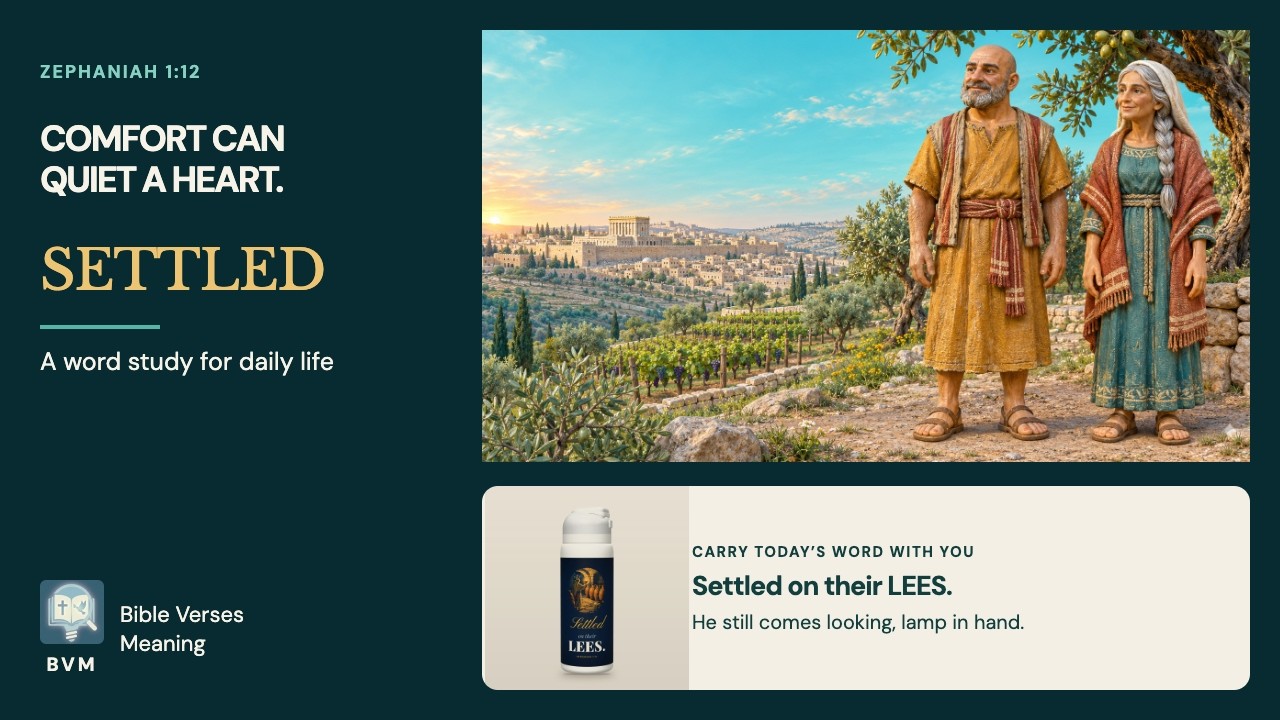
Zephaniah warns about people who no longer expect God to act. His picture of undisturbed wine invites us to examine what our daily choices say about our faith.
“Settled” · qapha · קָפָא
“And it shall come to pass at that time, that I will search Jerusalem with candles, and punish the men that are settled on their lees: that say in their heart, The LORD will not do good, neither will he do evil.”
Zephaniah 1:12 · King James Version
THE COMPLETE STUDY
Five discoveries, the real app study, and Pour Me Out.
READ · REFLECT · RESPOND
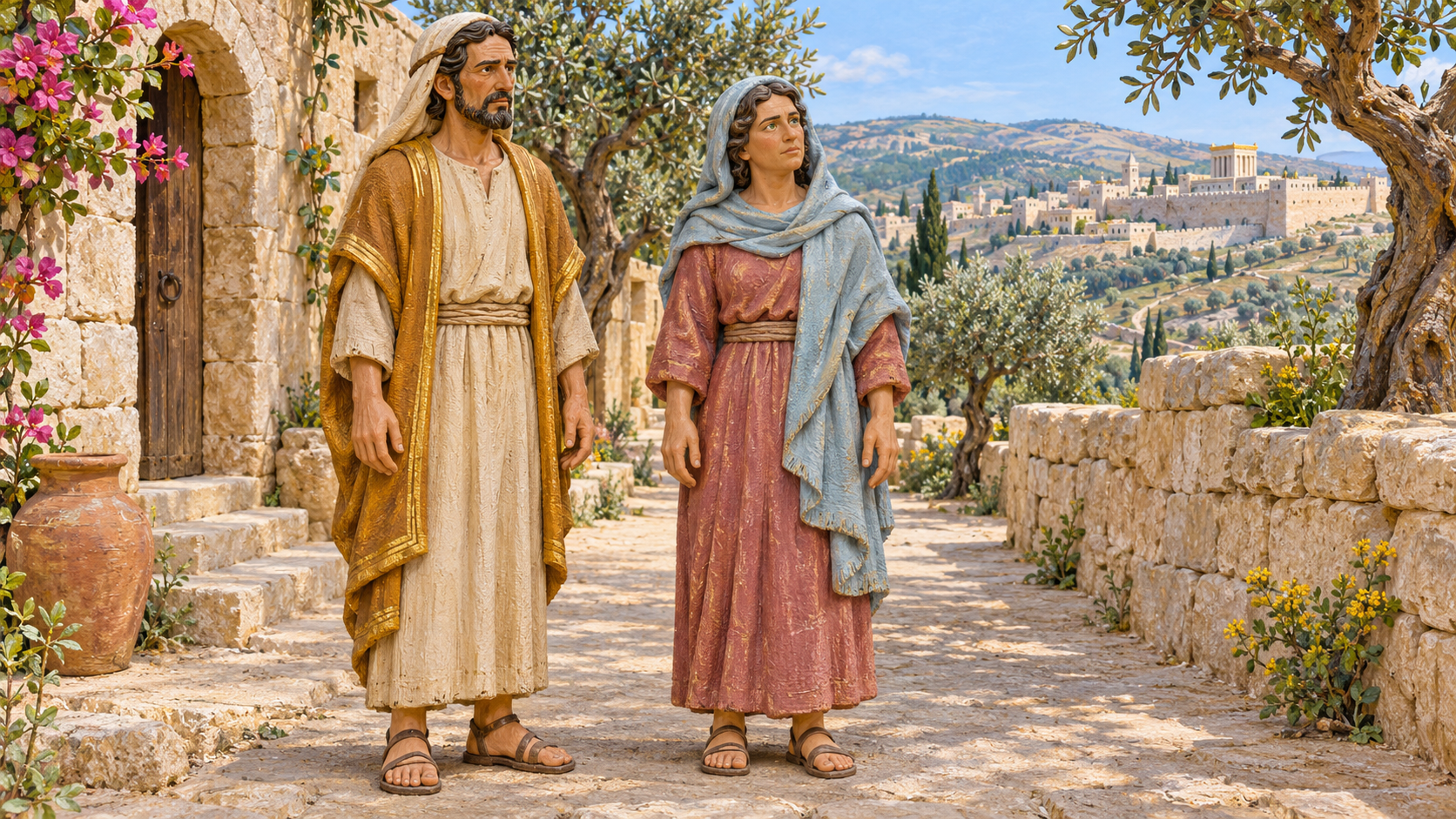
Zephaniah was a prophet, someone who spoke God’s message. He warned Judah and Jerusalem during the reign of King Josiah. Some people had stopped seeking the LORD. In verse 12, their settled condition is explained by what they say in their hearts: God will do neither good nor evil. Here, doing evil refers to bringing judgment or calamity, not committing moral wrongdoing. They are treating God as someone who will neither help nor hold them accountable. The passage is not condemning sleep, a peaceful home, or needed rest. It exposes a deeper problem: becoming so unconcerned about God that His word no longer shapes our choices. A person can still use religious language while making plans as though God has nothing to say.
Zephaniah 1:1, 6, 12
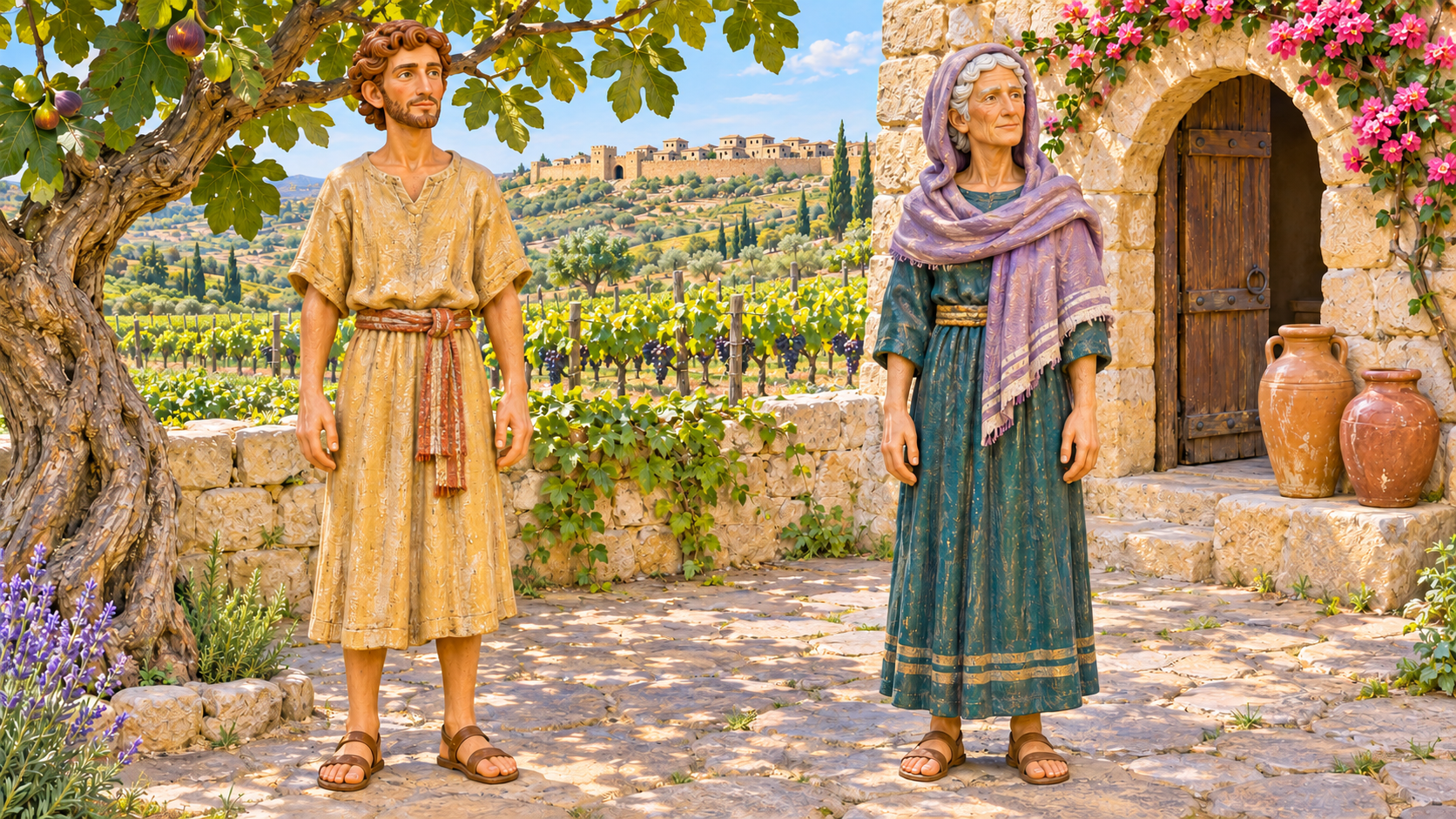
The Hebrew word behind settled is qapha, Strong’s number H7087. It can describe thickening or congealing, when something liquid becomes firm. “Lees” are the sediment that settles beneath wine. Zephaniah pictures people like wine left undisturbed on that sediment. The comparison helps us imagine an attitude that has become fixed and resistant to change. We do not need to make a claim about every wine’s quality to understand the warning. The verse itself identifies the problem: these people expect nothing from God. In everyday life, that may look like dismissing a needed apology, ignoring an honest correction, or repeatedly putting off a clear responsibility. Those are applications of the passage, not extra definitions hidden inside the Hebrew word.
Zephaniah 1:12
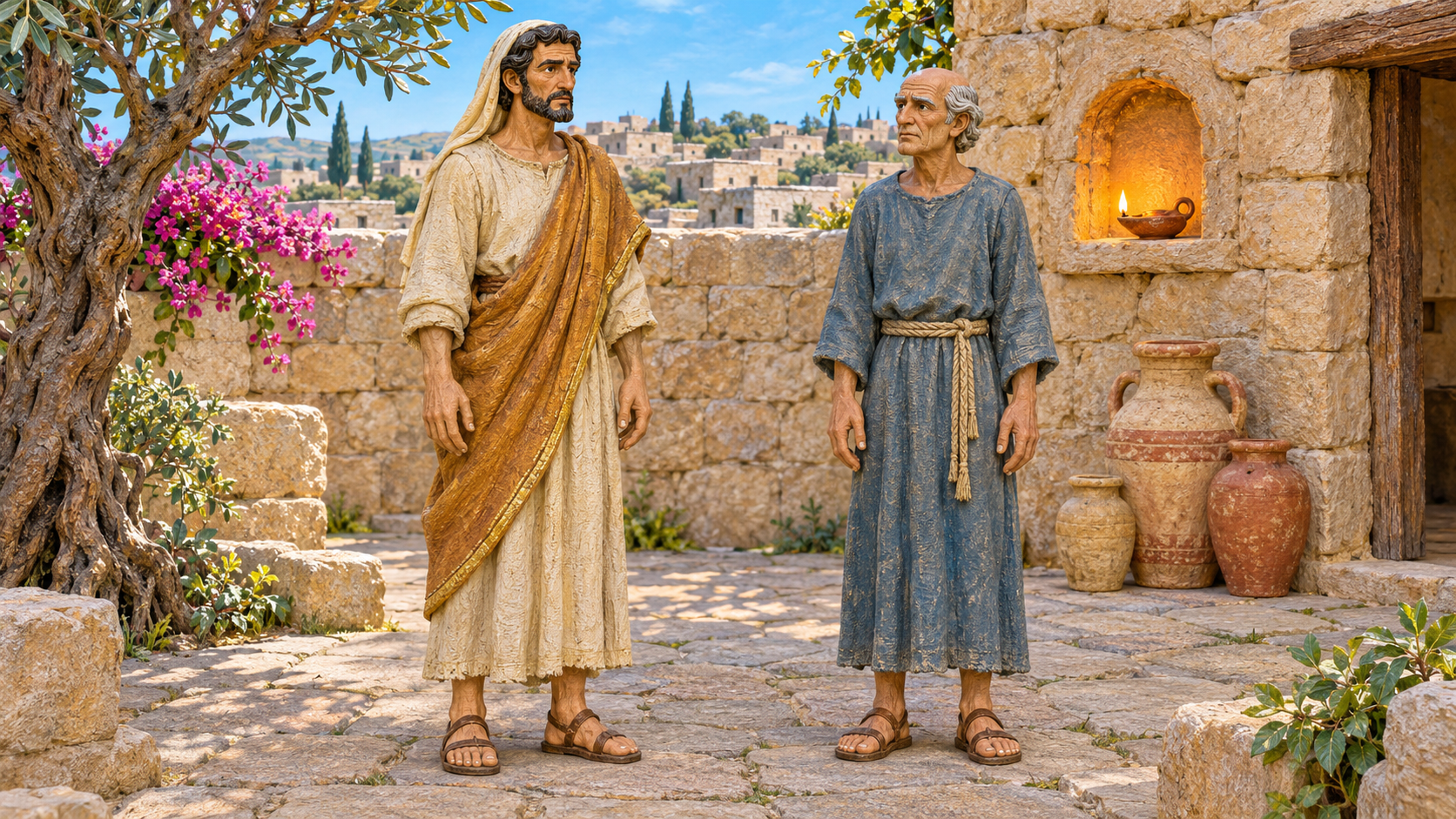
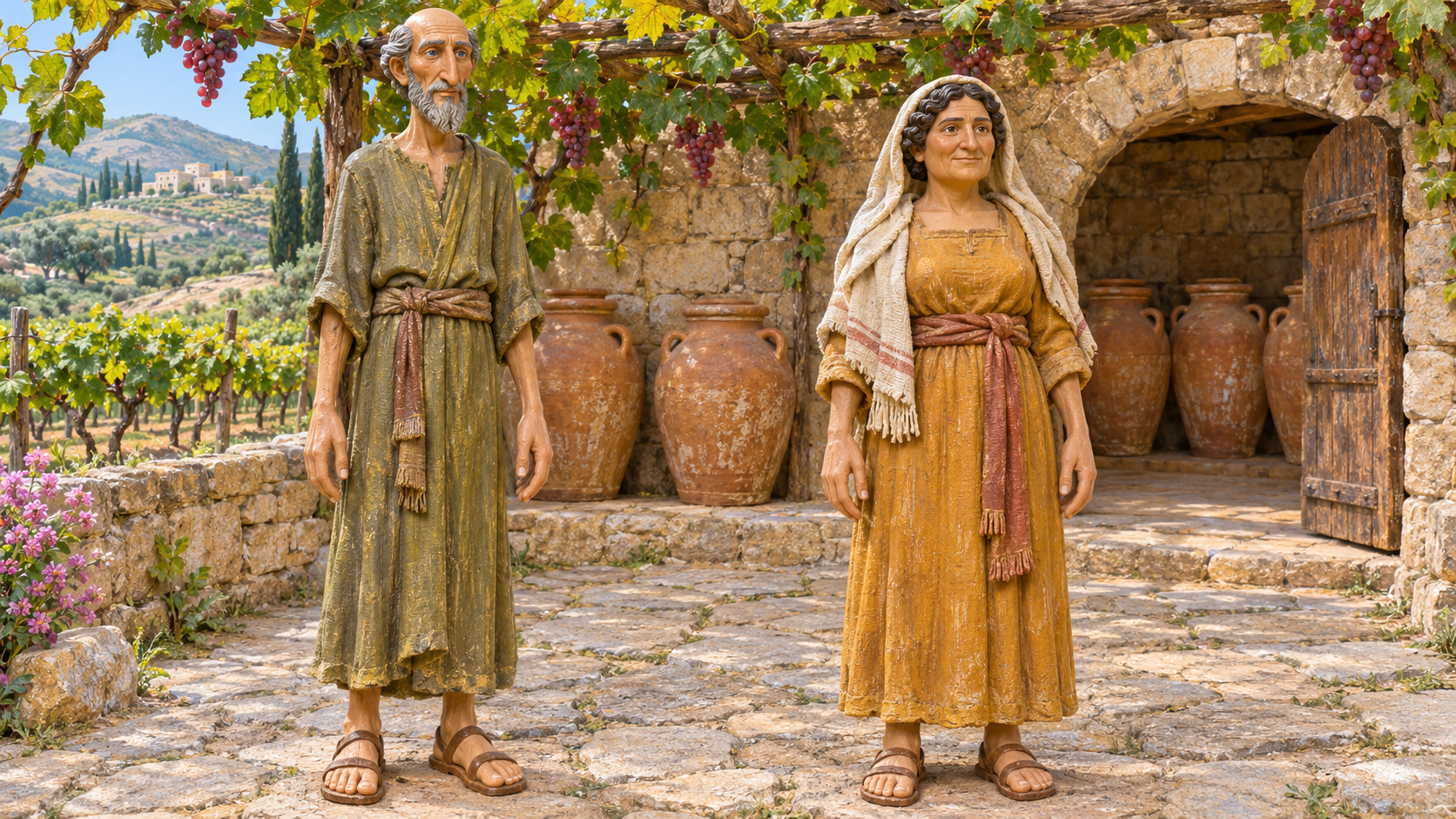
The LORD says He will search Jerusalem “with candles.” Picture a careful search that brings light into places where someone hoped to remain unnoticed. This is an image of thorough judgment, not a suggestion that God needs help seeing. The people’s private assumption will not protect them. Verse 13 says their goods, houses, and vineyards will be taken from their use. God directly confronts their belief that He will do nothing. The point is serious: a settled routine cannot make wrongdoing safe. We can respond by honestly naming what we have tried to excuse. The passage does not authorize us to label every hardship in someone else’s life as punishment. It calls us to take God’s own warning seriously.
Zephaniah 1:12–13
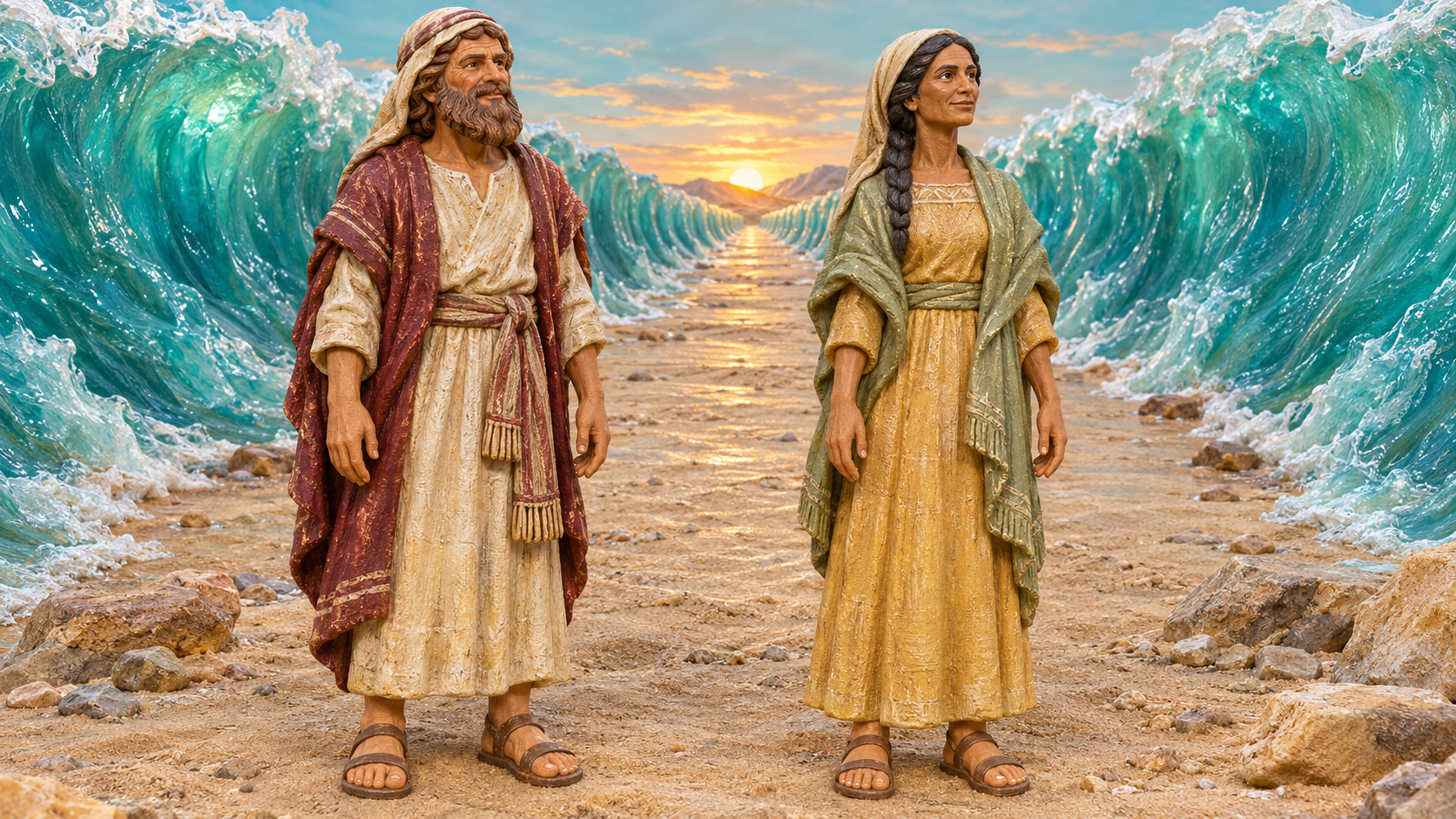
In the song celebrating Israel’s rescue from Egypt, Exodus says, “the depths were congealed in the heart of the sea.” This is another use of qapha. There the word describes the waters becoming firm in an act of God’s deliverance. In Zephaniah, the wine picture exposes people who have become unresponsive to Him. The shared word helps us feel the contrast between movement and firmness, but it does not make the two passages mean the same thing. The sea is not morally stubborn, and the Hebrew word is not always a name for unbelief. Context tells us what is happening. Read together, the passages also challenge the assumption that God never acts: the LORD whom Israel praised for rescue is the LORD Jerusalem must take seriously.
Exodus 15:8 · Zephaniah 1:12
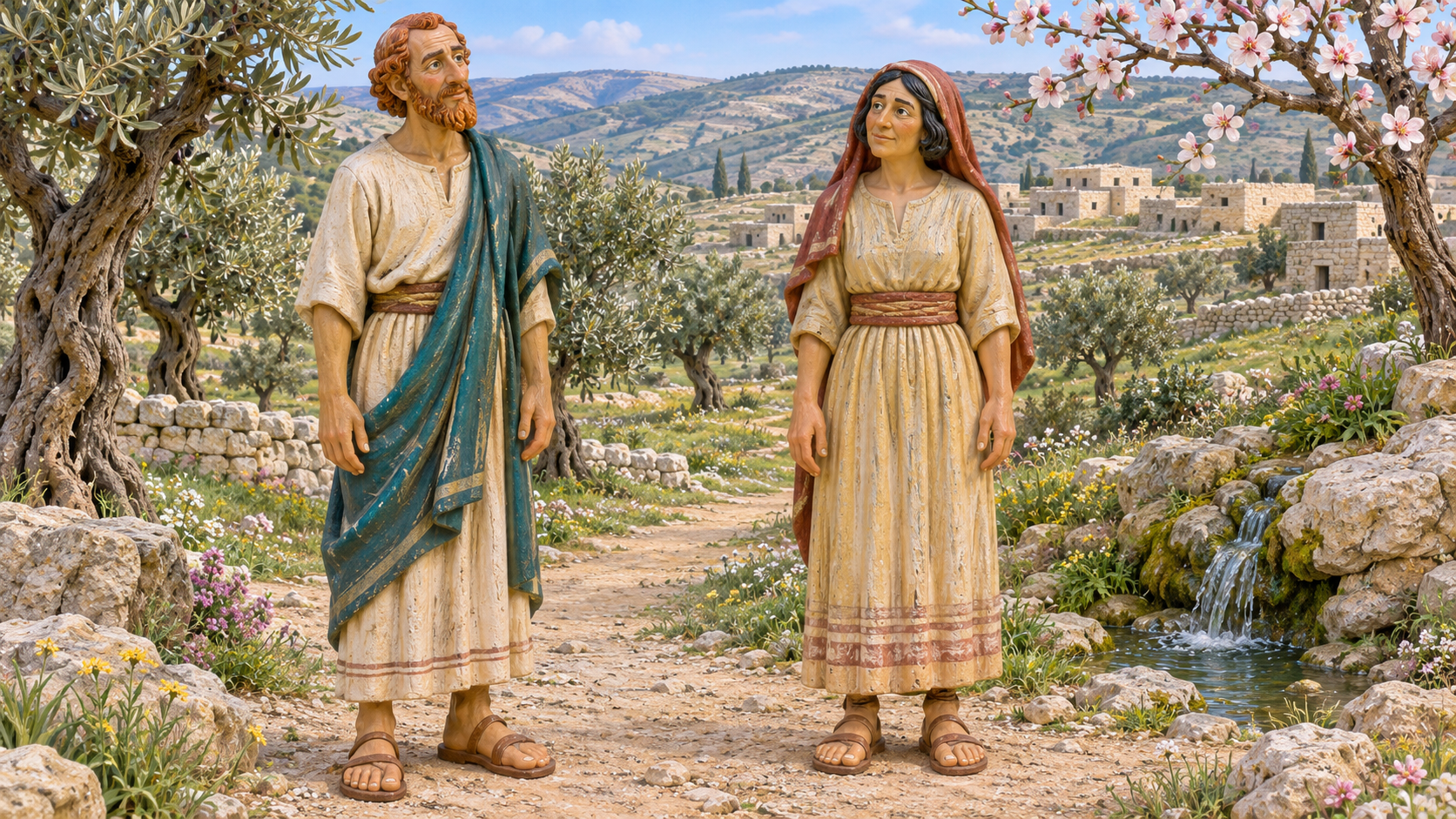
Zephaniah warns that silver and gold cannot rescue people from the LORD’s judgment. Then he calls them to gather and seek the LORD, righteousness, and meekness. Righteousness means doing what is right before God. Meekness is a humble readiness to receive His correction. The response is more than searching for a stronger feeling. It means turning toward God and acting on what He has made clear. Read the passage slowly. Admit one area where you have ignored Him. Then take an honest step, such as making that apology or putting right what you can. Zephaniah says “it may be ye shall be hid”; he does not offer a technique that guarantees a trouble-free life. The fitting response is humble dependence, not another way to control the outcome.
Zephaniah 1:18; 2:1–3
THE BOTTOM LINE
Being settled on our lees means living as though God will do nothing. His warning calls us to seek Him, receive correction, and let His word shape our next choice.
READ THE PASSAGES TOGETHER
| Exodus 15:8 | Zephaniah 1:12 |
|---|---|
| The depths are congealed. | People are settled on their lees. |
| Firm waters serve God’s rescue. | Undisturbed wine pictures an unresponsive attitude. |
| The song celebrates His action. | The warning confronts belief that He will do nothing. |
Qapha describes becoming firm or settled. The surrounding passage explains its purpose; the word does not always describe unbelief.
A MOMENT TO RESPOND
Where have you begun living as though God has nothing to say?
A prayer: LORD, forgive my indifference. Help me seek You with humility and respond to what You have made clear.
TODAY’S WORD · AN EVERYDAY REMINDER
A companion to today’s study of Settled in Zephaniah 1:12: a reminder to seek the LORD and take His word seriously.
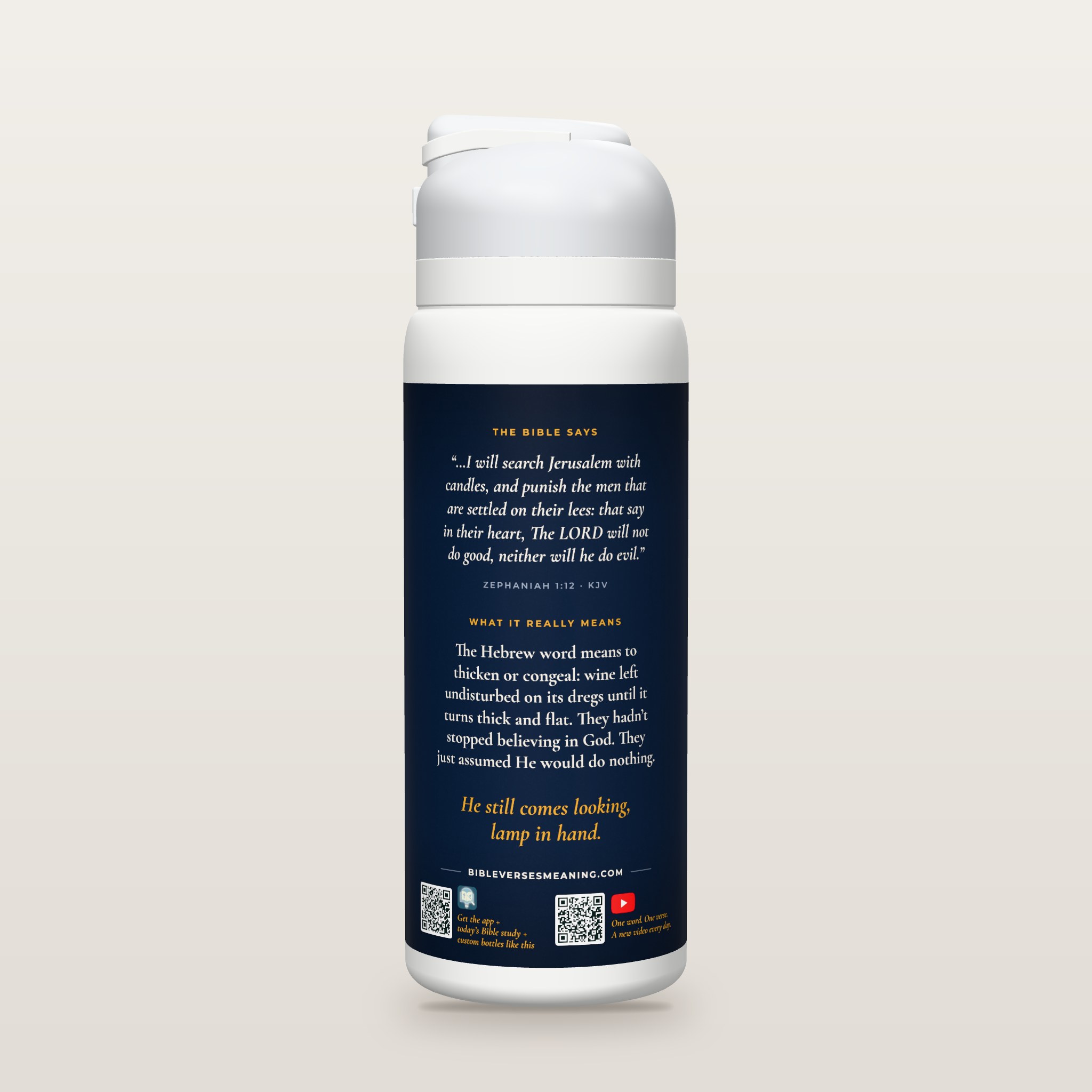
360° view · Settled on their LEES.
PRINTED ON THE BOTTLE
He still comes looking, lamp in hand.
“…I will search Jerusalem with candles, and punish the men that are settled on their lees: that say in their heart, The LORD will not do good, neither will he do evil.”
Zephaniah 1:12 · KJV
An everyday reminder to examine indifference and respond to God’s word.
Explore today’s study bottle ↗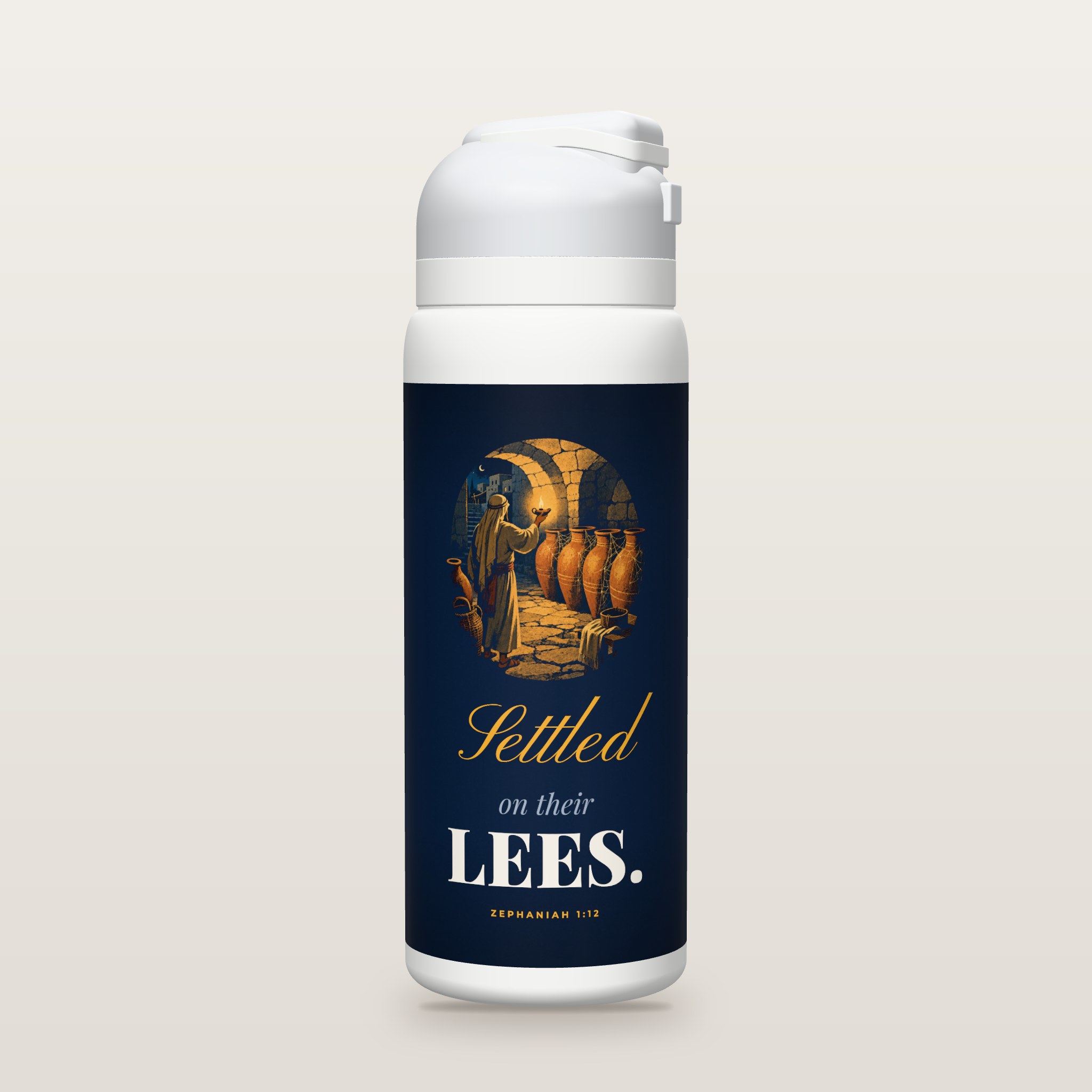
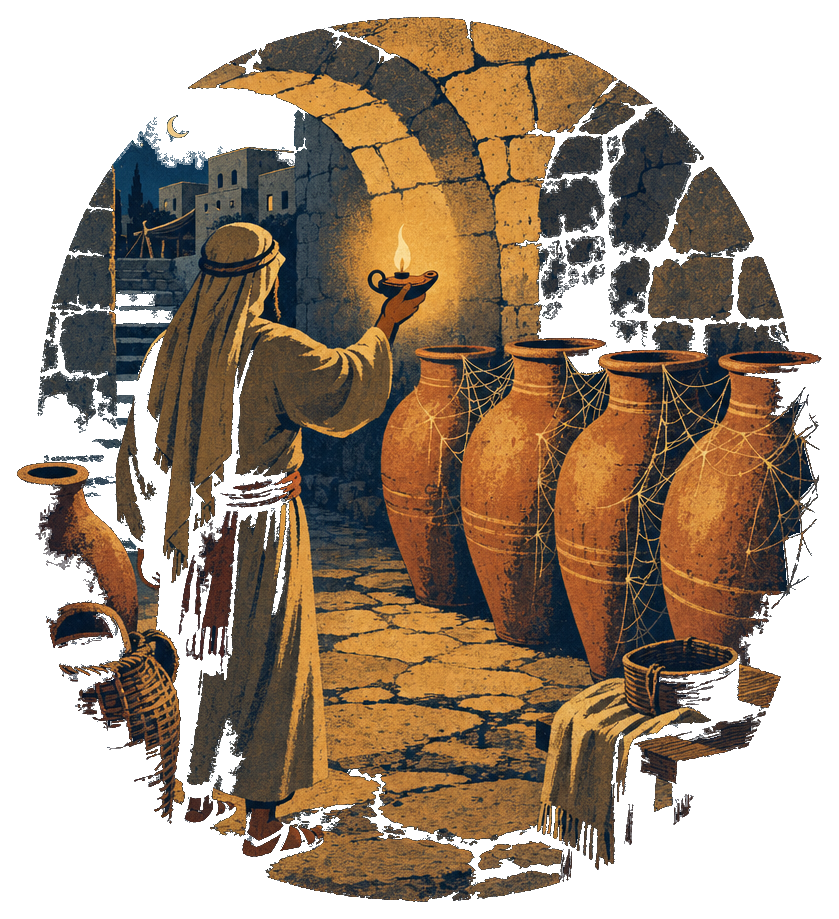
Headline: Settled on their LEES.
Verse: “…I will search Jerusalem with candles, and punish the men that are settled on their lees: that say in their heart, The LORD will not do good, neither will he do evil.”
Meaning: The Hebrew word means to thicken or congeal: wine left undisturbed on its dregs until it turns thick and flat. They hadn’t stopped believing in God. They just assumed He would do nothing.
Reminder: He still comes looking, lamp in hand.
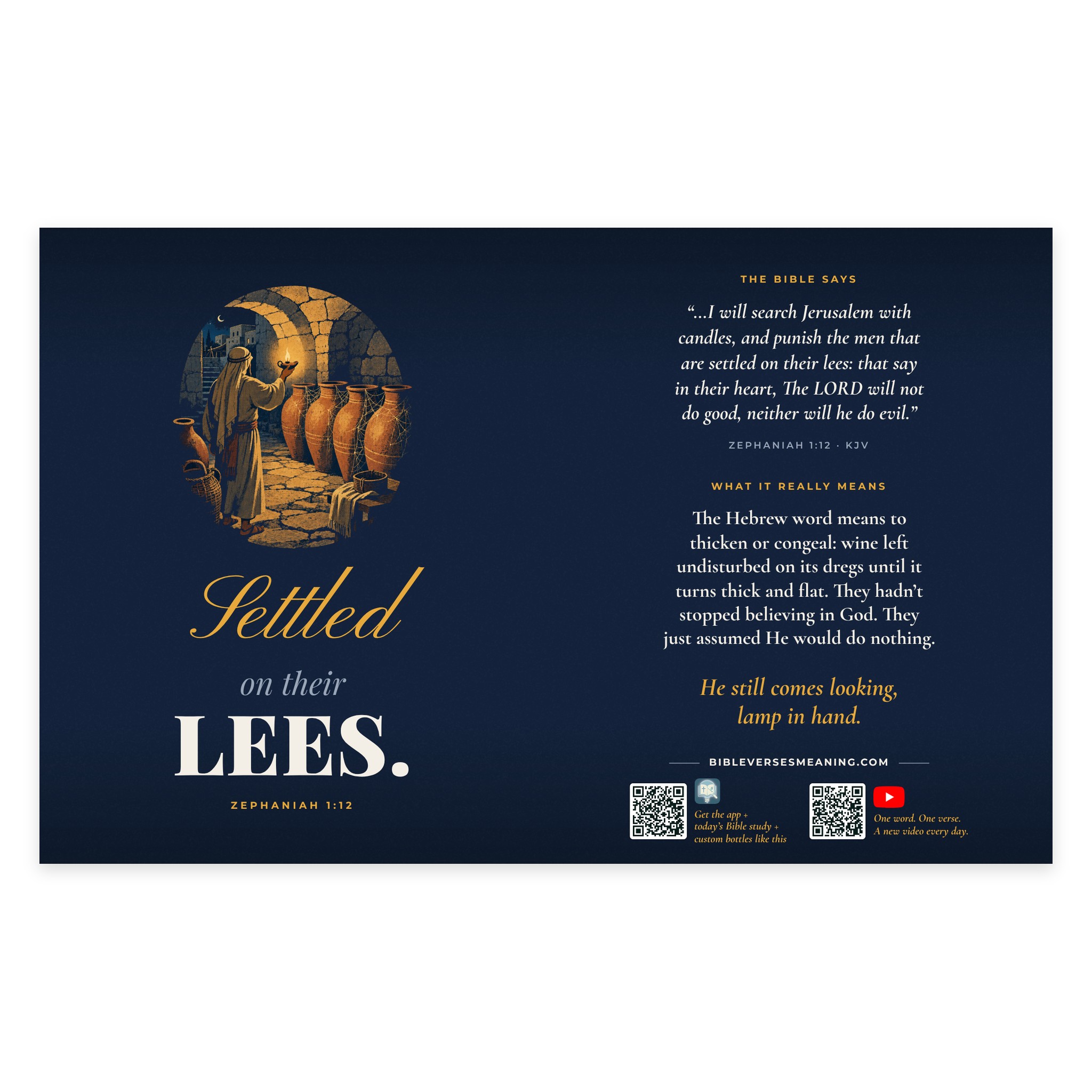
A companion to the study, created to help you remember today’s word.
FROM BIBLE VERSES MEANING
Continue reflecting on the word, the passage, and today’s song.
📖 Word Study: settled (H7087)
Zephaniah 1:12
1. Linguistic Nuance
Unlike Hebrew terms for merely "resting" (nuach) or "dwelling" (yashav), qāp̄ā’ carries visceral imagery of physical stagnation. It describes fluid turning rigid, thick, or murky—like congealed oil or curdled milk. The word implies not a peaceful state of rest, but a hardening process resulting in decaying inertia.
2. Historical Context
Ancient winemakers repeatedly poured fermented grape juice from vessel to vessel to separate it from its "lees" (dregs). Wine left undisturbed absorbed the dregs' foul taste, becoming thick and spoiled. Zephaniah’s 7th-century BCE audience understood this metaphor instantly: Judeans, lulled by prolonged luxury, had grown spiritually stagnant, devolving into practical atheism—assuming God was indifferent and inactive.
3. Practical Application
This warns against moral apathy born of undisturbed comfort. When life lacks challenge or self-examination, individuals risk "congealing" into spiritual indifference, operating as though divine accountability is irrelevant. True character requires being routinely refined and disrupted, rather than settling into comfortable decay.
— Bible Verses Meaning App
💡 Bible Insight
Q: In Zephaniah 1:12, the LORD says, "I will search Jerusalem with candles, and punish the men that are settled (qapha) on their lees: that say in their heart, The LORD will not do good, neither will he do evil." Is being "settled" here a picture of simple comfort and ease, or of a deeper thickening of the heart where belief in God has quietly hardened into practical unbelief? And what does it suggest that the same word is used in Exodus 15:8, where "the depths were congealed (qapha) in the heart of the sea"?
OVERVIEW
In Zephaniah 1:12, being "settled on their lees" (qapha) represents far more than simple physical comfort; it depicts a profound thickening of the heart into practical unbelief. The text explicitly defines this internal state by what these individuals say in their heart: "The LORD will not do good, neither will he do evil." This is a condition of spiritual inertia where individuals conclude that God is functionally absent or indifferent. The cross-reference to Exodus 15:8 illuminates this metaphor: there, the same word describes how "the depths were congealed (qapha)" so that fluid sea waters stood rigid like a heap. When applied to human attitudes in Zephaniah, qapha portrays a heart that has lost its fluid sensitivity, thickening like undisturbed wine sediment into a dense, solid apathy. The consistent biblical principle across these passages shows that just as physical waters can congeal into walls, human hearts can congeal into a stagnant state of indifference that denies God's active role in human affairs.
KEY BIBLICAL PASSAGES
The textual dynamic between these passages highlights the physical and spiritual dimensions of being "congealed" or "settled." In Exodus 15:8, the term describes physical transformation during Israel's deliverance: "with the blast of thy nostrils the waters were gathered together, the floods stood upright as an heap, and the depths were congealed in the heart of the sea." In Zephaniah 1:12, the term shifts to a moral context, where the LORD promises to "search Jerusalem with candles, and punish the men that are settled on their lees," targeting those who convince themselves that divine intervention does not exist.
Surrounding context in Zephaniah illustrates how this congealed mindset develops and fails. Zephaniah 1:6 identifies the root of this condition in those who "are turned back from the LORD; and those that have not sought the LORD, nor enquired for him." This persistent neglect fosters a false sense of security grounded in accumulated resources. However, Zephaniah 1:18 warns of the limits of material self-sufficiency: "Neither their silver nor their gold shall be able to deliver them in the day of the LORD'S wrath." Together, these passages demonstrate that spiritual congealing begins with failing to seek God, hardens into practical atheism, and leaves individuals exposed to ultimate judgment.
PRACTICAL WISDOM
The imagery of qapha provides a serious warning against passive spiritual stagnation. The text demonstrates that a dangerous form of unbelief is not necessarily vocal hostility, but quiet indifference—assuming that daily affairs proceed without divine oversight, accountability, or care.
To guard against this congealing of the heart, individuals must actively evaluate whether their ease has quietly turned into apathy. Zephaniah 1:6 highlights the fault of those who "have not sought the LORD, nor enquired for him." Practical wisdom requires actively seeking truth and maintaining moral awareness rather than drifting into self-satisfied routine. Modern life frequently tempts people to rely on financial security or personal stability, yet Zephaniah 1:18 highlights that "silver nor their gold" offers no ultimate protection when crisis comes.
Recognizing that divine inspection penetrates even hidden places—metaphorically described as searching "with candles" Zephaniah 1:12—encourages individuals to cultivate an intentional, responsive conscience rather than allowing comfortable circumstances to harden into spiritual blindness.
— Bible Verses Meaning App
Pour Me Out turns the study’s picture of undisturbed wine into a personal prayer for a responsive heart. It is a poetic response to Zephaniah’s warning, not a quotation of the passage. The comparison with congealed waters should be understood through Exodus 15:8, where the firm waters serve God’s rescue rather than representing unbelief. Seeking change does not mean every disruption is a divine judgment or that faithful people must reject ordinary rest.
Sitting too long.
Getting thick in the dark.
The oil is turning in the cold.
A story that is getting old.
I feel the hardening in my veins.
Stuck in the shadow of the stains.
The lees are gathering at the base.
A bitter weight in a sacred space.
Don't let me settle, don't let me stay.
Pour me out, wash the dregs away.
I'm turning rigid, I'm growing thin.
Break the seal, be the cure for this ache.
I need to move, I need to flow.
Don't let me stagnate, don't let me slow.
The vessel's calling for a change.
To rearrange the broken range.
I've absorbed the sour of the past.
A clouded vision that was built to last.
But I can't be wine that's lost its life.
I'm choosing clarity over the night.
Don't let me settle, don't let me stay.
Pour me out, wash the dregs away.
I'm turning rigid, I'm growing thin.
Break the seal, be the cure for this ache.
I need to move, I need to flow.
Don't let me stagnate, don't let me slow.
Shake the foundation, turn it around.
Lift my spirit up off the ground.
I was becoming like stone in the clay.
But I'm asking to be poured out today.
Don't let me settle, don't let me stay.
Pour me out, wash the dregs away.
I'm turning rigid.
I'm growing thin.
I'm growing thin.
Break the seal, be the cure for this ache.
Be the cure for this ache.
I need to move, I need to flow.
Don't let me stagnate, don't let me slow.
Clear at last, no more dregs.
Finally flowing.
Try Bible Verses Meaning free for 7 days and discover what the original words really mean.
