
Take 15 minutes a day to discover what really matters — the Bible
Daily studies that reveal the original Hebrew and Greek meanings behind Scripture. No seminary required — just you, your phone, and 15 minutes.
SONG OF SOLOMON 2:15 · STRONG’S NUMBER H7776
What do the little foxes spoil?
The grapes are still tender when the call comes to catch the foxes. What do these lovers see growing that is worth protecting?
“Foxes” · shu'al · שׁוּעָל
“Take us the foxes, the little foxes, that spoil the vines: for our vines have tender grapes.”
Song of Solomon 2:15 · King James Version
THE COMPLETE STUDY
What do the little foxes spoil?
Five discoveries, the real app study, and Protect This Love.
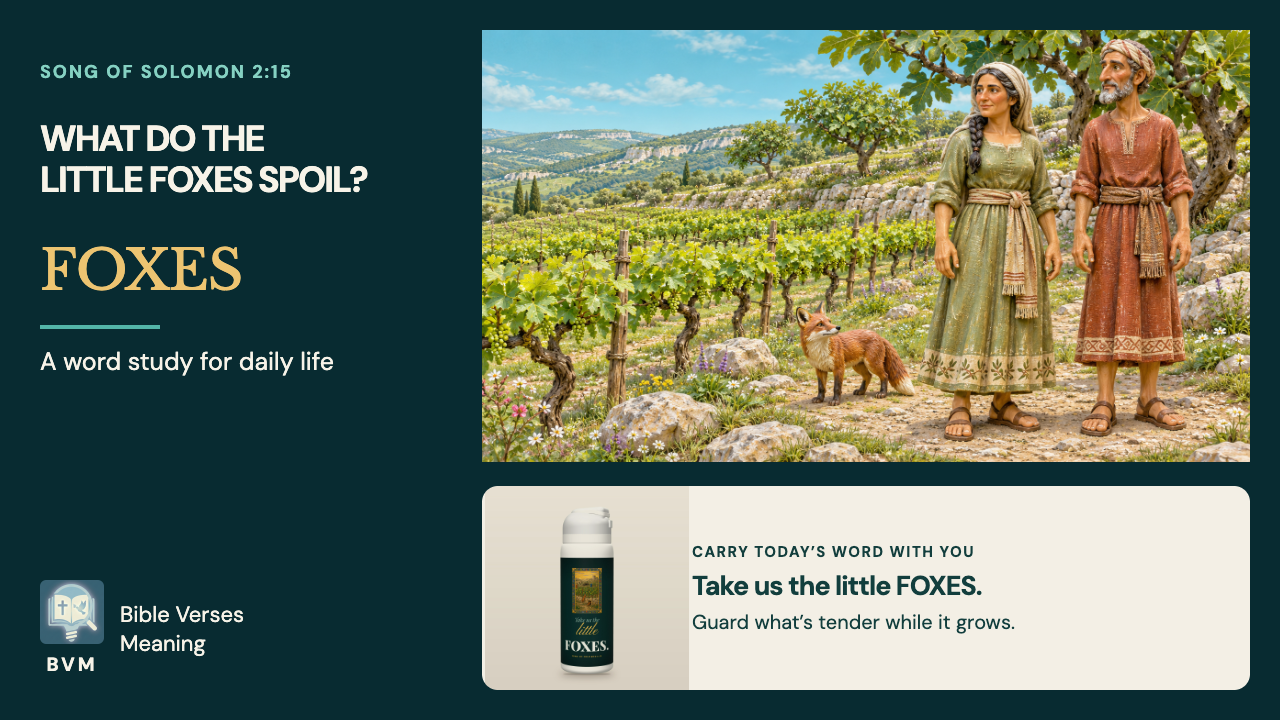

READ · REFLECT · RESPOND
Today's Revelations
- 1
Spring tells us what is at stake.
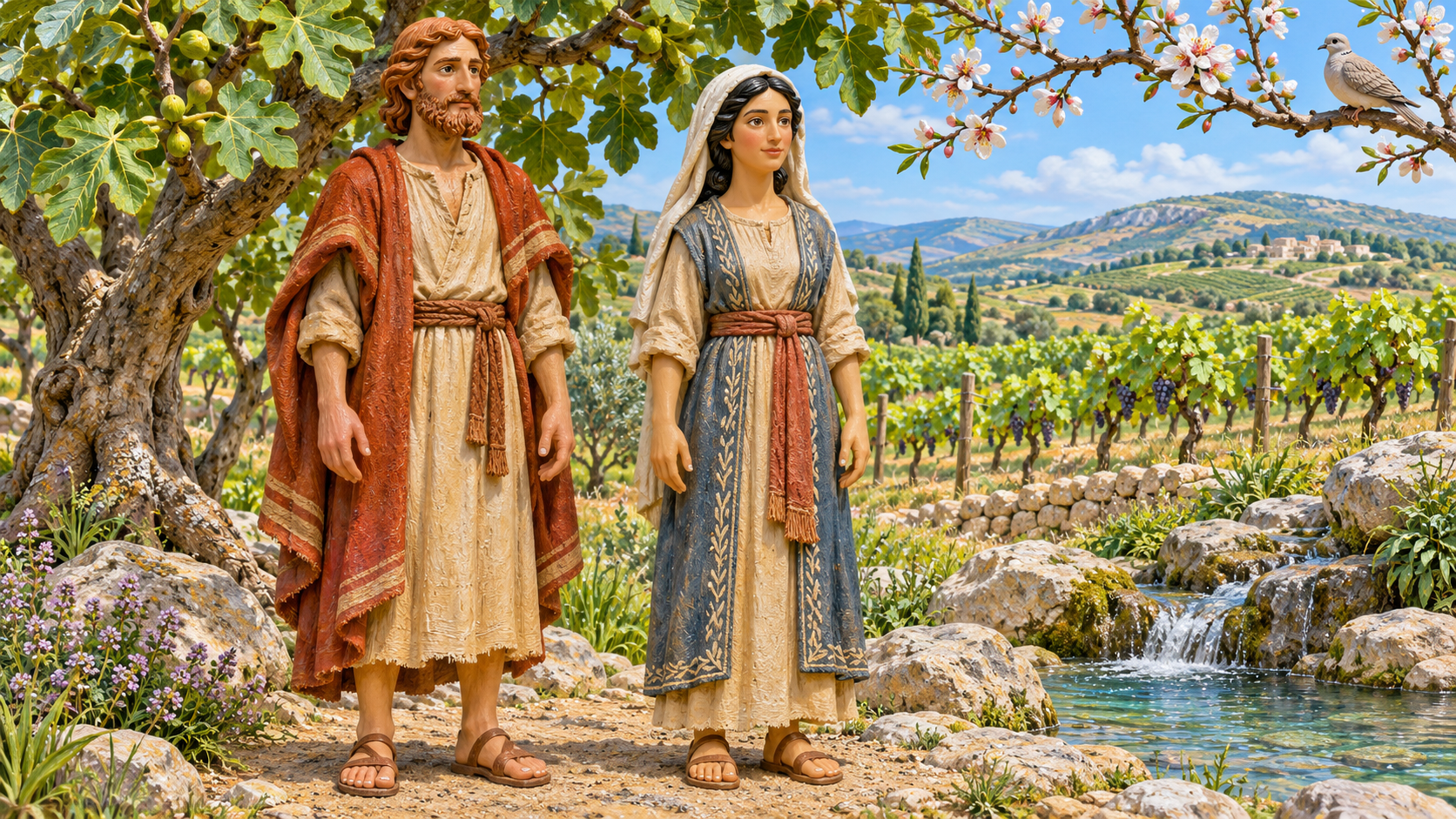
Winter has passed. Flowers appear, a dove calls, and green figs are growing. The beloved invites the woman to come outside and share it with him. Then comes a detail you could easily pass over. The young grapes give off a good smell. The vineyard matters to these two people before it has produced a single ripe bunch. That makes the next verse easier to understand. Catching the foxes matters because there is already something good here, and it is still growing. Think of the first conversation after a long silence. It may feel small, but someone has taken a risk to speak again. That first sign of trust deserves care.
Song of Solomon 2:10–13
- 2
A small fox can spoil a growing vine.
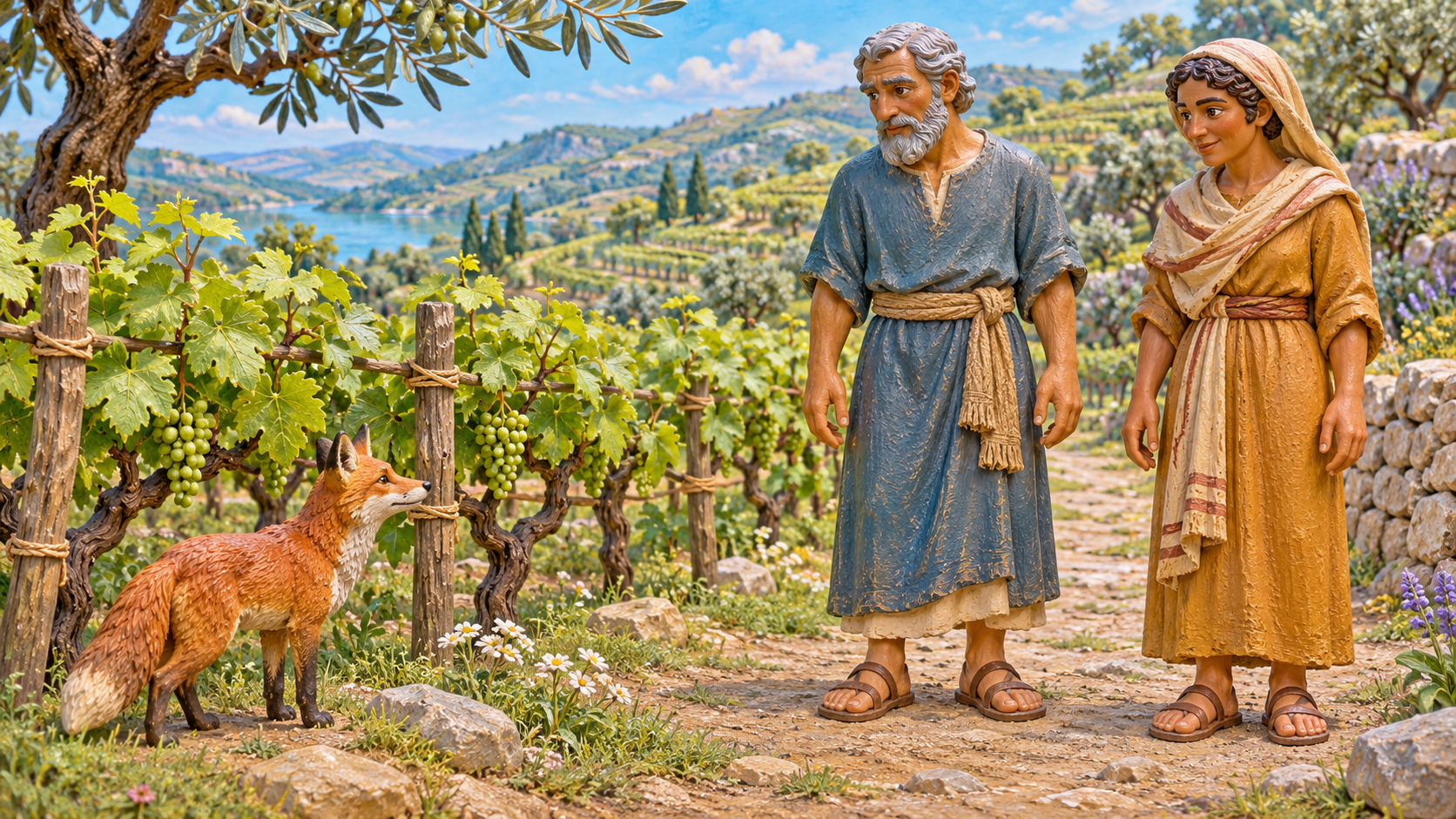
The Hebrew word behind foxes is shu'al, Strong’s number H7776. It names a fox, a small wild animal. The verse gives us all we need to see the danger. The foxes are little, and the grapes are tender. A creature can be small and still do real harm to something that has just begun to grow. The poet does not tell us exactly how the animals spoil the vines. We can stay with the picture he gives. In a relationship, a joke at someone’s expense can seem small to the person who tells it. The person who trusted them with a private worry may remember it long after everyone else has forgotten.
Song of Solomon 2:15
- 3
Listen to the word “our.”
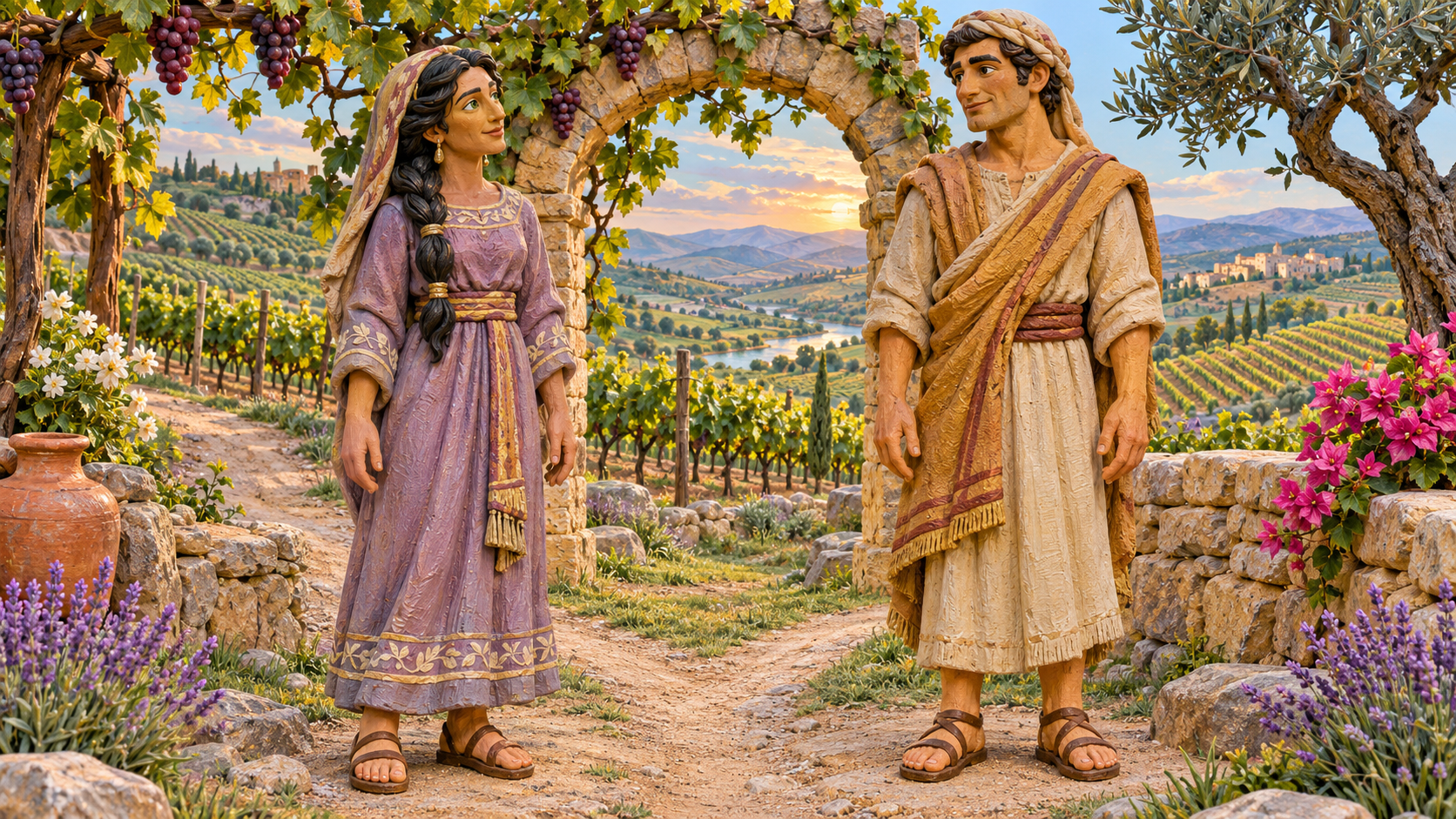
Just before the call to catch the foxes, the beloved asks to hear the woman’s voice. Just after it, she speaks of belonging to each other. Between those words of affection, the vines are called “our vines.” The poem leaves the particular threats unnamed. Outside pressure and a habit within a relationship can both help us see its point. A relative might pass along a rumor. Or one partner might repeatedly promise to listen and then turn away. Those are examples we bring to the verse. A better conversation begins when a couple can ask what is hurting the trust they share. Both have a reason to care, and each can take responsibility for their own part.
Song of Solomon 2:14–16
- 4
Tobiah uses the fox to make people feel small.

In Nehemiah’s day, the people of Jerusalem were rebuilding their city wall. Tobiah, one of their opponents, said that even a fox climbing on it would bring the stones down. Imagine hearing that after carrying stone all morning. He chose a little animal because he wanted the workers to feel that their work was worthless. The wall did not fall in this story. Nehemiah prayed, the people kept building, and the wall came together to half its height. In the vineyard, a little fox poses a real danger to the vines. At the wall, a man uses the idea of a fox to mock. Before you take criticism to heart, ask what actually needs repair and what the speaker is asking you to believe.
Nehemiah 4:1–6
- 5
Care for what is growing today.
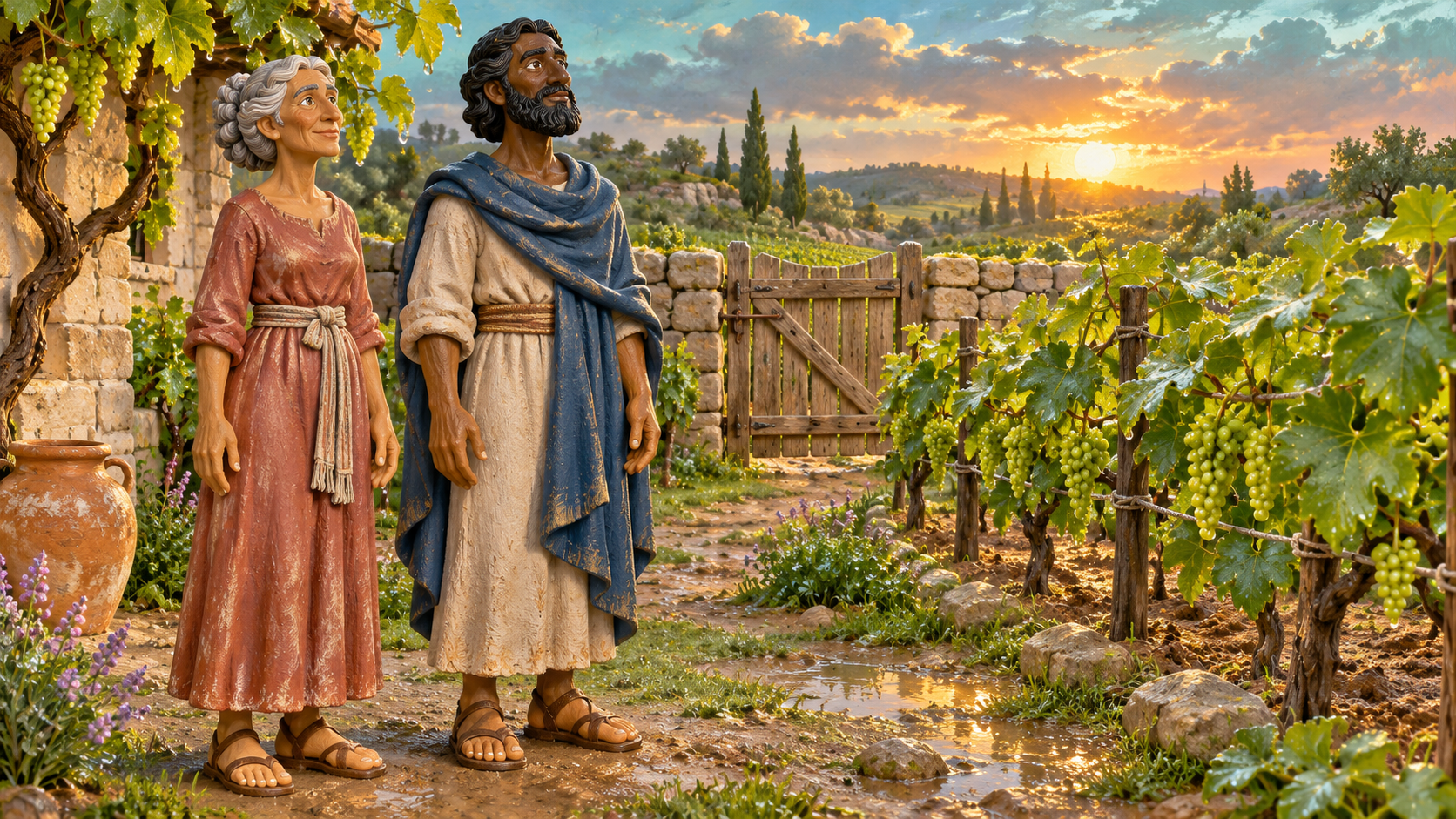
The call to catch the foxes comes while the grapes are tender. There is still time to do something. Think about one relationship where you want trust to grow. Perhaps someone stopped telling you about their day after you shared something they had asked you to keep private. You could start with one honest sentence. ‘You trusted me with that, and I passed it on. I’m sorry.’ Then give the other person time to speak. Or perhaps you need to ask someone outside the relationship to stop repeating a rumor. The action depends on what is actually causing harm. A small act of care today can give something good room to grow.
Song of Solomon 2:15–16


THE BOTTOM LINE
The little foxes matter because the tender grapes matter. When you see something wearing away trust, name it with kindness and take one step to protect the love you share.
READ THE PASSAGES TOGETHER
The fox in two settings
| Song of Solomon 2:15 | Nehemiah 4:3 |
|---|---|
| Young grapes are growing. | A city wall is rising. |
| Little foxes can spoil the vines. | Tobiah imagines a fox bringing the wall down. |
| The lovers have reason to protect their vines. | The builders pray and keep working. |
A MOMENT TO RESPOND
What has someone trusted you with?
- Notice. Think of a conversation when someone grew quiet. What happened just before that?
- Listen. Ask if something you said hurt them. Give them room to answer.
- Respond. Make a specific apology, keep a confidence, or set a boundary around gossip.
Lord, help me see the small things that wear away trust. Give me the courage to tend what is growing between us. Amen.
TODAY’S WORD · AN EVERYDAY REMINDER
Carry today’s word with you.
A companion to today’s study of Foxes in Song of Solomon 2:15: a reminder to care for the trust you share.
360° view · Take us the little FOXES.
PRINTED ON THE BOTTLE
Take us the little FOXES.
Guard what’s tender while it grows.
“Take us the foxes, the little foxes, that spoil the vines: for our vines have tender grapes.”
Song of Solomon 2:15 · KJV
The little foxes and tender grapes recall the love that needs care.
Explore today’s study bottle ↗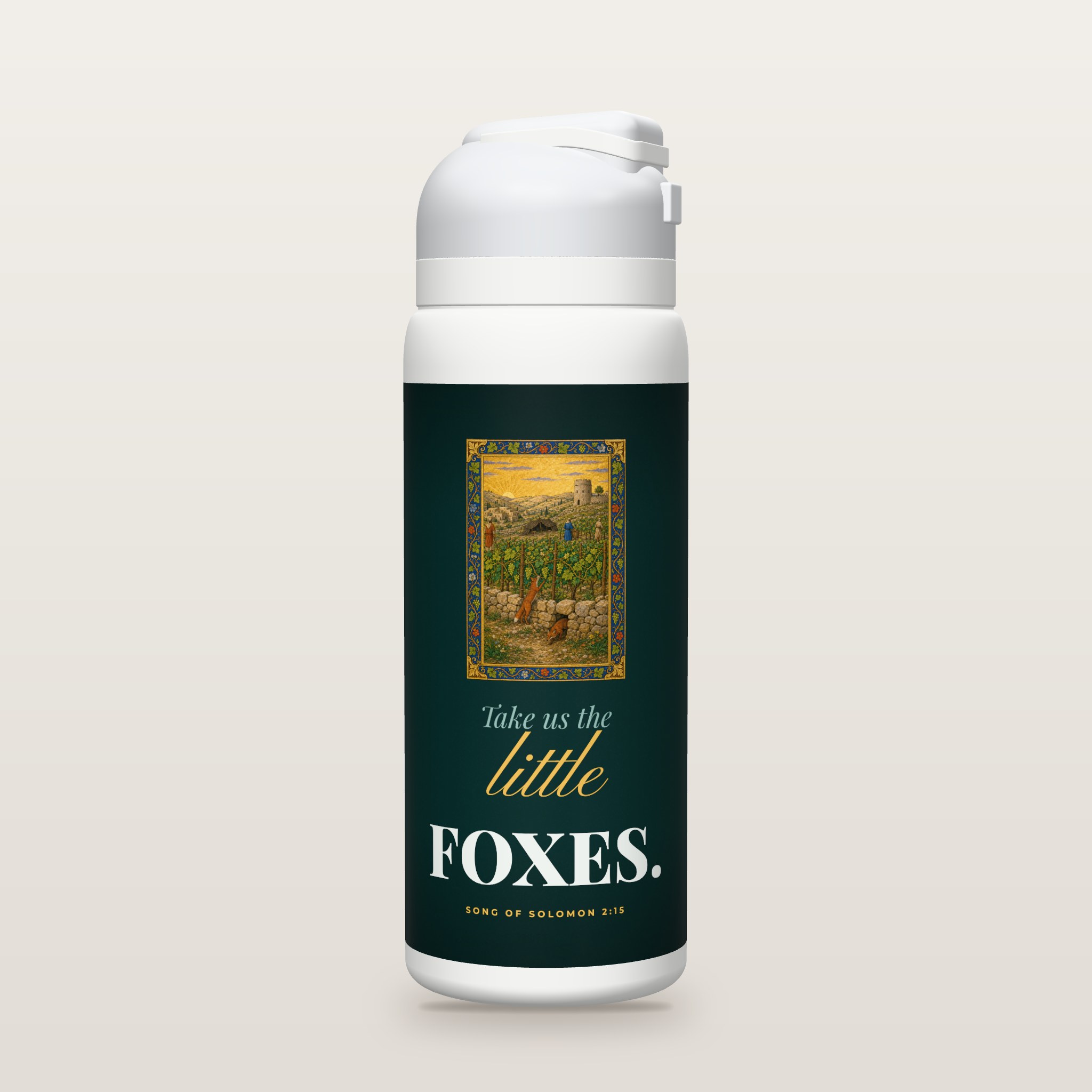
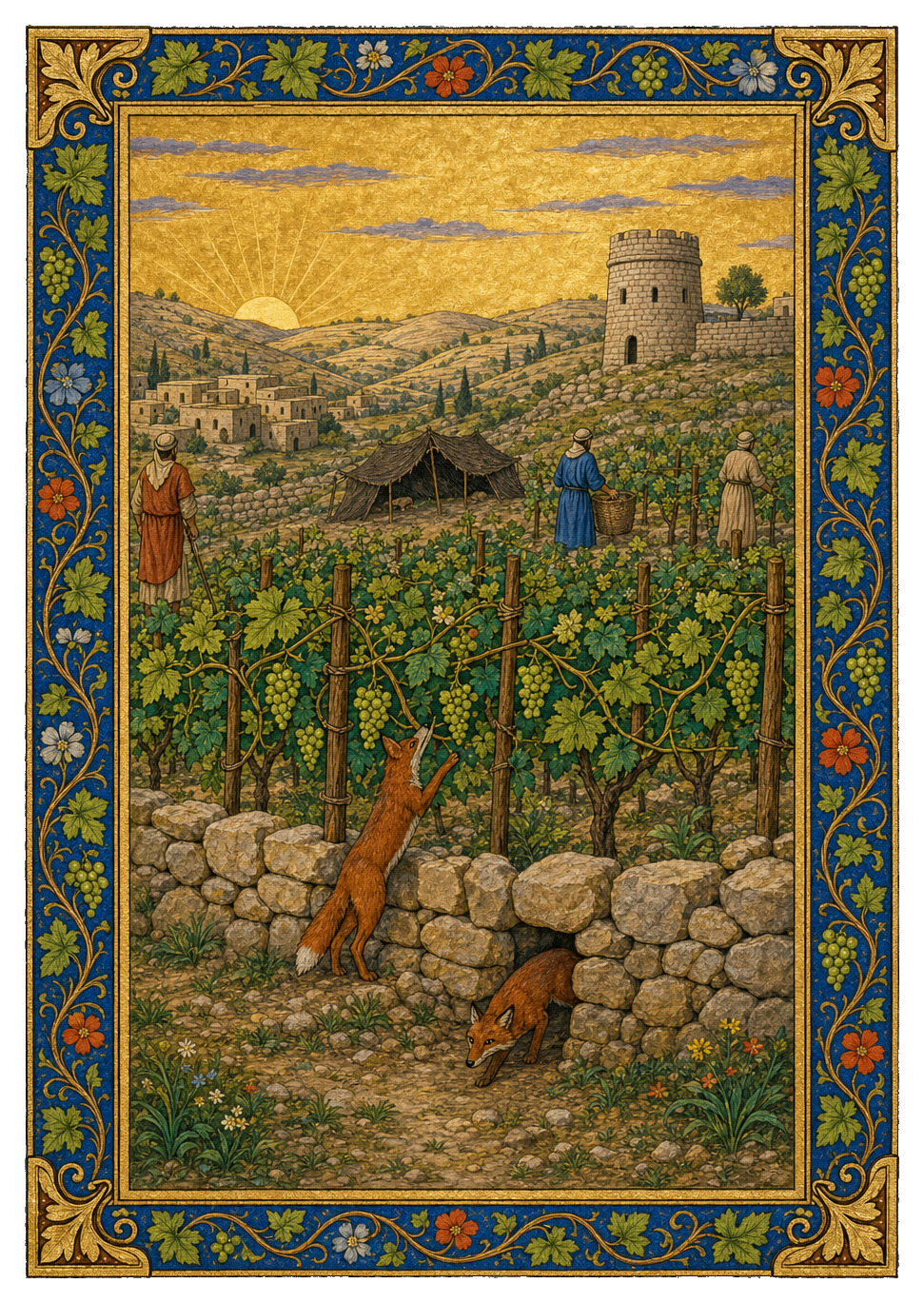
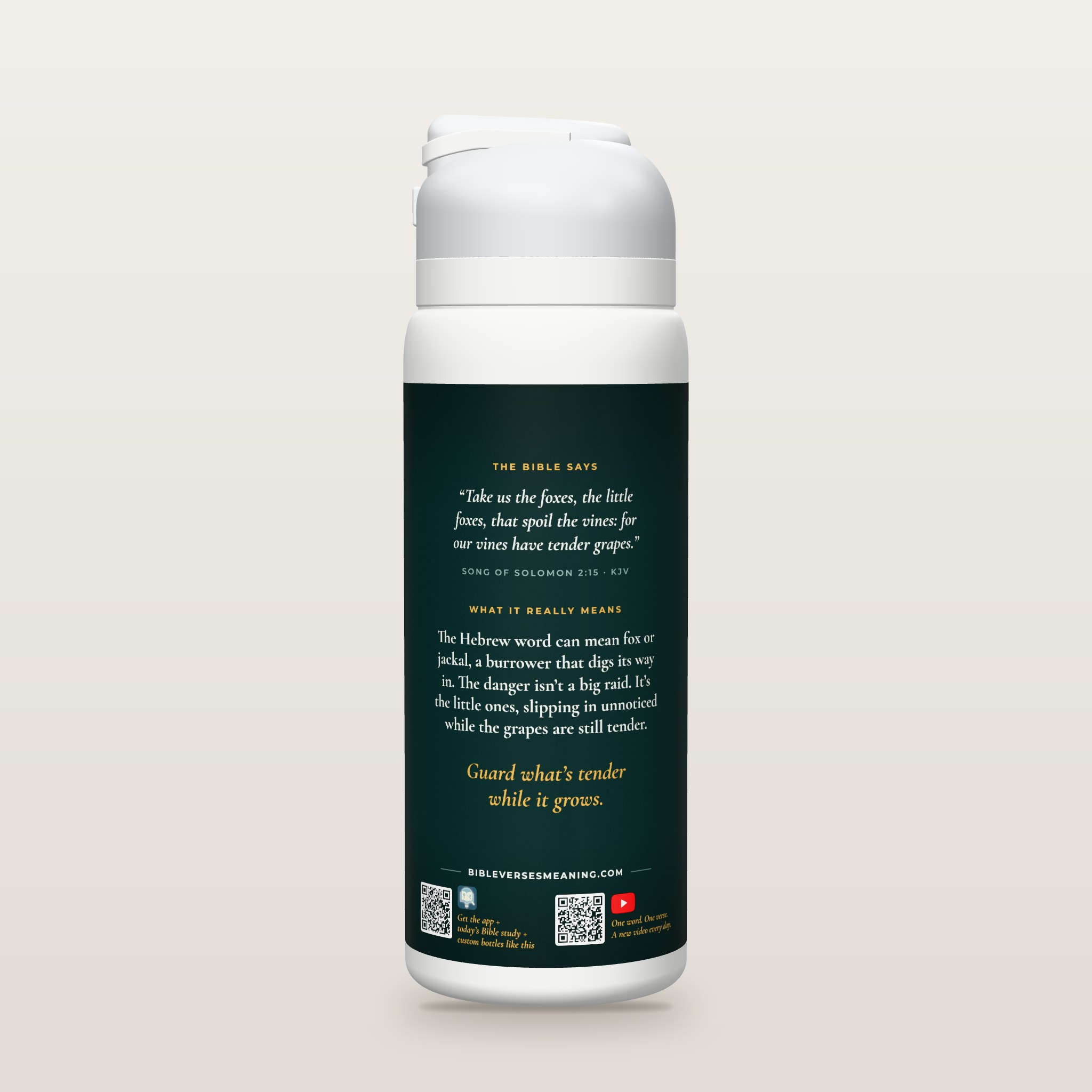
Read the complete printed design
Headline: Take us the little FOXES.
Verse: “Take us the foxes, the little foxes, that spoil the vines: for our vines have tender grapes.”
Meaning: The Hebrew word can mean fox or jackal, a burrower that digs its way in. The danger isn’t a big raid. It’s the little ones, slipping in unnoticed while the grapes are still tender.
Reminder: Guard what’s tender while it grows.
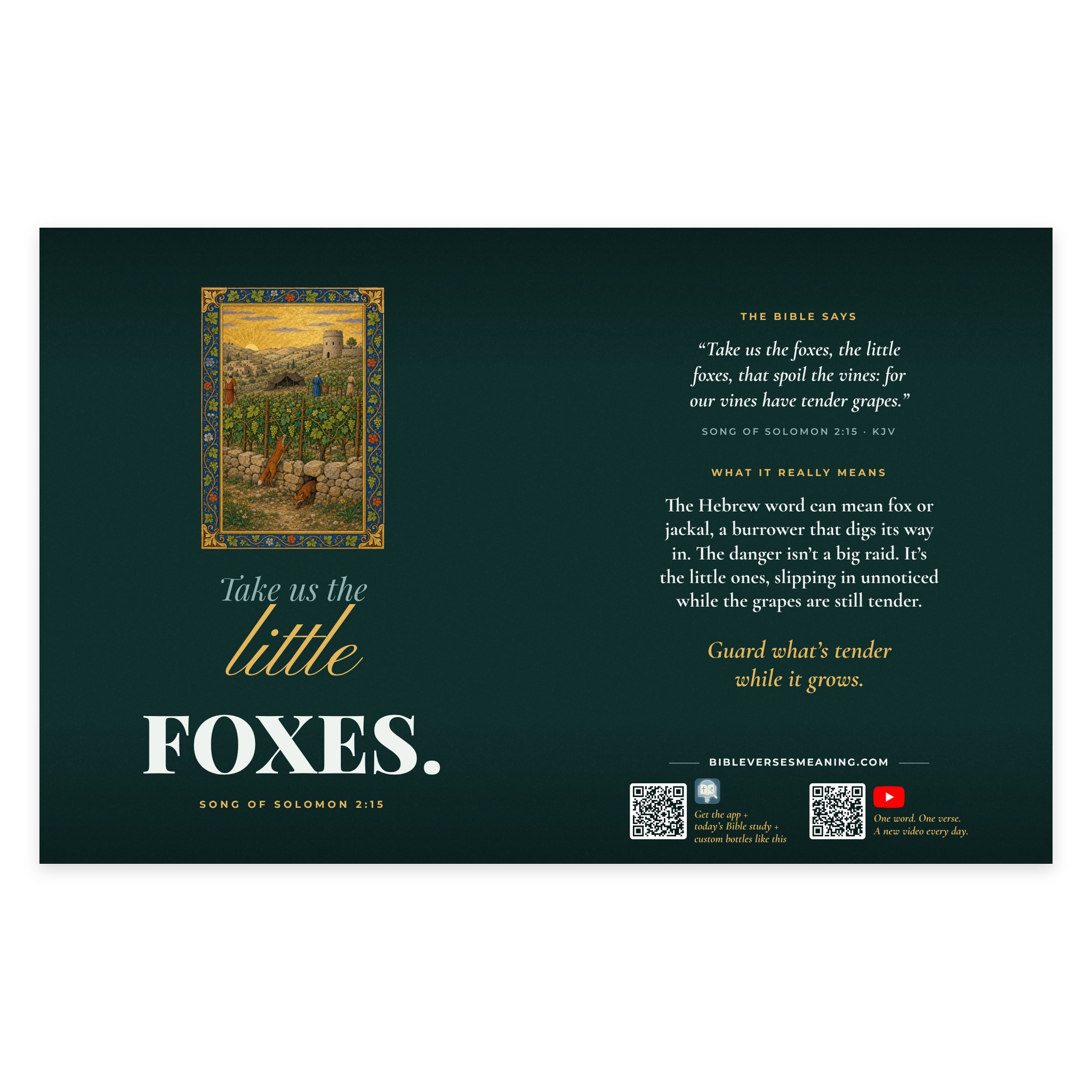
A companion to the study, created to help you remember today’s word.
FROM BIBLE VERSES MEANING
Explore the app’s study notes.
Continue reflecting on the word, the passage, and today’s song.
Word Study · Foxes (H7776)
📖 Word Study: foxes (H7776)
Song of Solomon 2:15
1. Linguistic Nuance
The Hebrew shu'al (שׁוּעָל) derives from a root meaning "to burrow." While translated as "fox," it frequently denotes the golden jackal. Unlike apex predators (ari / lion) that attack overtly, the shu'al represents subterranean, opportunistic destruction. Its unique nuance highlights hidden, insidious disruption—undermining growth from beneath rather than through direct force.
2. Historical Context
To an ancient Israelite audience, vineyards represented significant labor, economic security, and covenantal joy. Shu'alim were notorious pests. Beyond eating sweet, low-hanging grapes, they burrowed extensively, loosening soil and destroying delicate root systems. In this poetic context, the audience recognized these creatures as subtle, easily overlooked threats capable of ruining a blossoming romantic relationship before it reached maturity.
3. Practical Application
The "little foxes" symbolize small, seemingly trivial compromises—unaddressed resentments, minor dishonesties, or neglected habits—that silently erode integrity, relationships, or organizations. Because they appear harmless compared to major crises, they are often tolerated. However, unmanaged minor issues eventually destroy the roots of trust and productivity. Vigilance over small details preserves long-term fruitfulness.
— Bible Verses Meaning App
Biblical Insight · The little foxes in the vineyard and the fox at the wall
💡 Bible Insight
Q: In Song of Solomon 2:15, "Take us the foxes, the little foxes (shual), that spoil the vines: for our vines have tender grapes." Are the "little foxes" outside threats that creep in against love, or small neglected faults that grow up inside the relationship itself? And what does it suggest that the same word appears in Nehemiah 4:3, where Tobiah mocks that "if a fox go up, he shall even break down their stone wall"?
OVERVIEW
In Song of Solomon 2:15, the directive to catch "the little foxes, that spoil the vines" addresses threats to a relationship during a vulnerable stage when "our vines have tender grapes." Set against the backdrop of spring's arrival (Song of Solomon 2:11-13), the text implies that these "foxes" can represent both external interferences creeping in and small, internal negligences that threaten emerging affection.
Conversely, in Nehemiah 4:3, Tobiah uses the same word (shual) maliciously, mocking that "if a fox go up, he shall even break down their stone wall." Here, the fox signifies an external element capable of exploiting or exposing weakness. Nehemiah’s surrounding context features outside adversaries plotting covert infiltration ("They shall not know, neither see, till we come in the midst," Nehemiah 4:11). Across both contexts, the biblical image of the fox highlights how small, stealthy, or overlooked factors—whether internal lapses or external attacks—can ruin delicate growth or undermine significant endeavors if left unguarded.
KEY BIBLICAL PASSAGES
Song of Solomon 2:13-15 shows love in a delicate, blossoming phase ("the vines with the tender grape give a good smell"), prompting the call to "Take us the foxes, the little foxes, that spoil the vines." This highlights the vulnerability of early growth to small, unnoticed disruptions before the fruit matures.
Nehemiah 4:3 presents Tobiah’s taunt: "Even that which they build, if a fox go up, he shall even break down their stone wall." This illustrates how hostile observers minimize work and seek to exploit any perceived fragility in defensive boundaries.
Nehemiah 4:11 further illustrates the stealthy nature of threats: "And our adversaries said, They shall not know, neither see, till we come in the midst among them, and slay them, and cause the work to cease."
Nehemiah 4:17-18 demonstrates the active response required: "every one with one of his hands wrought in the work, and with the other hand held a weapon. For the builders, every one had his sword girded by his side, and so builded."
Together, these passages show that whether protecting tender internal intimacy (Song of Solomon 2:15) or defending against covert external hostility Nehemiah 4:11, active vigilance is essential to preserve what is being built.
PRACTICAL WISDOM
These passages offer clear guidance for protecting relationships and long-term commitments from subtle decay or disruption. First, the imagery of tender grapes (Song of Solomon 2:15) emphasizes addressing minor issues immediately. Small misunderstandings, unaddressed grievances, or subtle neglect can quietly ruin trust and affection if left to roam unchecked while a relationship is developing.
Second, the narrative in Nehemiah teaches the necessity of dual focus: building and guarding simultaneously. The builders worked with one hand while holding a weapon with the other Nehemiah 4:17 and set a watch "day and night" Nehemiah 4:9. In modern life, this requires actively investing in positive growth while remaining alert to outside influences, covert distractions, or harsh cynicism that seek to weaken personal boundaries.
Practically, this means establishing proactive safeguards: identifying and resolving small interpersonal conflicts early before they escalate, remaining aware of subtle external stressors, and maintaining clear protective boundaries around personal commitments and collaborative efforts.
— Bible Verses Meaning App
Today’s song · Protect This Love
The song takes the vineyard image into a shared prayer. Its invitation to protect love gives listeners time to name a small hurt and consider what caring for one another might look like today.
Song lyrics
Mmm, yeah. Gotta watch the ground we're on.
We labored hard to plant this sweet vine,
hoping that someday the sun would shine.
But something's digging deep in the night,
tearing at our roots and staying from sight.
Don't need a lion roaring so loud
to break all the promises we have vowed.
It's small little things that undo us,
creeping right in to pursue us both.
Catch them little digging beasts,
before they steal our joy.
Roots are shaking underneath us.
We must protect this love.
Catch them little digging beasts,
before they ruin the vine.
Keep a watchful eye tonight.
Save what is yours and mine.
They burrow low while we look ahead,
turning our green into something so dead.
A little mistrust or a silent lie,
that's how the sweetest of covenants die.
The ground is getting all soft and loose.
We got no time for a quiet truce.
Gotta dig down and find where they hide.
Keep all this poison from getting inside.
Catch them little digging beasts,
before they steal our joy.
Roots are shaking underneath us.
We must protect this love.
Catch them little digging beasts,
before they ruin the vine.
Keep a watchful eye tonight.
Save what is yours and mine.
It ain't about the storms above,
it's what we allow below.
If we don't tend to the dirt we're in,
we're gonna watch our harvest go.
Yeah. Catch them little digging beasts,
before they steal our joy.
Roots are shaking underneath us.
We must protect this love.
Catch them little digging beasts,
before they ruin the vine.
Keep a watchful eye tonight.
Save what is yours and mine.
Yeah, come on. Save what's ours.
Mmm, watch the ground.
Ready to Go Deeper?
Try Bible Verses Meaning free for 7 days and discover what the original words really mean.