
Take 15 minutes a day to discover what really matters — the Bible
Daily studies that reveal the original Hebrew and Greek meanings behind Scripture. No seminary required — just you, your phone, and 15 minutes.
OBADIAH 1:3 · STRONG’S NUMBER H2087
Who shall bring me down?
Edom could see an enemy coming up the mountain. What it could not see was the lie it had begun to believe about itself.
“Pride” · zadon · זָדוֹן
“The pride of thine heart hath deceived thee, thou that dwellest in the clefts of the rock, whose habitation is high; that saith in his heart, Who shall bring me down to the ground?”
Obadiah 1:3 · King James Version
THE COMPLETE STUDY
Who shall bring me down?
Five discoveries, the real app study, and Boiling Over the Edge.
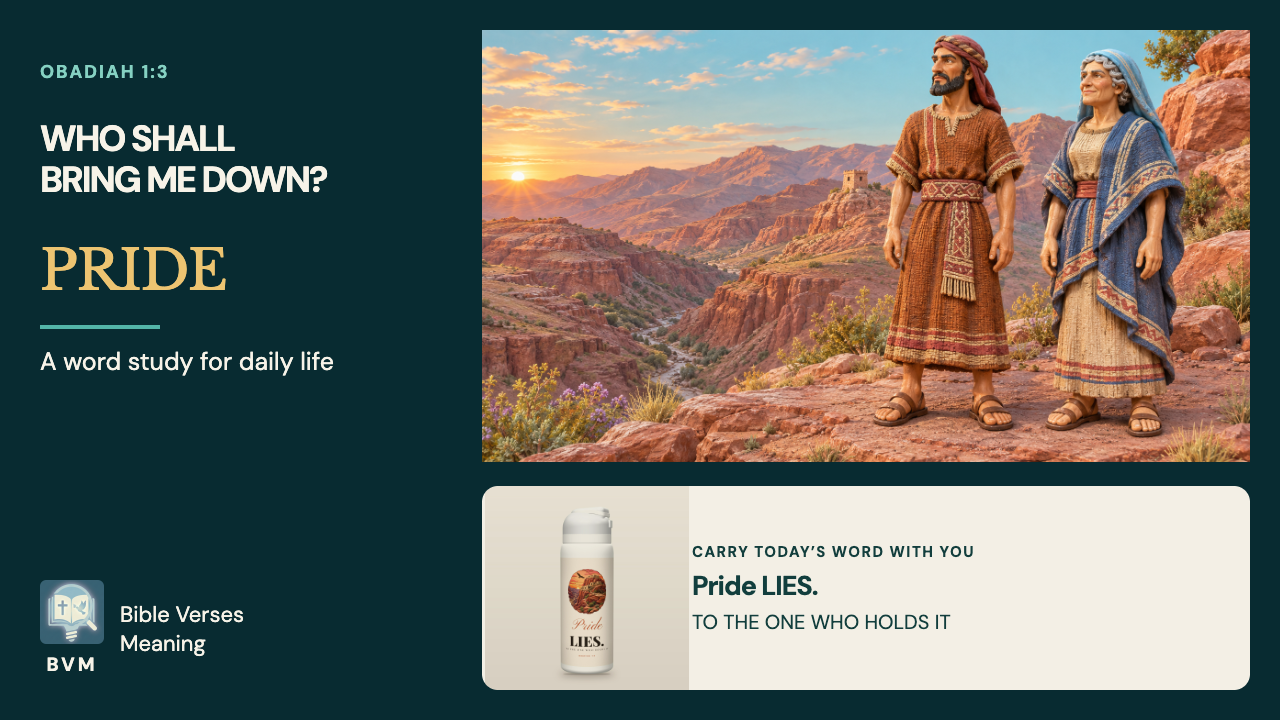
READ · REFLECT · RESPOND
Today's Revelations
- 1
A cliff can shelter people.
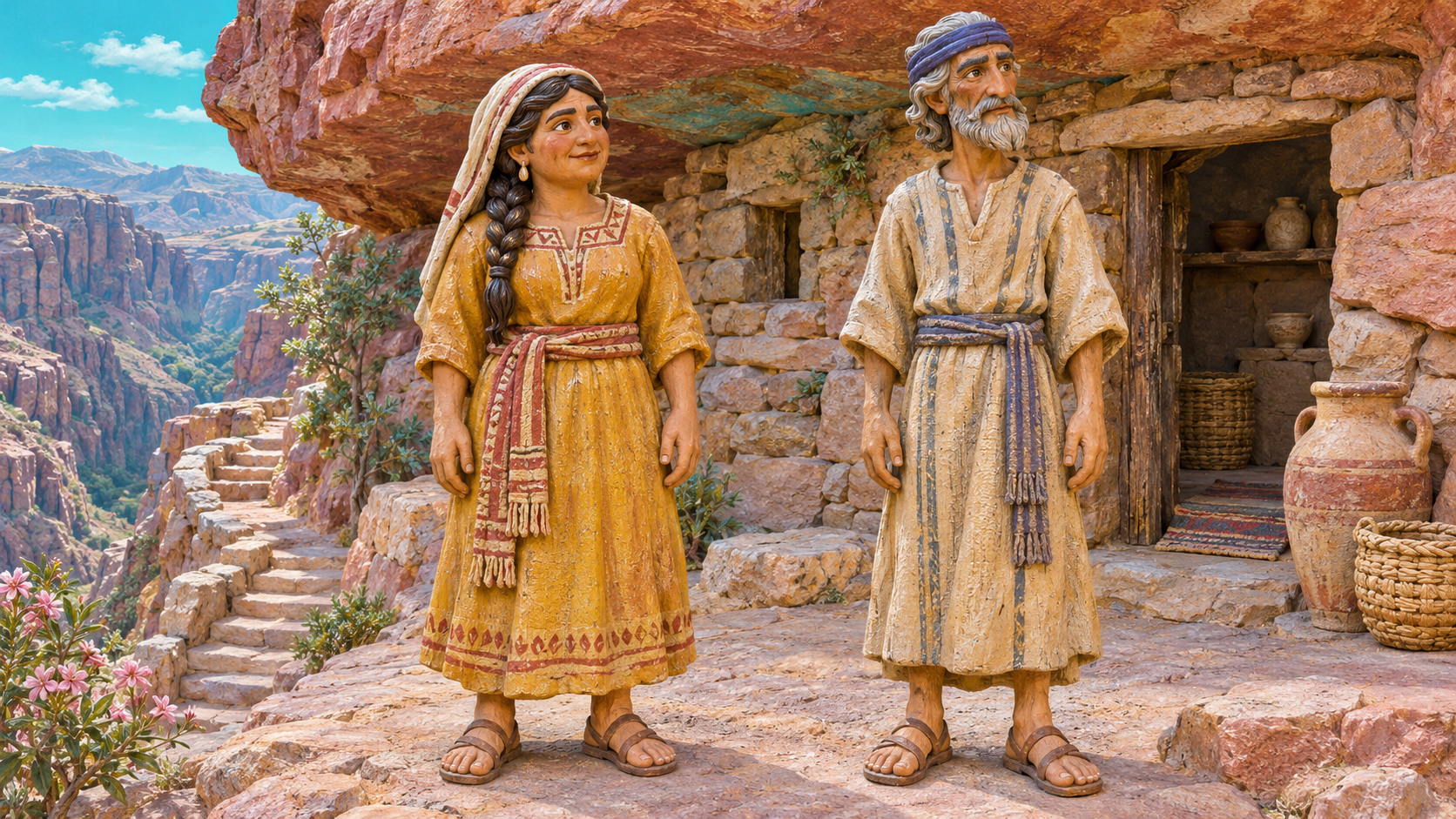
Picture the climb to a house high in a rock face. A narrow approach makes it hard for an enemy to reach the door. When Obadiah speaks God’s message to Edom, he names a real advantage. The people live in the clefts, or openings, of the rock. The trouble begins when Edom takes a fact about the climb and turns it into a claim about the future. A hard place to attack is one thing. A place where no one can ever call you to account is another. The prophet does not tell Edom to move downhill. He asks the people to hear what they have been saying to themselves.
Obadiah 1:1–3
- 2
Listen to the boast nobody hears.

Who tells Edom the lie? The verse begins, “The pride of thine heart hath deceived thee.” Then notice where the question about being brought down is asked: in the heart. Edom can look at the rocks and see proof for something the heart already wants to believe. The Hebrew word is zadon, Strong’s number H2087. Here it means pride that takes too much for granted. Obadiah does not tell us when that pride first began. He does tell us what is doing the deceiving. Think of someone who has done a job well for years. That experience is real. It cannot tell them that a new colleague has nothing useful to say.
Obadiah 1:3
- 3
God answers Edom’s question.

Edom asks who could bring it down. In the next verse God gives a direct answer. Picture an eagle nesting far above the path. Now picture a nest among the stars, farther out of reach than any eagle could fly. Even there Edom would still answer to the LORD. Later in the chapter another weakness comes into view: people who shared Edom’s bread would turn against it. The cliffs could not tell Edom whom to trust. This is a word of judgment addressed to Edom. It does not give us permission to look at another person’s hardship and decide that pride must have caused it.
Obadiah 1:3–4, 7
- 4
A confident voice can claim too much.
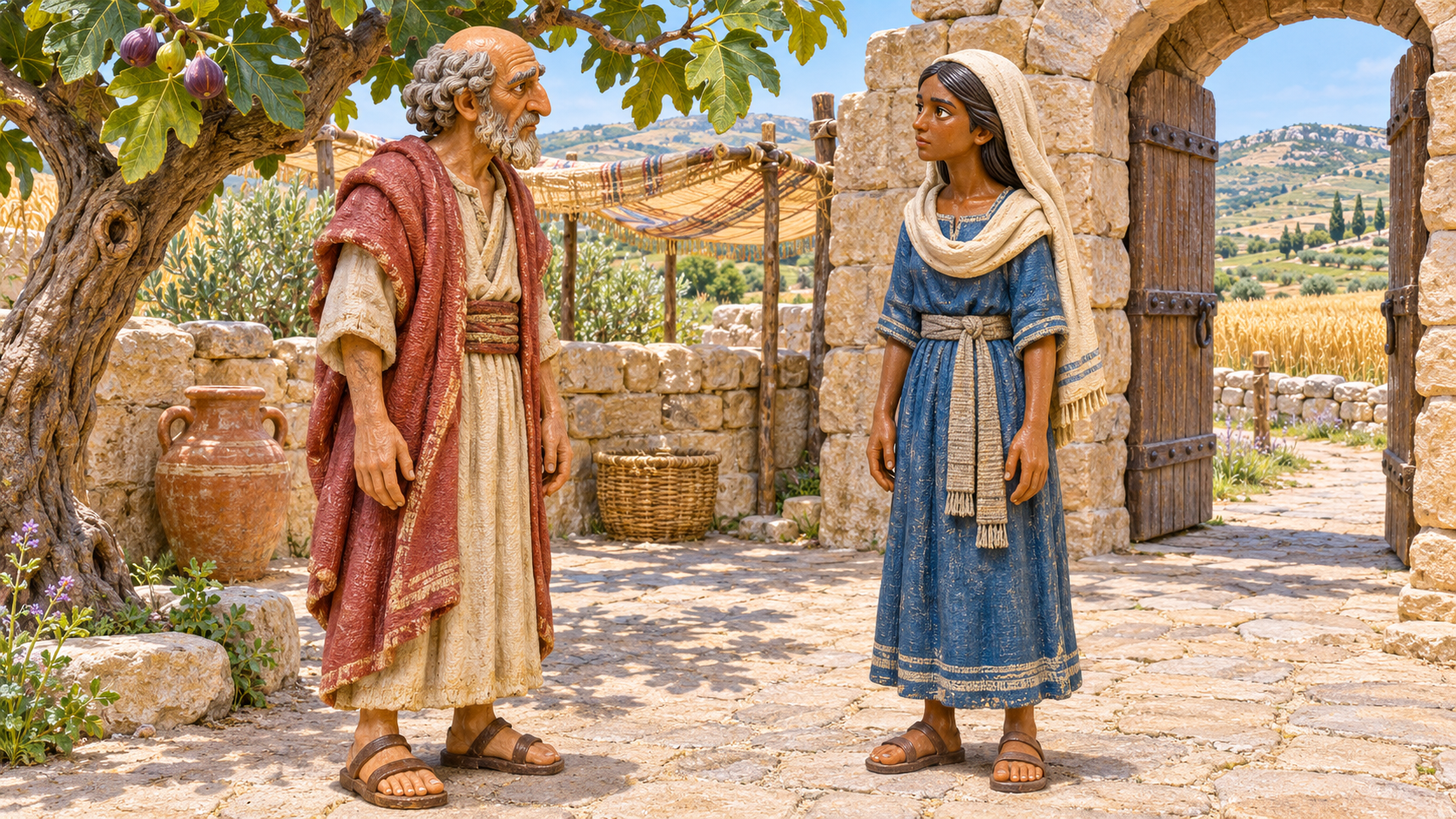
Moses gives Israel a way to recognize a particular false claim. Someone speaks in the LORD’s name and predicts what will happen. The thing does not happen. Moses says the LORD did not speak that word; Israel need not be afraid of that speaker. The KJV says the prophet spoke “presumptuously.” The same Hebrew noun appears here as in Obadiah. Edom claimed safety that God had never promised. The speaker claimed words God had never given. We can practice honesty on a smaller scale. When a friend faces a hard choice, we can offer our best judgment and call it advice. We have no reason to put God’s name on a decision that is ours.
Deuteronomy 18:20–22
- 5
Look at who was left outside.
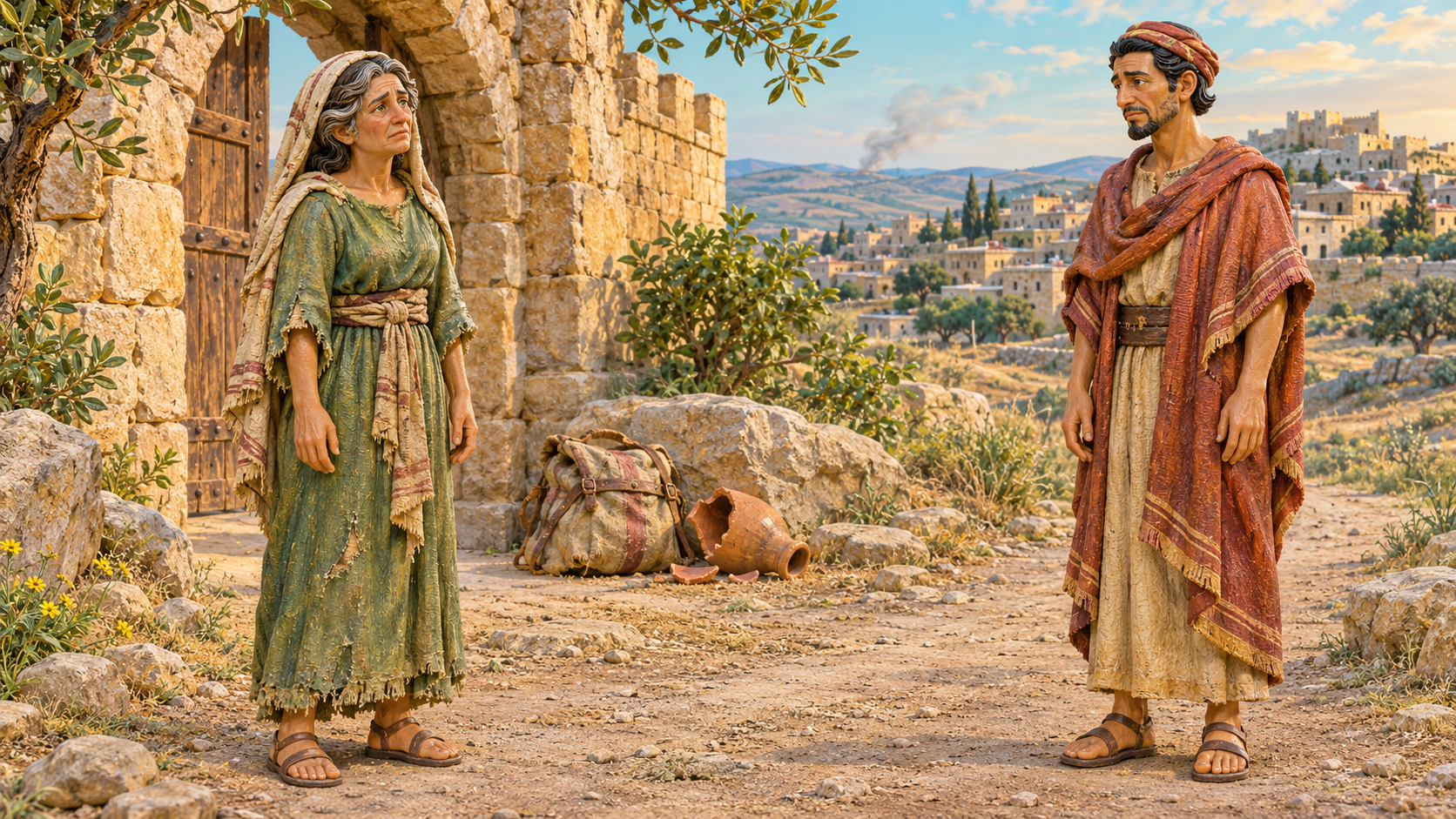
When foreigners entered Jerusalem, Edom stood on the other side. Obadiah calls Jacob Edom’s brother. The family language brings the harm close: the people Edom watched in their trouble were kin. The prophet names the violence, the gloating, and the proud words spoken in a day of distress. By now the boast in the heart has a human cost. For a moment, put yourself beside the person who needs help. Who has taken a risk to tell you that something went wrong? You could defend your record and send them away. Or you could pull up a chair, let them finish, and ask what you can do to help repair the harm.
Obadiah 1:10–12


THE BOTTOM LINE
Edom knew how strong its cliffs were. Pride told the people that strength put them beyond correction. When someone brings you a hard truth, let them finish before you explain why you think you are right.

READ THE PASSAGES TOGETHER
Two claims that reach too far
| Obadiah 1:3–4 | Deuteronomy 18:20–22 |
|---|---|
| Edom looks down from the rocks. | A speaker addresses Israel in the LORD’s name. |
| The heart assumes no one can bring Edom down. | The speaker assumes the right to give a message God did not give. |
| The LORD answers Edom’s boast. | The failed prediction exposes the claim. |
A MOMENT TO RESPOND
Who has tried to tell you something difficult?
- Remember. Think of the last time you cut someone off to explain your side.
- Ask. Go back to that person and say, “I interrupted you. What did you want me to understand?”
- Listen. Let them finish. Repeat what you heard before you decide how to respond.
Lord, help me hear the truth, especially when it comes from someone I have been quick to dismiss. Amen.
TODAY’S WORD · AN EVERYDAY REMINDER
Carry today’s word with you.
A companion to today’s study of Pride in Obadiah 1:3: a reminder to hear the truth, even when you feel secure.
360° view · Pride LIES.
PRINTED ON THE BOTTLE
Pride LIES.
Cliffs can’t protect you from yourself.
“The pride of thine heart hath deceived thee, thou that dwellest in the clefts of the rock, whose habitation is high; that saith in his heart, Who shall bring me down to the ground?”
Obadiah 1:3 · KJV
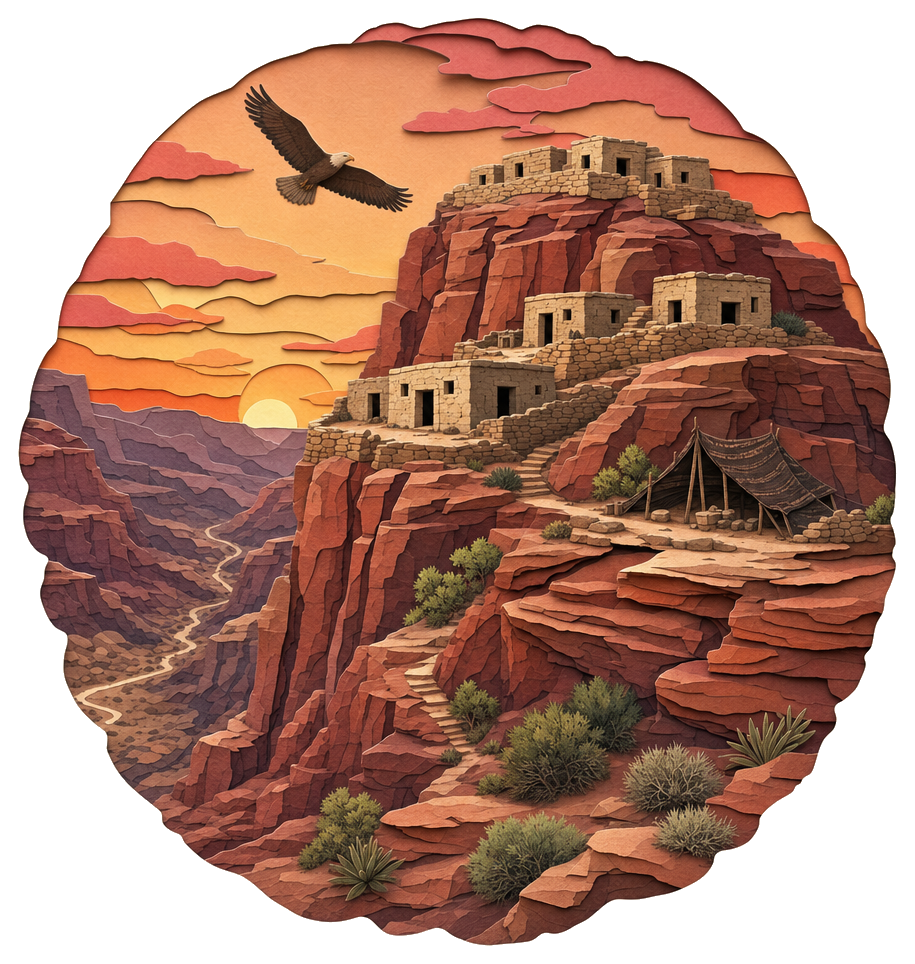
The eagle over the cliffs recalls the LORD’s answer to Edom in verse four.
Explore today’s study bottle ↗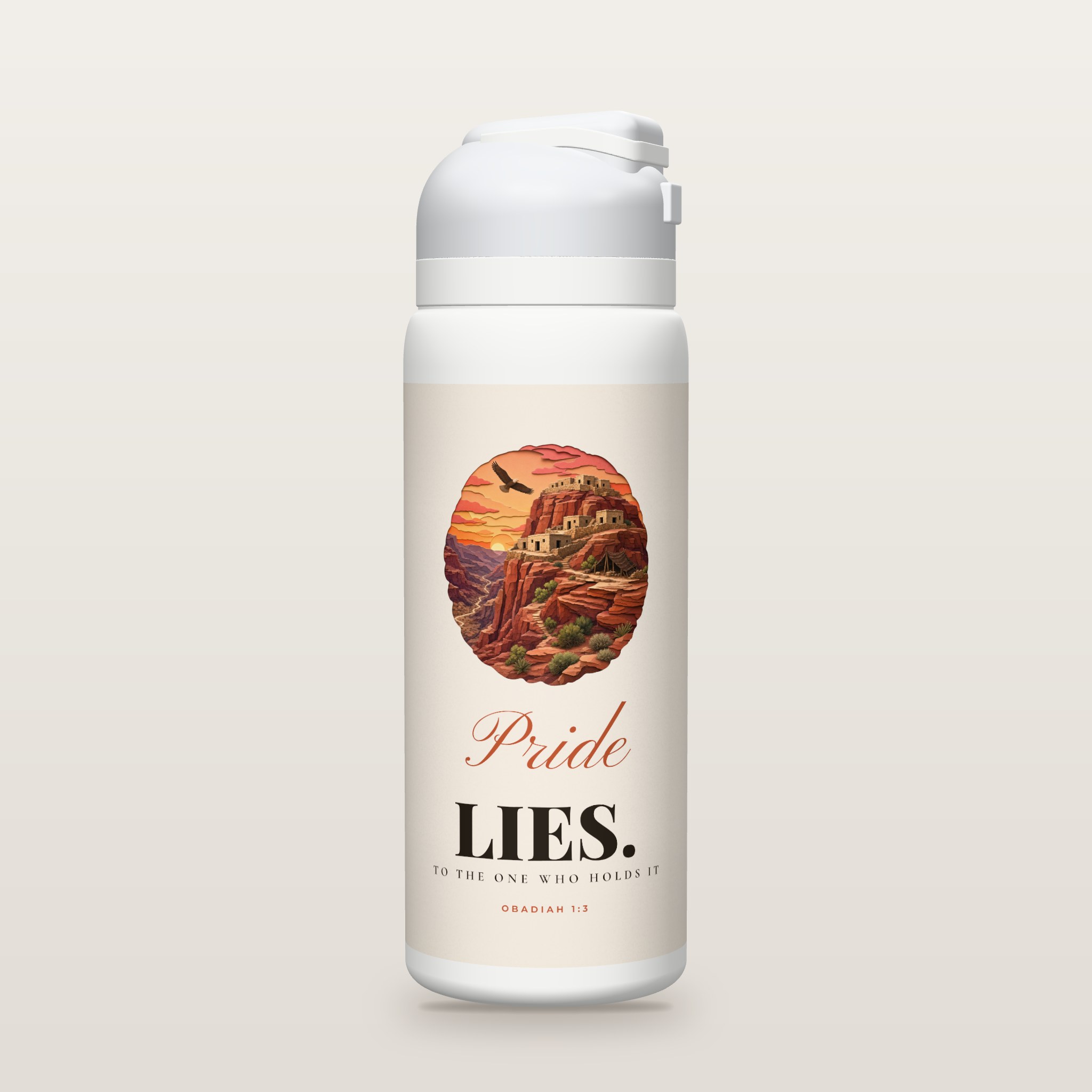
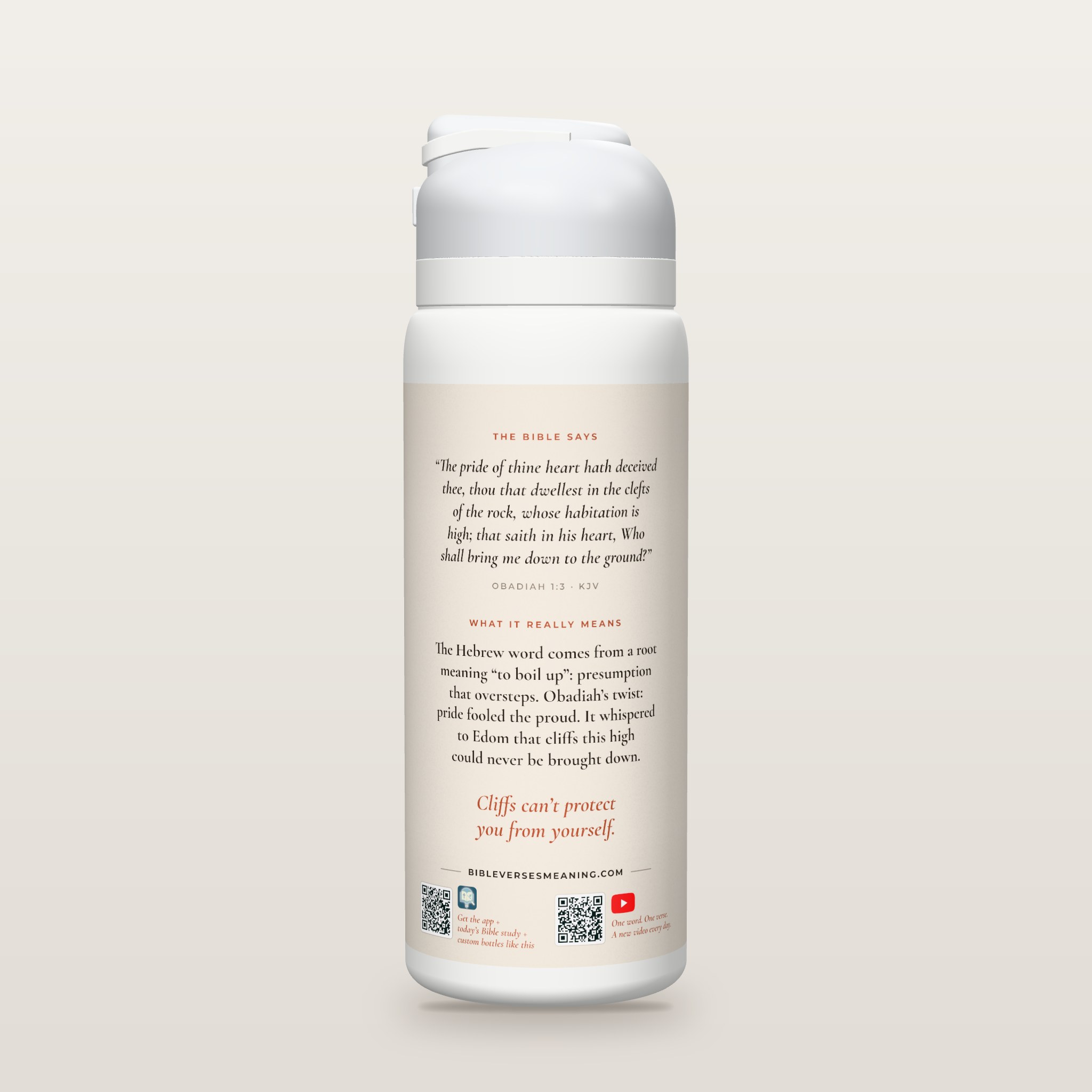
Read the complete printed design
Headline: Pride LIES.
Verse: “The pride of thine heart hath deceived thee, thou that dwellest in the clefts of the rock, whose habitation is high; that saith in his heart, Who shall bring me down to the ground?”
Meaning: The Hebrew word comes from a root meaning “to boil up”: presumption that oversteps. Obadiah’s twist: pride fooled the proud. It whispered to Edom that cliffs this high could never be brought down.
Reminder: Cliffs can’t protect you from yourself.
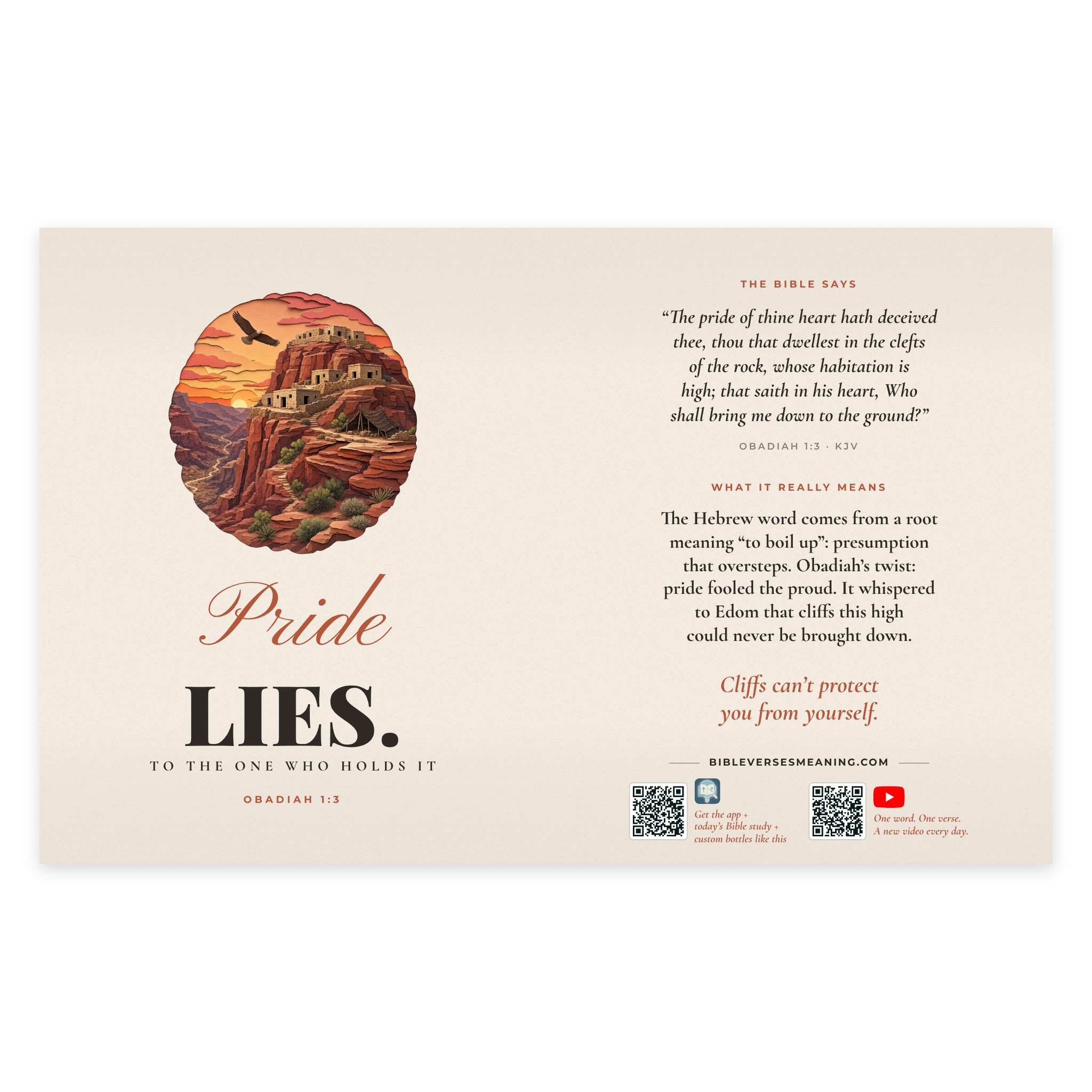
A companion to the study, created to help you remember today’s word.
FROM BIBLE VERSES MEANING
Explore the app’s study notes.
Continue reflecting on the word, the passage, and today’s song.
Word Study · Pride (H2087)
📖 Word Study: pride (H2087)
Obadiah 1:3
1. Linguistic Nuance
The Hebrew zādôn derives from a root meaning "to boil over." Unlike static forms of high self-regard (such as ga'avah), zādôn carries the specific nuance of active, seething insolence and deliberate presumption. It denotes an aggressive overstepping of boundaries—a rebellious overconfidence that "boils over" into explicit defiance against divine authority.
2. Historical Context
This text (Obadiah 1:3) addresses the nation of Edom, located in the high, virtually impregnable sandstone cliffs of Sela (the region of Petra). To the ancient audience, Edom's geography was central to their identity. Their physical height and natural fortifications bred zādôn—a false sense of absolute security that convinced them they were beyond the reach of both human enemies and divine judgment.
3. Practical Application
Zādôn illustrates how external advantages create spiritual and psychological blind spots. Modern "cliffs"—such as financial wealth, social status, or technological reliance—can foster a false illusion of invincibility. The text warns that trusting in human security deceives the heart, leading to an arrogant posture that ignores ultimate accountability.
— Bible Verses Meaning App
Biblical Insight · The heart, the fortress, and the prophet’s words
💡 Bible Insight
Q: In Obadiah 1:3, the LORD tells Edom, "The pride (zadon) of thine heart hath deceived thee, thou that dwellest in the clefts of the rock, whose habitation is high; that saith in his heart, Who shall bring me down to the ground?" Is Edom's pride a self-deception produced by its secure, high position, or was the heart already deceived, with the rock fortress simply giving that pride a place to hide? And what does it suggest that the same word is used in Deuteronomy 18:22, where a prophet who speaks what the LORD has not spoken "hath spoken it presumptuously (zadon)"?
OVERVIEW
In Obadiah 1:3, the text indicates that deception originates within the human heart ("The pride of thine heart hath deceived thee"), while Edom's lofty physical environment—dwelling in the "clefts of the rock"—serves as the setting that feeds and reinforces this internal arrogance. The heart's pride is the active agent of deception, while the natural fortress provides a tangible justification for its boastful posture ("Who shall bring me down to the ground?").
Connecting zadon (pride or presumption) to Deuteronomy 18:22 reveals a consistent biblical principle: zadon is a deep-seated self-delusion that causes individuals or nations to claim authority, security, or truth they do not actually possess. In Deuteronomy 18:20–22, a false prophet acts with zadon by declaring words not commanded by God. In both contexts, zadon produces a false sense of invulnerability or divine backing, leading subjects to exalt themselves Obadiah 1:4 while remaining completely blind to reality.
KEY BIBLICAL PASSAGES
Obadiah 1:3–4 reveals the mechanics of heart-level deception. Edom relies on its high dwelling, yet the passage stresses that physical elevations offer no safety when pride deceives the mind: "Though thou exalt thyself as the eagle, and though thou set thy nest among the stars, thence will I bring thee down, saith the LORD."
Obadiah 1:7 illustrates the practical consequence of this blindness. While Edom boasts in its security, its own allies and confederates "have deceived thee, and prevailed against thee," showing how internal pride leaves a nation unaware of its actual peril.
Deuteronomy 18:20–22 defines zadon in the realm of speech and authority. A prophet who presumes to speak uncommanded words exhibits zadon. The passage offers a clear test for discerning this arrogance: if the message fails to come to pass, the speaker "hath spoken it presumptuously" and carries no real authority.
Together, these verses demonstrate that zadon distorts perception across both political defense and religious declaration, creating an illusion of authority or safety that fails when tested.
PRACTICAL WISDOM
The scriptural analysis of zadon offers actionable guidance for modern decision-making:
Audit internal motivations rather than relying on external advantages. High positions, financial reserves, or prestigious status can easily feed existing pride, creating a false sense of security Obadiah 1:3.
Avoid presumptuous speech and overreaching claims. Just as Deuteronomy 18:22 warns against claiming divine authority without authorization, individuals should refrain from making absolute promises or arrogant assertions that lack substance.
Measure claims by outcomes rather than confident presentation. Deuteronomy 18:21–22 establishes that true authority is verified by results and alignment with reality, not merely bold declarations.
Build meaningful accountability to counter blind spots. Edom's pride led to betrayal by trusted partners because self-deception prevented clear discernment Obadiah 1:7. Cultivating openness to corrective feedback helps prevent arrogant assumptions from leading to downfall.
— Bible Verses Meaning App
Today’s song · Boiling Over the Edge
The singer looks down from a stone fortress, mistakes height for strength, and ends the song on the ground. Hearing the boast in the first person helps us hear it in ourselves. The boiling pot is the song’s picture of pride spilling over.
Song lyrics
November 5, 2026 · Lyrics from the supplied recording
Ooh, rising higher and higher.
Living on the edge of a great divide.
I carved a fortress in the stone above.
Still I was the quiet place I loved.
I looked down on the valley from the peak.
Thinking I was strong and they were weak.
But height is just a trick played on the eyes.
And arrogance is painted in the skies.
It is boiling over the edge.
Right on a cliffside ledge.
I can't hide anymore from the heat.
The stone melts at my feet.
They said that Edom would forever stand.
The greatest kingdom in this barren land.
But what is stone when fire is in the soul?
And self-deception starts to take control.
The water in the pot is turning black.
There is no turning and no going back.
It is boiling over the edge.
It is boiling over the edge.
Right on a cliffside ledge.
Right on a cliffside ledge.
I can't hide anymore from the heat. (From the heat.)
The stone melts at my feet.
Oh, oh.
It's a long way down when you fall from the sun,
and all of your battles have only begun.
I wanted to touch where the wild eagles fly.
But I'm just a woman underneath this big sky,
yeah.
It is boiling over the edge.
Oh.
Right on a cliffside ledge. (Right on a cliffside ledge.)
I can't hide anymore.
The stone melts at my feet. (From the heat.)
The stone melts at my feet.
Just the silence now on the ground.
Ready to Go Deeper?
Try Bible Verses Meaning free for 7 days and discover what the original words really mean.