
Take 15 minutes a day to discover what really matters — the Bible
Daily studies that reveal the original Hebrew and Greek meanings behind Scripture. No seminary required — just you, your phone, and 15 minutes.
JUDGES 16:20 · STRONG’S NUMBER H5287
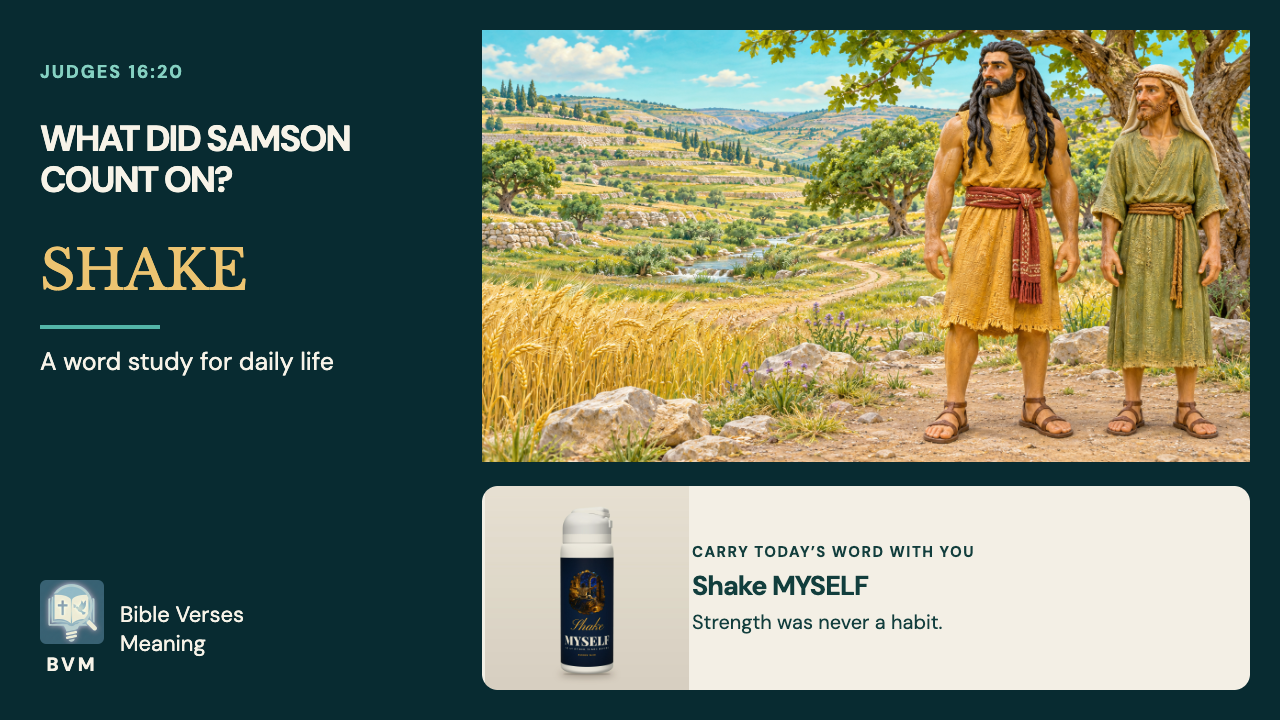
What did Samson wake up counting on?
Samson remembered how to break free. Judges tells us what he failed to notice, and Isaiah shows why the same word can call a captive city to hope.
“Shake” · na'ar · נָעַר
“And she said, The Philistines be upon thee, Samson. And he awoke out of his sleep, and said, I will go out as at other times before, and shake myself. And he wist not that the LORD was departed from him.”
Judges 16:20 · King James Version
THE COMPLETE STUDY
What did Samson wake up counting on?
Five discoveries, the real app study, and The Well Is Dry.
READ · REFLECT · RESPOND
Today's Revelations
- 1
Remember where the strength came from.
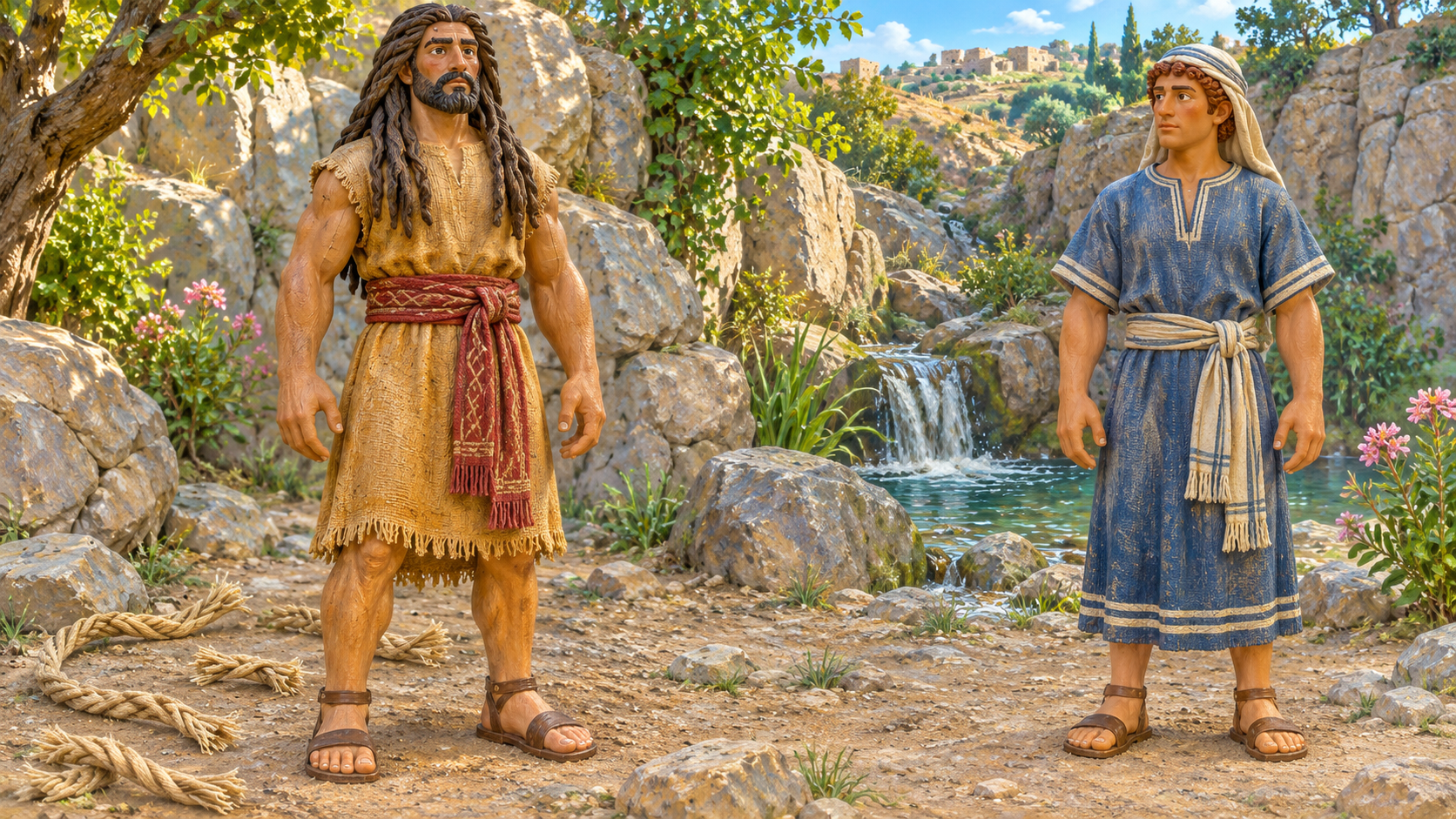
Samson had good reason to remember what it felt like to get free. At Lehi, men had tied him with two new cords and handed him over to the Philistines. Then the Spirit of the LORD came upon him. The cords around his arms gave way like flax burned in a fire. Notice the order: God acted, and the ropes fell away. Later, when Delilah bound Samson with seven fresh bowstrings, he broke them too. His arms had done real work. But remembering what his arms had done was only half the story. The part he could not afford to forget was who had given him strength.
Judges 15:13–14; 16:6–9
- 2
Listen to the words “as at other times.”
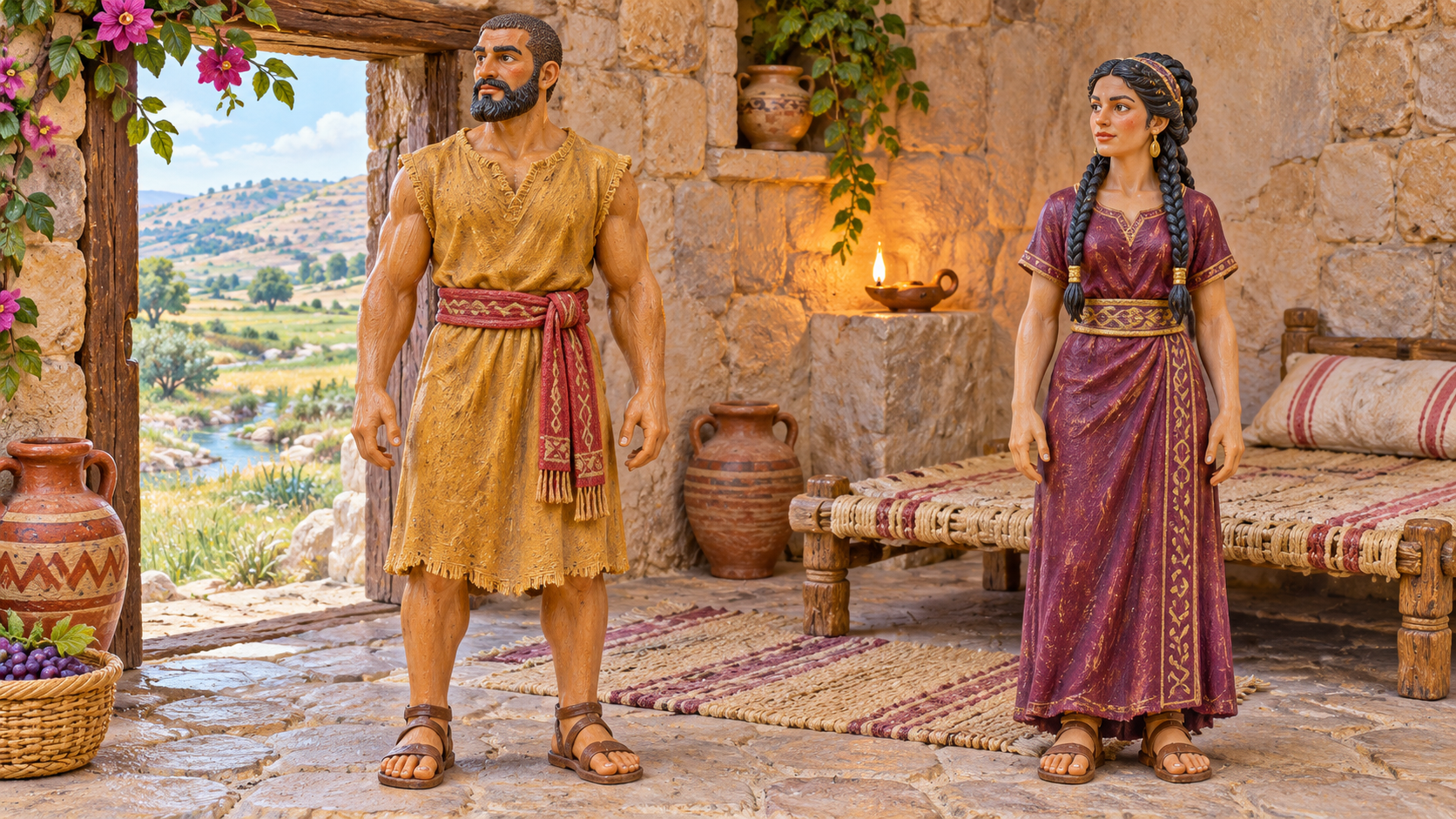
Delilah had pressed Samson to tell her why he was so strong. At last he told her that no razor had touched his head because he had been set apart for God from the womb. As he slept, she had a man shave off his seven locks. Samson woke to a warning he had heard before. The Hebrew word is na'ar, Strong’s number H5287. Here it means to shake oneself free. The word describes a movement; it does not tell us whether the person trusts God. Samson’s own words tell us what he expected: he would go out as he had before. He remembered what to do with his body. He took the outcome for granted.
Judges 16:15–20
- 3
Samson knew the motion. He missed the change.
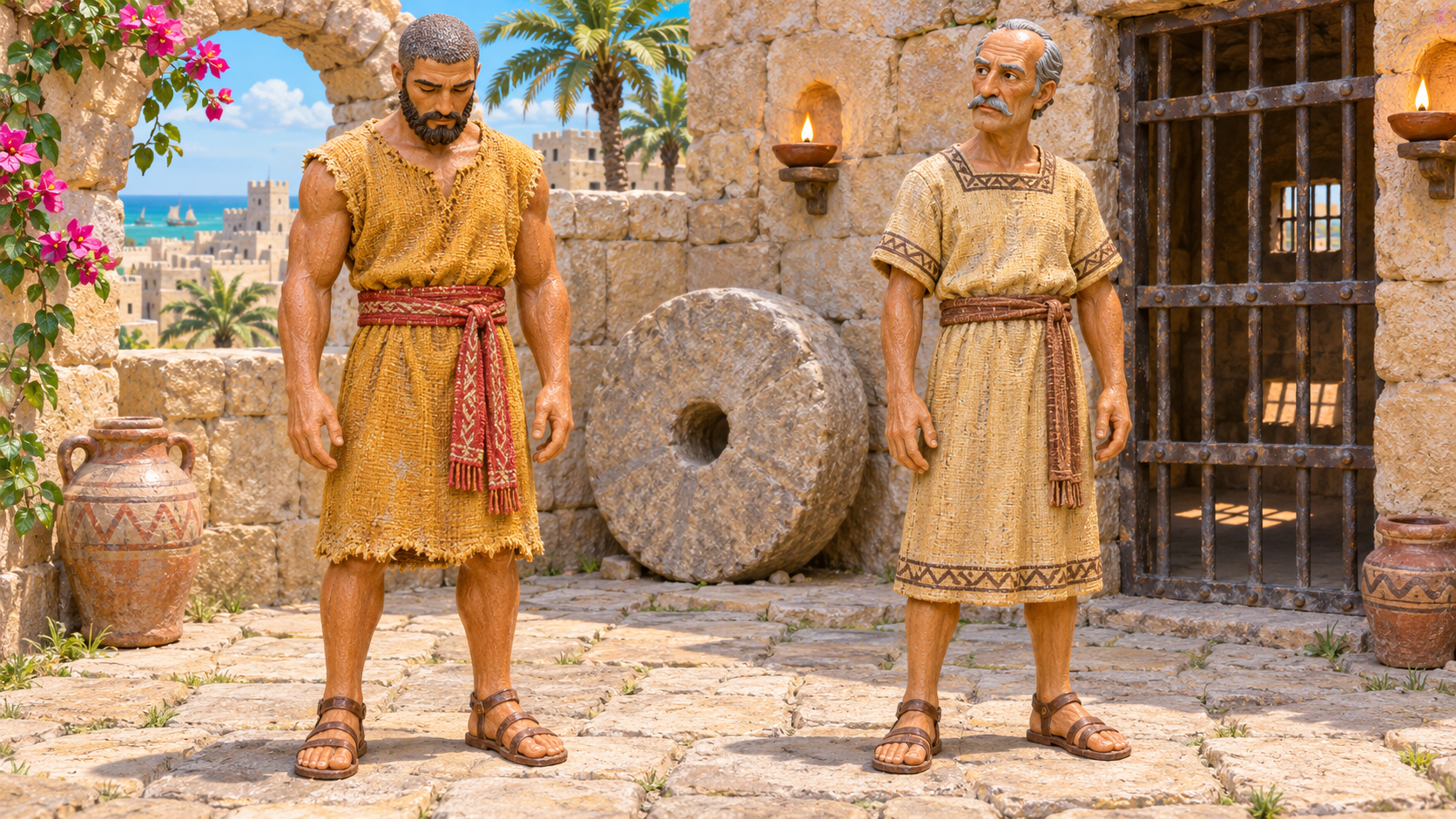
The reader knows something Samson does not. Before he wakes up, verse 19 says his strength has gone. After he speaks, verse 20 says that the LORD had departed from him. The KJV’s words “he wist not” mean that he did not know. His confidence felt familiar even though his situation had changed. Now the Philistines could seize him. They blinded him, took him to Gaza, and put him to work grinding in prison. The brass restraints come after his capture; the Bible does not say he woke already wearing them. Nor does it say that every person who feels weak has been abandoned by God. It tells us what happened to this man, who mistook yesterday’s escape for a promise about today.
Judges 16:19–21
- 4
Jerusalem hears a call to get up.
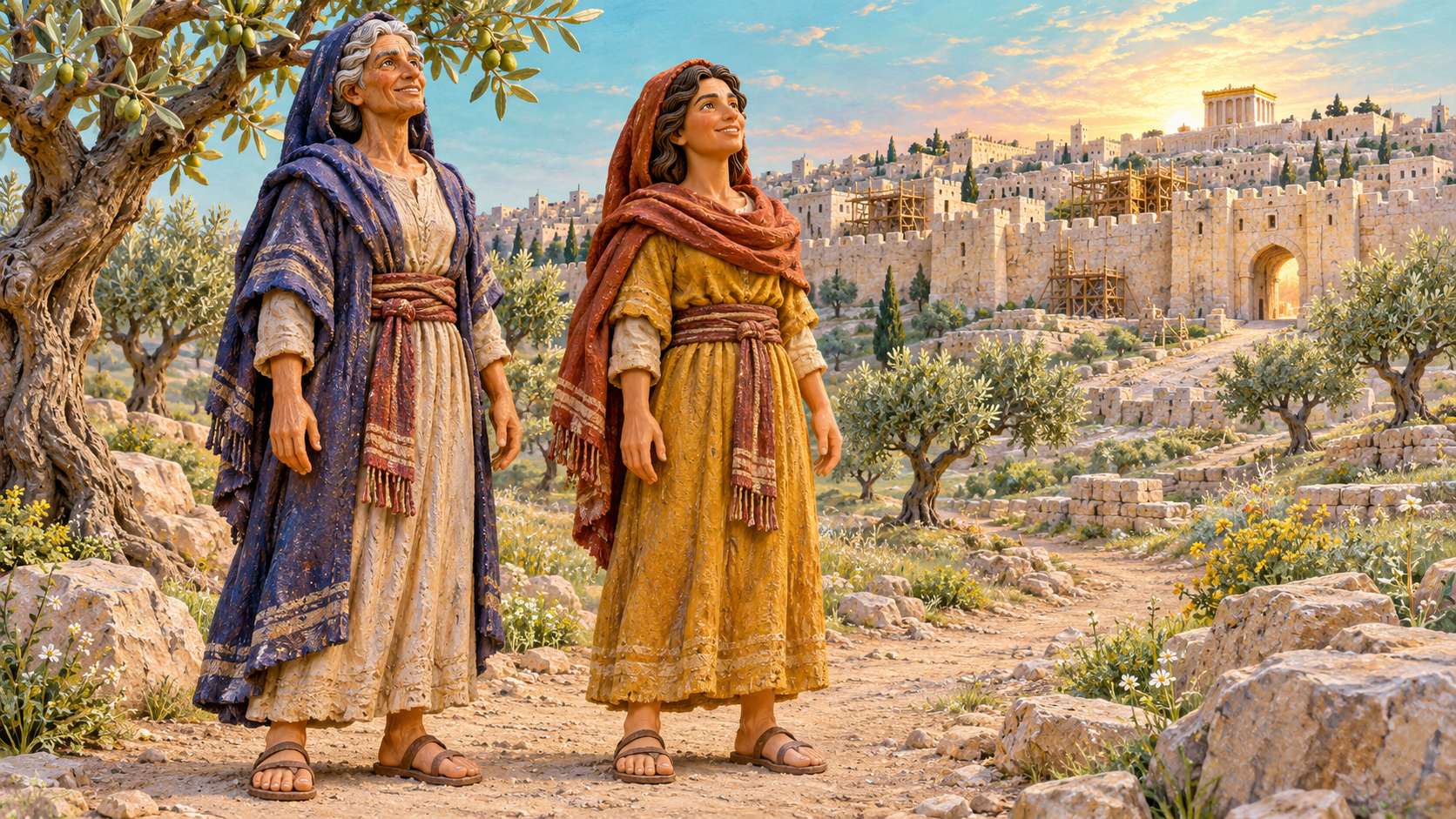
Isaiah uses the same Hebrew word when he addresses Jerusalem as a captive woman sitting in the dust. “Shake thyself from the dust; arise,” he says. Picture someone who has sat on the ground so long that the dust clings to her clothes. She really is called to stand up. But she is not being asked to rescue herself. Verse 9 gives the reason for joy: the LORD has comforted his people and redeemed Jerusalem. To redeem is to reclaim or set free. Samson announced what he would do on the strength of his past. Jerusalem heard what to do because of what the LORD had promised. The difference is not in the shaking. It is in whose word starts the action.
Isaiah 52:1–3, 9–12
- 5
Later, Samson asks for what he once assumed.
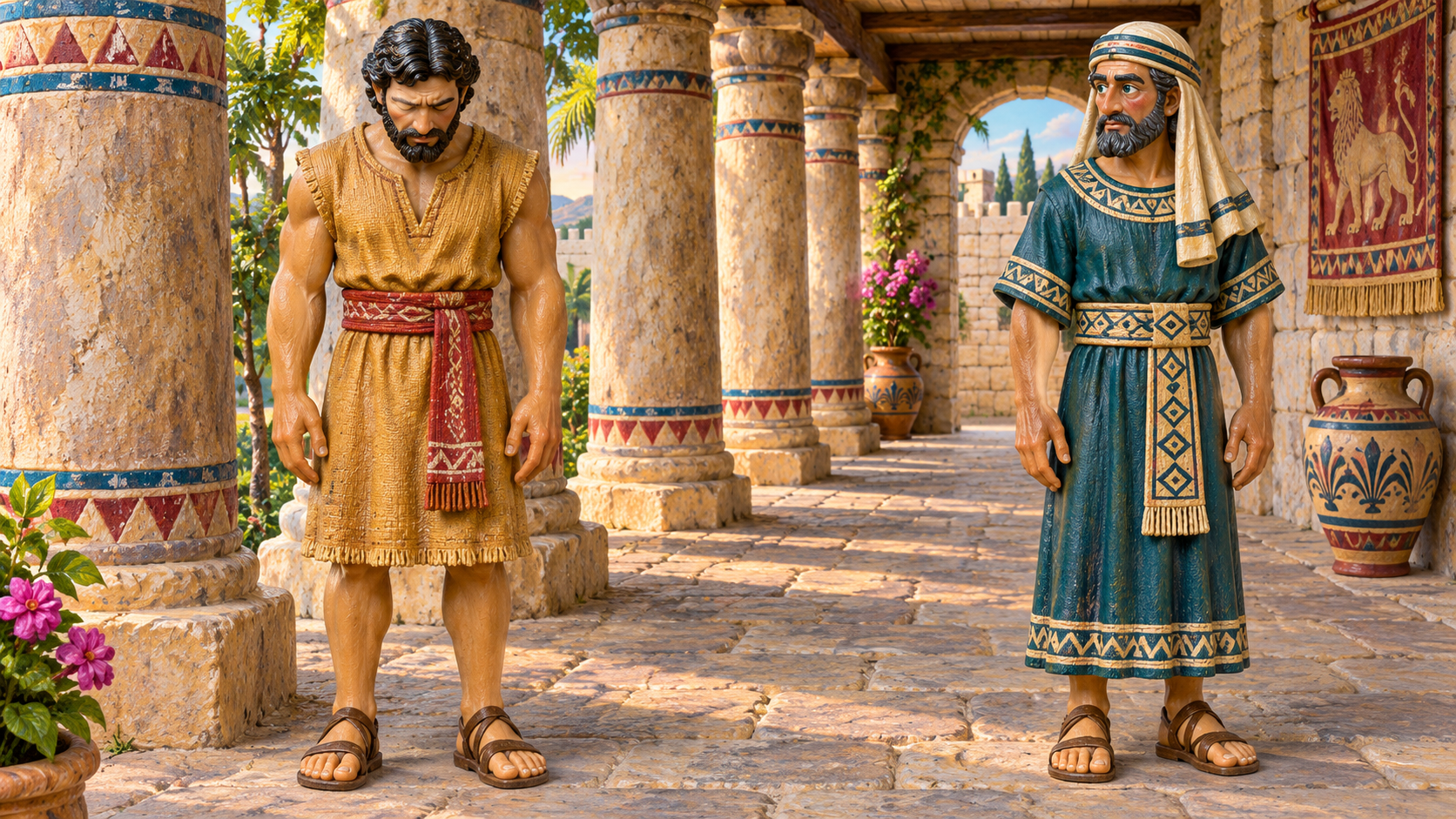
In prison Samson’s hair began to grow again. The story could have ended with that detail, leaving us to wonder whether hair held his power. Instead, listen to him in the Philistines’ house. Standing between its pillars, Samson calls on the Lord to remember him and give him strength once more. His prayer includes his desire for revenge for his eyes; the passage does not give us that desire to copy. What has changed is the way he speaks about strength. Earlier he announced what he would do. Now he asks for what he cannot give himself. Before a difficult conversation today, try that smaller, honest beginning: ask God to help you hear the other person before you rehearse your answer.
Judges 16:22, 25–30


THE BOTTOM LINE
Samson remembered the motion and forgot the Giver. Jerusalem could rise because the LORD had spoken. Before you repeat what worked last time, name the help you need from God and take the next step you already know is right.

READ THE PASSAGES TOGETHER
Who tells whom to shake?
| Judges 16:20 | Isaiah 52:2, 9 |
|---|---|
| Samson wakes up and speaks for himself. | Jerusalem hears God’s call through Isaiah. |
| He remembers how he got free before. | The city hears that the LORD has redeemed his people. |
| His familiar movement cannot supply the strength he has lost. | Getting up from the dust is a response to God’s promise. |
A MOMENT TO RESPOND
What do you usually do without asking for help?
- Remember. Name one time a hard conversation went well. Who helped you find the words or the patience?
- Ask. Before the next conversation, ask God to help you listen when you feel ready to interrupt.
- Act. Give the other person time to finish. Ask one honest question about what you heard.
Lord, thank you for yesterday’s help. Give me patience to hear the person in front of me today. Amen.
TODAY’S WORD · AN EVERYDAY REMINDER
Carry today’s word with you.
A companion to today’s study of Shake in Judges 16:20: a reminder to ask for the strength you once took for granted.
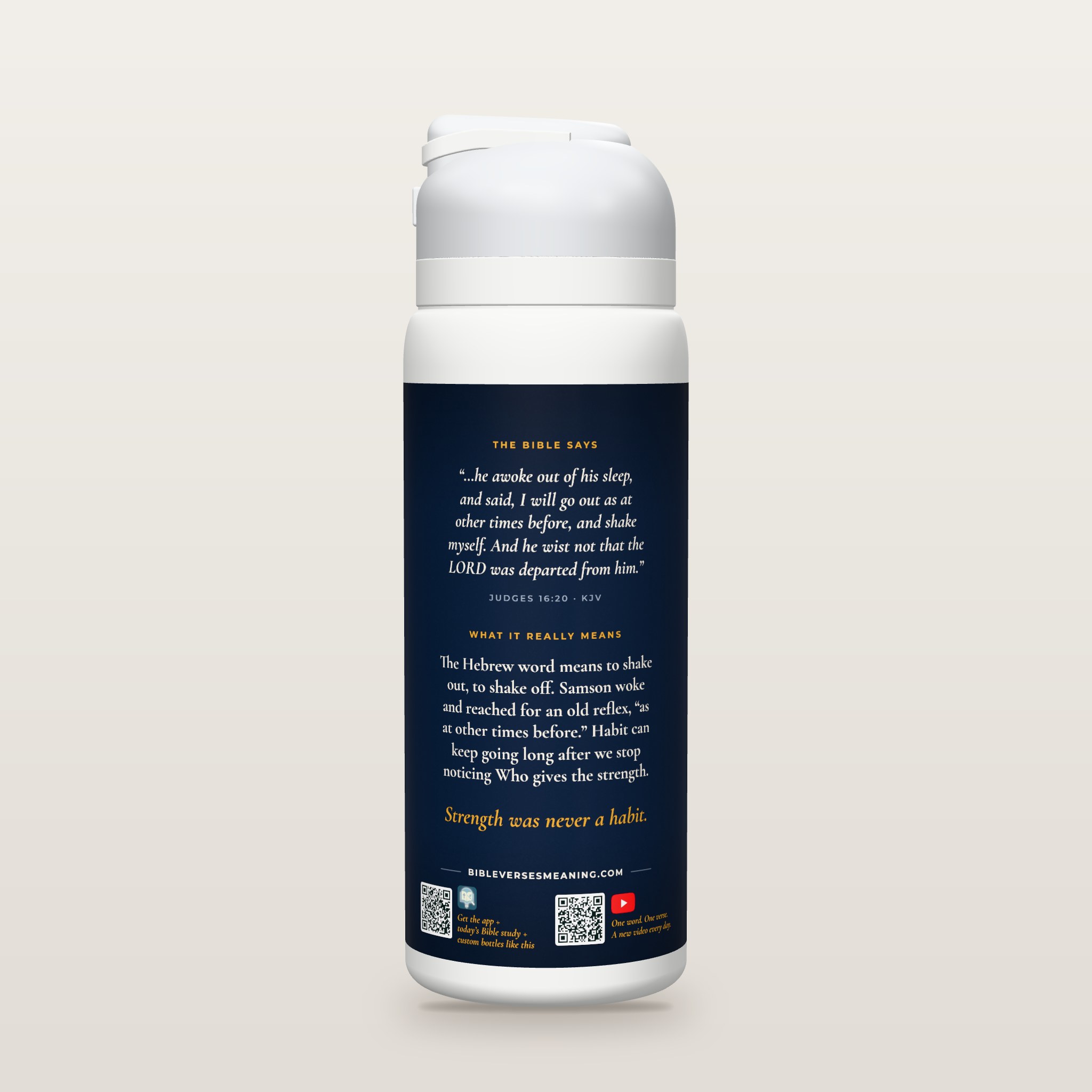
360° view · Shake MYSELF
PRINTED ON THE BOTTLE
Shake MYSELF
Strength was never a habit.
“…he awoke out of his sleep, and said, I will go out as at other times before, and shake myself. And he wist not that the LORD was departed from him.”
Judges 16:20 · KJV
The lamp beside the bed recalls the moment Samson woke to Delilah’s warning.
Explore today’s study bottle ↗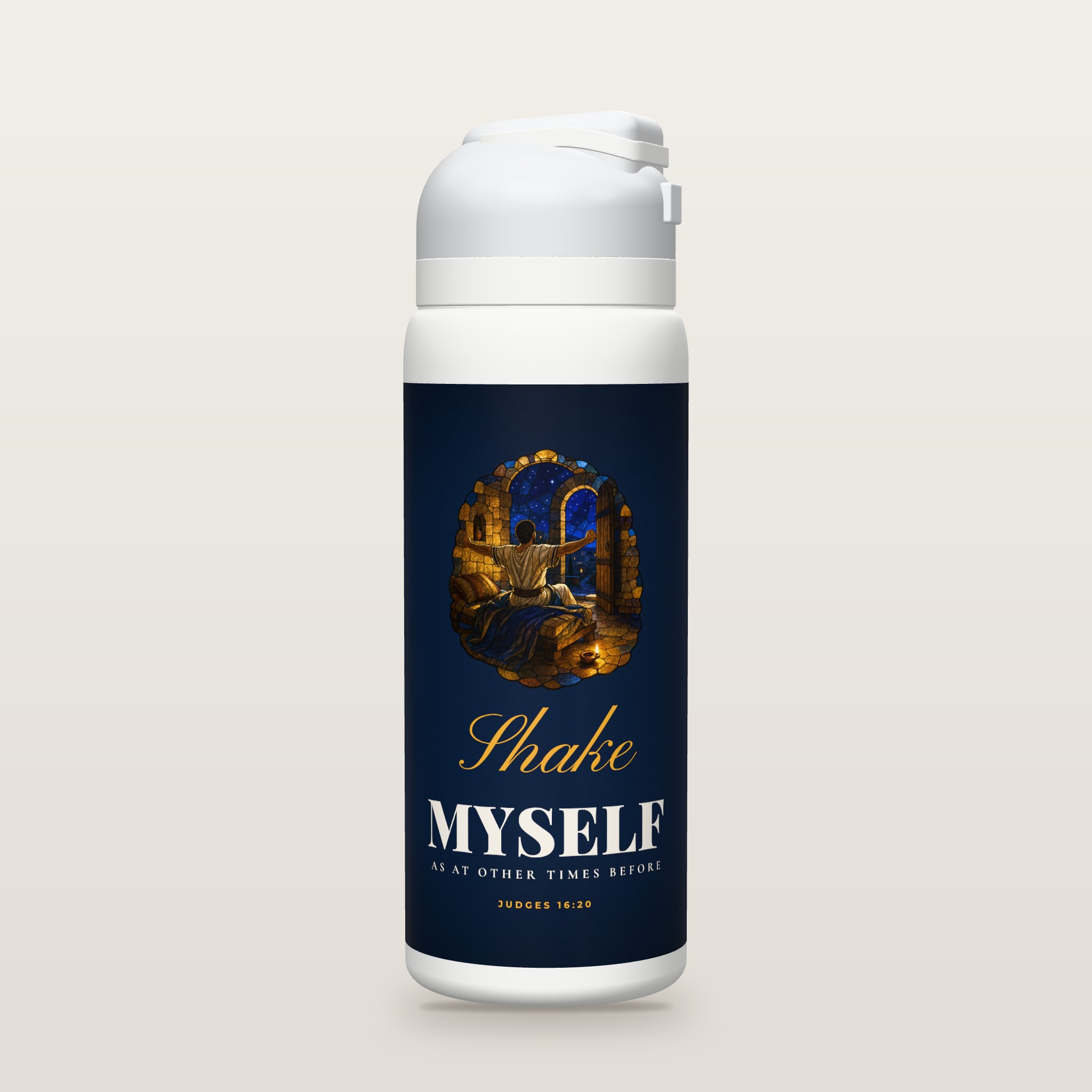
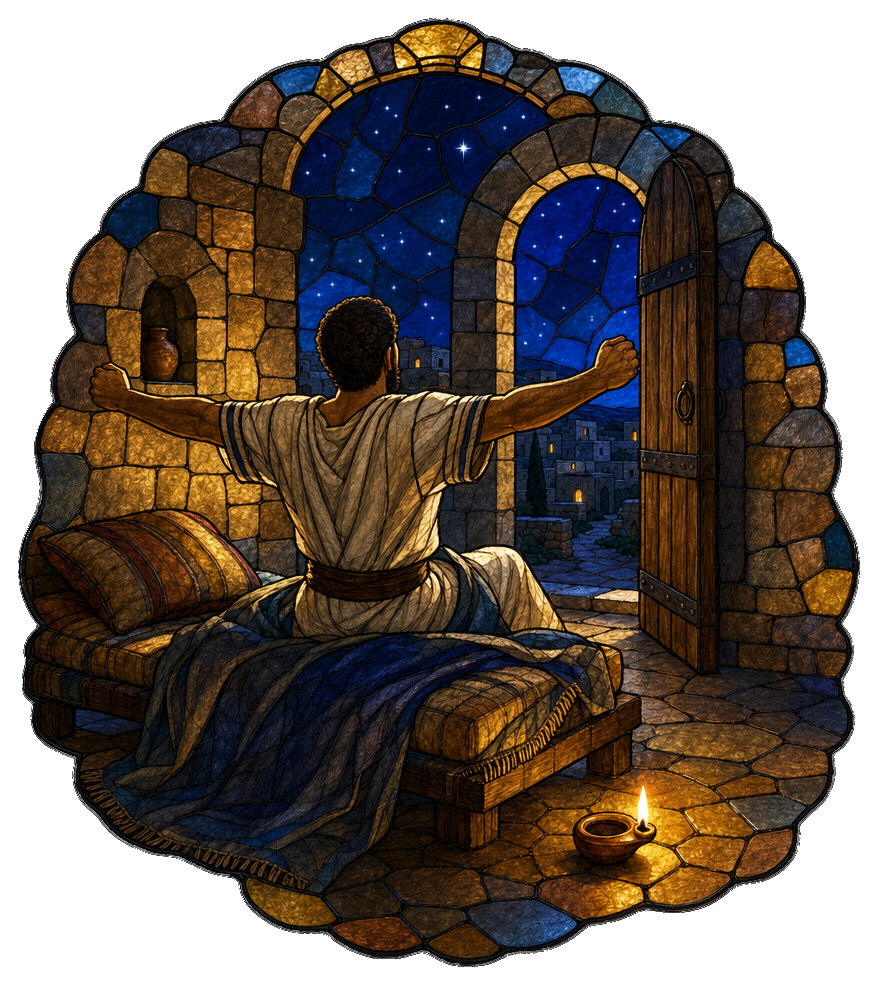
Read the complete printed design
Headline: Shake MYSELF
Verse: “…he awoke out of his sleep, and said, I will go out as at other times before, and shake myself. And he wist not that the LORD was departed from him.”
Meaning: The Hebrew word means to shake out, to shake off. Samson woke and reached for an old reflex, “as at other times before.” Habit can keep going long after we stop noticing Who gives the strength.
Reminder: Strength was never a habit.
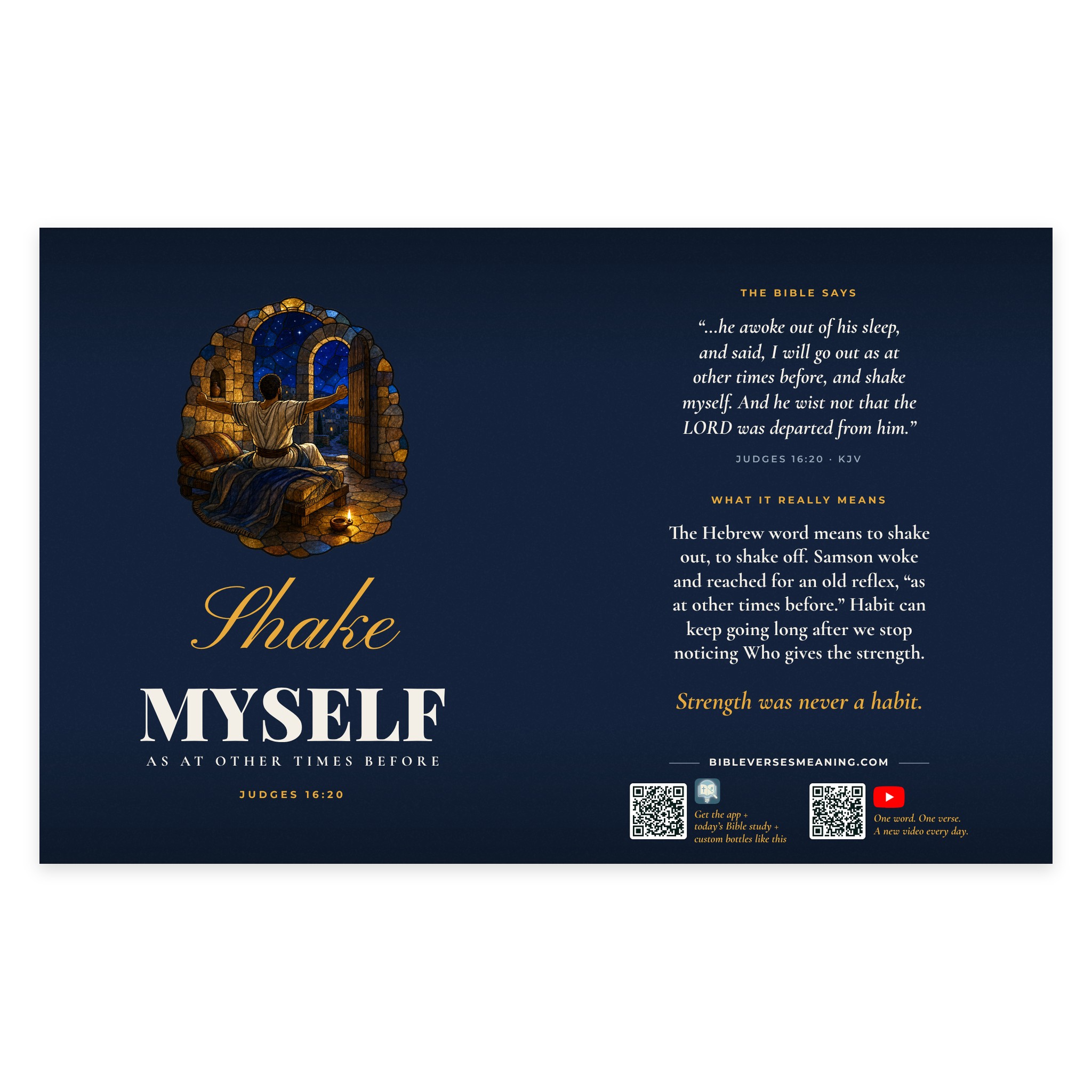
A companion to the study, created to help you remember today’s word.
FROM BIBLE VERSES MEANING
Explore the app’s study notes.
Continue reflecting on the word, the passage, and today’s song.
Word Study · Shake (H5287)
📖 Word Study: shake (H5287)
Judges 16:20
1. Linguistic Nuance
The Hebrew root na'ar (H5287) conveys a violent, decisive action: specifically to shake off, dislodge, or cast away a burden (like shaking dust from a garment or a horse shaking off a rider). Unlike Hebrew synonyms denoting mere trembling (ra'ash) or waving (nuaph), na'ar implies an energetic exertion to forcefully free oneself from restraint.
2. Historical Context
Ancient Israelite readers understood na'ar as Samson’s habitual, arrogant physical routine. Expecting to effortlessly snap his bonds as he had done previously, Samson treated his supernatural power as a personal muscle he could casually flex. The narrative presents tragic irony: Samson attempted a familiar physical reflex, entirely unaware that the divine source of his strength had departed.
3. Practical Application
Samson's na'ar warns against spiritual presumption and empty routine. Relying mechanically on past victories, natural talents, or familiar habits while disconnected from God leaves one vulnerable to defeat. True capacity requires ongoing reliance on the Source, not mere self-effort.
— Bible Verses Meaning App
Biblical Insight · Samson’s habit and Jerusalem’s call to rise
💡 Bible Insight
Q: In Judges 16:20, Samson "awoke out of his sleep, and said, I will go out as at other times before, and shake myself (naar). And he wist not that the LORD was departed from him." Is Samson's "shake myself" an act of confident faith that simply misread the moment, or the reflex of a man who had come to treat the LORD's strength as his own habit? And what does it suggest that the same word appears in Isaiah 52:2, where captive Jerusalem is told, "Shake thyself (naar) from the dust; arise"?
OVERVIEW
In Judges 16:20, Samson awakes stating he will go out "as at other times before, and shake myself," yet "he wist not that the LORD was departed from him." The narrative presents his action not as confident faith, but as the presumption of a man who came to treat divine power as a personal habit. Having repeatedly toyed with his Nazirite identity (Judges 16:7–17), Samson assumed God's strength was an automatic resource he could summon at will.
The appearance of the same word (na'ar, "shake thyself") in Isaiah 52:2 provides a striking contrast. Captive Jerusalem is commanded, "Shake thyself from the dust; arise... loose thyself from the bands of thy neck." While Samson’s self-shaking was an arrogant reflex ignorant of God's departure, Zion’s shaking is a commanded action in response to God’s initiative to redeem His people Isaiah 52:9. Across both passages, the text reveals that human effort to "shake" oneself free is tragic self-deception when rooted in presumption, but liberating when responding to God's promised deliverance.
KEY BIBLICAL PASSAGES
Judges 16:20: Exposes Samson’s self-deception. His assumption that he could prevail "as at other times before" reveals that he had reduced God's sovereign presence to a personal habit, unaware that the Lord had left him.
Judges 16:28: Contrasts Samson's earlier presumption with actual faith. Blinded and imprisoned, Samson finally acknowledges his dependence, calling upon the Lord: "O Lord GOD, remember me, I pray thee, and strengthen me, I pray thee, only this once."
Isaiah 52:1–2: Commands captive Zion to "Awake, awake; put on thy strength... Shake thyself from the dust; arise." Unlike Samson’s self-directed initiative, Jerusalem’s shaking is an act of obedience called forth by God.
Isaiah 52:10–12: Ground Zion's call to action in divine power, stating "The LORD hath made bare his holy arm" and "the LORD will go before you." Israel’s enablement comes entirely from the God who redeems them.
PRACTICAL WISDOM
These texts offer clear direction regarding self-examination, dependence, and spiritual awareness.
First, guard against presumption and spiritual routine. Samson’s downfall shows the danger of taking divine strength or past victories for granted. When spiritual habits become self-reliant routines detached from genuine commitment, one risks becoming oblivious to spiritual decline Judges 16:20. Practical wisdom requires regularly examining one's motives and maintaining conscious dependence on God rather than relying on past experiences.
Second, distinguish between self-generated effort and responsive action. Samson tried to "shake" himself in his own power while alienated from God, resulting in capture and bondage Judges 16:21. Conversely, Isaiah 52:2 calls captives to "shake" off dust because God has already declared redemption Isaiah 52:9. When facing life's struggles or bondages, true liberation comes not from asserting personal self-sufficiency, but from rising up in active obedience to God's promises and strength.
— Bible Verses Meaning App
Today’s song · The Well Is Dry
The chorus lets us hear Samson’s shock in the first person: the singer tries the old motion, but the chains hold. The dry well is the songwriter’s picture of finding that strength was a gift. Judges 16:28 takes us beyond that moment, to the day Samson asked the Lord for strength again.
Song lyrics
(Mmm, felt the power...)
(Thought I had it all...)
This muscle built, a steady hand.
Thought the power was my own command.
A simple habit, a daily turn.
The strength I had, I thought I'd earn.
Just gotta shake, it's always so.
The way I let the whole world go.
But I shake, and the chains hold fast!
My old power, it didn't last!
I shake, but they won't break free!
This ain't the strength inside of me!
The spirit faded, soft and slow.
Didn't feel the power start to go.
Just a habit, a reflex deep.
Secrets the Lord alone could keep.
I tried the shake, my usual way.
Expected victory that day.
But I shake, and the chains hold fast!
My old power, it didn't last!
I shake, but they won't break free!
This ain't the strength inside of me!
It wasn't mine, this mighty force.
Just borrowed from a sacred source.
That grace is gone, the well is dry.
Beneath this vast and empty sky.
But I shake, and the chains hold fast!
My old power, it didn't last!
I shake, but they won't break free!
This ain't the strength inside of me!
(Mmm, no more shaking...)
Just standing here now.
(The strength is gone...)
(Let it go.)
Ready to Go Deeper?
Try Bible Verses Meaning free for 7 days and discover what the original words really mean.